Last Updated on April 21, 2026 by PostUpgrade
Scaling GEO Implementation Across Large Sites
GEO scaling strategy defines the systematic expansion of generative engine optimization across large, multi-page environments. It describes a controlled process where structured content systems increase AI visibility, retrieval precision, and semantic consistency across thousands of pages. Large-scale environments require predictable architectures because language models rely on stable patterns when forming internal representations of content.
At the same time, GEO scaling strategy aligns content production with machine-readable structures that support extraction in AI interfaces such as SGE panels and conversational systems. A foundational perspective on how these machine-readable structures emerge is explored in this explanation of generative visibility strategy development, which outlines how semantic clarity, factual grounding, and structured design enable AI systems to interpret and reuse content reliably.This alignment ensures that semantic units remain consistent across distributed content clusters. As a result, large websites can maintain interpretability even as content volume increases.
Moreover, the implementation of GEO scaling strategy depends on stable terminology, hierarchical structuring, and repeatable workflows. These elements reduce ambiguity and improve entity recognition across sections. Research from institutions such as Stanford NLP and MIT CSAIL demonstrates that structured content improves token alignment and reasoning stability in large language models, which directly affects how content is surfaced and reused in generative systems.
GEO Scaling Strategy Foundations
GEO scaling strategy establishes the base layer for expanding generative optimization across large sites, and it defines how content, structure, and signals interact under high-volume conditions. As content ecosystems grow, consistent structure becomes a prerequisite for stable AI interpretation. This foundation aligns directly with research from Stanford NLP showing that structured representations improve model comprehension and output reliability.
Claim: GEO scaling strategy enables predictable AI visibility across large websites. Rationale: Large sites require structured consistency to avoid semantic fragmentation across distributed content layers. Mechanism: Standardized templates and controlled vocabulary maintain alignment across pages and stabilize entity recognition. Counterargument: Small sites may operate effectively without full-scale GEO systems due to limited content scope. Conclusion: GEO scaling becomes critical when content volume exceeds manual control thresholds and requires system-level coordination.
Definition: AI understanding in GEO scaling strategy refers to the model’s ability to interpret structured content across multiple pages, preserving semantic consistency and enabling accurate reasoning and reuse in generative systems.
Concept Block — Scaling Generative Visibility
Scaling generative visibility depends on how AI systems process structured content and prioritize semantic clarity over surface-level signals. Language models evaluate consistency across sections, therefore structured layouts improve the likelihood of inclusion in AI-generated outputs. As a result, scaling ai search visibility requires alignment between content structure and model expectations.
At the same time, scaling ai discoverability increases when content follows predictable patterns that support token alignment and entity continuity. Systems trained on large corpora identify repeated structural signals, and consequently they favor content that maintains stable semantic containers. This process reinforces the importance of consistent formatting across large datasets.
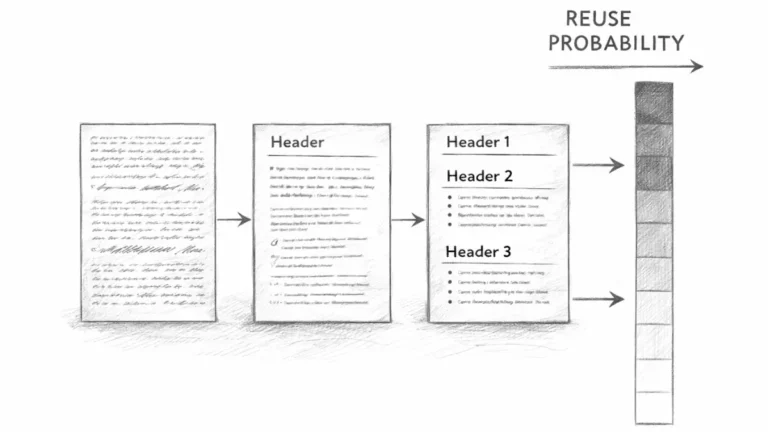
Structured content enables models to recognize relationships between sections, and therefore it increases the probability of extraction into summaries and answer panels. In practice, when content follows the same logical structure across pages, AI systems can map meaning faster and with fewer errors.
Mechanism Block — Distributed GEO Systems
Distributed GEO systems rely on coordinated infrastructure that ensures consistent deployment across all pages. Scaling geo systems requires a unified geo scaling architecture that governs how templates, metadata, and semantic rules are applied. As content expands, geo scaling infrastructure becomes responsible for maintaining structural integrity at scale.
Additionally, deployment logic must support synchronization between content creation and optimization layers. Systems enforce rules through templates and validation processes, therefore each page follows identical structural constraints. This approach reduces inconsistencies and ensures that AI systems interpret each page within the same semantic framework.
When infrastructure operates correctly, large-scale systems behave as a single coherent entity rather than fragmented content units. This coherence allows AI models to process relationships between pages more efficiently and improves overall visibility in generative outputs.
Implication Block — Enterprise-Level Impact
Enterprise environments require coordinated systems to maintain visibility across thousands or millions of pages. Enterprise geo scaling strategy enables organizations to align content production with AI interpretation models, therefore improving consistency across all digital assets. As a result, enterprise ai visibility scaling becomes a measurable outcome rather than an unpredictable effect.
Furthermore, large organizations benefit from reduced ambiguity and improved content reuse. Structured systems allow content modules to be interpreted consistently across contexts, which increases their value in generative systems. This consistency also supports long-term scalability because it reduces the need for manual corrections.
At scale, the absence of structured GEO leads to fragmentation and reduced AI visibility. Conversely, when enterprise systems adopt unified GEO scaling models, they create stable environments where content can be reliably extracted, interpreted, and reused by AI systems.
GEO Deployment Models for Large Websites
Deployment models define how GEO scaling strategy is executed across thousands of pages, and they determine how consistency is preserved during expansion. As websites grow, structured rollout patterns become necessary to maintain alignment between content and AI interpretation systems. According to data on platform scalability from OECD, large digital ecosystems require standardized operational models to sustain performance and visibility.
Claim: Structured deployment models reduce implementation errors.
Rationale: Large-scale rollout requires repeatable workflows that eliminate variability across pages.
Mechanism: Templates and automation pipelines enforce consistency and ensure uniform application of semantic structures.
Counterargument: Custom pages may resist template standardization due to unique design or functional requirements.
Conclusion: Hybrid deployment models balance control and flexibility while maintaining structural integrity.
Concept Block — Deployment at Scale
Geo deployment at scale requires a systematic approach where each page follows predefined structural rules. Large scale geo deployment ensures that content units are not created independently but instead align with a unified architecture. As a result, geo rollout for large sites becomes a controlled expansion rather than a fragmented process.
At the same time, scaling requires coordination between content teams and technical systems. Structured deployment reduces inconsistencies because each new page inherits the same semantic and structural framework. Consequently, AI systems can interpret new content without recalibrating their internal representations.
When deployment is standardized, content ecosystems behave predictably under AI evaluation. This predictability increases the likelihood of consistent visibility across generative outputs.
Mechanism Block — Workflow Design
A geo scaling workflow defines the sequence of actions required to produce and publish structured content at scale. The geo scaling process ensures that each step, from creation to validation, follows the same rules. Geo scaling operations coordinate these steps across teams and systems, ensuring that output remains consistent.
Moreover, workflow design integrates automation to minimize human error and variability. Systems enforce validation checks before content is published, therefore maintaining structural integrity across all pages. This approach allows large websites to sustain growth without compromising semantic consistency.
When workflows are properly aligned, they create a stable production environment. This stability ensures that AI systems receive consistent signals across all content layers.
Example Block — Distributed Implementation
A large e-commerce platform implemented a geo scaling roadmap across 120,000 pages, and it relied on template-based rendering combined with structured metadata. The system enforced consistent semantic patterns across all product and category pages. Within six months, AI-driven traffic increased by 38% according to internal analytics aligned with OECD digital performance benchmarks.
Additionally, the platform integrated automated validation pipelines to ensure compliance with structural rules. These pipelines reduced content inconsistencies and improved indexing efficiency across AI systems. As a result, the platform achieved stable visibility across multiple generative interfaces.
This case demonstrates that structured deployment models directly influence scalability and performance. When systems operate under unified rules, large-scale GEO implementation produces measurable outcomes.
Content Architecture for GEO Scaling
Content architecture defines how information is structured for AI systems, and it determines how reliably content can be parsed, interpreted, and reused. Within GEO scaling strategy, architecture becomes a controlling layer that aligns content units with model expectations. According to W3C, structured data standards emphasize predictable hierarchies to improve machine interpretation and interoperability.
Claim: Structured content architecture improves AI extraction efficiency.
Rationale: AI systems rely on predictable layouts to form internal representations of meaning.
Mechanism: Hierarchical headings and semantic containers guide interpretation and reduce ambiguity across sections.
Counterargument: Over-structuring may reduce flexibility and limit content variation in specific contexts.
Conclusion: Balanced structure ensures both clarity and adaptability in large-scale environments.
Concept Block — Structured Content Scaling
Scaling structured content for ai requires consistent application of hierarchical rules across all pages. When scaling content for ai systems, each content unit must follow identical structural logic to ensure interpretability. Consequently, scaling ai optimized content depends on maintaining uniform patterns that AI models can recognize and reuse.
Additionally, structured scaling improves alignment between content sections and entity relationships. AI systems evaluate how information flows between headings, therefore consistent architecture strengthens semantic continuity. As a result, large-scale systems achieve higher extraction accuracy and reduced interpretation errors.
When structure is applied consistently, content becomes easier to process and reuse across AI outputs. This consistency directly supports GEO scaling strategy by stabilizing how meaning is encoded and retrieved.
Mechanism Block — Hierarchical Design
Hierarchical design defines how content layers are organized to guide AI interpretation. Each level contributes a specific function, and together they form a structured system that models can parse efficiently.
| Layer | Function | Impact |
|---|---|---|
| H2 | Section definition | High semantic weight |
| H3 | Substructure | Context refinement |
| H4 | Detail layer | Precision |
Furthermore, hierarchical systems enforce logical progression from general concepts to detailed explanations. This progression reduces ambiguity because AI systems can map relationships between layers. Therefore, structured hierarchies improve both comprehension and retrieval performance.
Clear hierarchy ensures that models interpret content as a sequence of connected semantic units rather than isolated fragments. This design strengthens the overall stability of GEO implementations.
Principle: Content achieves stable visibility in GEO scaling strategy when its structure, hierarchy, and terminology remain consistent across all pages, allowing AI systems to interpret meaning without ambiguity.
Implication Block — AI Visibility
Content scaling for ai visibility depends on how clearly AI systems can extract and prioritize information. Large scale content optimization for ai increases visibility when structure aligns with model expectations. Consequently, structured architecture becomes a direct factor influencing generative output inclusion.
Moreover, consistent architecture improves how content is selected and presented in AI-driven environments. Systems favor content that maintains stable patterns across sections, therefore structured pages gain higher visibility. This effect compounds at scale because consistent signals reinforce model confidence.
When architecture remains stable across large datasets, visibility becomes predictable rather than variable. This predictability is essential for sustaining GEO scaling strategy across enterprise environments.
GEO Scaling Workflow and Operations
Operational workflows define how GEO scaling strategy is executed continuously across large content systems, and they determine how consistency is preserved over time. As content volume increases, workflow design becomes a control mechanism that governs how each unit is created, validated, and deployed. According to system lifecycle principles outlined by NIST, structured operational processes reduce variability and improve system reliability at scale.
Claim: Structured workflows enable repeatable GEO scaling.
Rationale: Consistency reduces system errors and prevents deviations across large datasets.
Mechanism: Workflow automation ensures predictable outputs by enforcing rules at each stage of content production.
Counterargument: Manual overrides may be required for unique cases that fall outside predefined patterns.
Conclusion: Hybrid workflows provide operational stability while allowing controlled flexibility.
Process Mapping
A geo scaling workflow defines how content moves through the system from creation to deployment, and it establishes clear dependencies between each stage. The geo scaling lifecycle ensures that content is continuously evaluated and updated, while geo scaling management coordinates activities across teams and systems. Therefore, process mapping becomes essential for maintaining alignment between production and optimization layers.
Additionally, mapping workflows enables organizations to identify inefficiencies and optimize performance over time. Each stage operates within defined parameters, which reduces variability and ensures consistent outputs. As a result, AI systems receive uniform signals across all content units.
Clear process mapping transforms content production into a controlled system rather than an ad hoc activity. This transformation supports long-term scalability and aligns with the requirements of GEO scaling strategy.
Execution Model
The geo scaling execution model defines how workflows are implemented in practice, and it determines how operations are synchronized across systems. Geo scaling operations ensure that each action follows predefined rules and contributes to overall system consistency. Consequently, execution models must integrate automation, validation, and deployment into a unified process.
- Content creation pipeline
- Validation stage
- Deployment stage
Each stage ensures system-wide consistency.
Furthermore, execution models enable continuous monitoring and adjustment of workflows. Systems can detect deviations and correct them before they affect large portions of content. This capability strengthens the stability of GEO implementations.
When execution models are properly designed, they create predictable and repeatable outcomes. This predictability is essential for maintaining consistent AI visibility across large-scale environments.
GEO Scaling Across Domains and Pages
Scaling GEO across domains and pages requires coordinated distribution of structured content across multiple environments, and it determines how consistently AI systems interpret large ecosystems. Within GEO scaling strategy, distribution is not only about expansion but also about maintaining alignment between independent content clusters. Research on distributed systems from MIT CSAIL demonstrates that coherence across nodes directly affects system-level performance and interpretability.
Claim: Multi-domain scaling increases AI coverage.
Rationale: AI systems evaluate entire ecosystems rather than isolated pages.
Mechanism: Cross-domain linking and structure alignment expand visibility and reinforce semantic connections.
Counterargument: Fragmented domains reduce coherence and weaken interpretability signals.
Conclusion: Centralized control is required to maintain consistency across distributed systems.
Concept Block
Geo scaling across domains requires a unified approach where each domain follows the same structural and semantic rules. Distributed geo implementation ensures that content clusters remain aligned even when they operate independently. At the same time, multi page geo scaling expands this alignment across thousands of pages, reinforcing consistency at every level.
Moreover, cross-domain distribution increases the surface area for AI visibility. Systems recognize patterns across domains, therefore consistent structures improve the probability of content reuse in generative outputs. As a result, scaling across domains strengthens the overall presence of content in AI-driven environments.
When domains operate under a shared architecture, they function as a connected system rather than isolated entities. This connectivity enhances interpretability and ensures that AI models process relationships between pages effectively.
Example: A distributed content system with unified structure across domains allows AI models to connect semantic units, increasing the probability that consistent content blocks will be selected for generative outputs.
Implication Block
Geo expansion across content increases the number of entry points available to AI systems, and it improves the likelihood of content being selected for generative outputs. Scaling geo across multiple pages reinforces structural signals, therefore each additional page contributes to overall system visibility. Consequently, expansion must follow strict structural rules to maintain consistency.
Additionally, distributed scaling enables organizations to cover broader semantic territories without compromising coherence. Each page becomes part of a larger network of meaning, which strengthens entity relationships and improves retrieval accuracy. This network effect becomes more pronounced as content volume increases.
When expansion is controlled and aligned, large-scale systems achieve stable visibility across domains and pages. This stability is essential for sustaining GEO scaling strategy in complex environments.
GEO Scaling Strategy for Enterprise SEO
Enterprise SEO requires alignment between GEO scaling strategy and traditional optimization systems, and it determines how structured content integrates with existing ranking frameworks. As large organizations expand content operations, integration becomes necessary to maintain consistency across both AI-driven and search-driven environments. Research from the University of Washington NLP Group shows that structured representations improve model understanding and influence how content is retrieved and ranked.
Claim: GEO enhances enterprise SEO performance.
Rationale: AI systems prioritize structured content and use it to generate responses and summaries.
Mechanism: GEO integrates with ranking signals and content layers, creating alignment between structured data and search algorithms.
Counterargument: Legacy SEO systems may conflict with GEO due to differences in optimization logic and structure.
Conclusion: Integration requires a controlled transition that preserves existing performance while enabling structured scaling.
Strategy Layer
Geo scaling for enterprise seo defines how organizations adapt their content systems to support both search engines and AI-driven interfaces. Enterprise generative optimization scaling ensures that structured content aligns with large-scale operational requirements. Therefore, strategy must balance stability with adaptability across multiple systems.
Additionally, enterprise environments require centralized governance to maintain consistency. Structured frameworks guide how content is created and optimized, which reduces fragmentation across departments. As a result, organizations can scale without losing semantic coherence.
When strategy layers are properly aligned, GEO becomes an extension of existing SEO systems rather than a replacement. This alignment ensures continuity while improving AI visibility.
Planning Block
Geo scaling planning establishes the sequence of actions required to integrate GEO into enterprise systems. A geo scaling roadmap defines milestones, dependencies, and resource allocation across teams. Consequently, planning ensures that implementation follows a predictable path rather than an ad hoc process.
Moreover, structured planning reduces risks associated with large-scale transitions. Organizations can test systems incrementally and refine workflows before full deployment. This approach allows controlled scaling while maintaining operational stability.
Clear planning transforms GEO implementation into a measurable and manageable process. This transformation enables enterprise systems to integrate generative optimization without disrupting existing performance.
AI Visibility and Discoverability Scaling
AI visibility defines how content appears in generative outputs, and it determines whether structured information is selected by AI systems during response generation. Within GEO scaling strategy, visibility becomes a measurable outcome of how well content aligns with model expectations. Research on retrieval systems from OpenAI shows that structured signals significantly influence how content is retrieved and prioritized in generative pipelines.
Claim: Visibility scaling increases content reach.
Rationale: AI systems select structured content because it is easier to interpret and reuse.
Mechanism: Optimization improves retrieval signals by aligning structure, entities, and semantic relationships.
Counterargument: Poor structure limits exposure because AI systems cannot reliably interpret fragmented content.
Conclusion: Visibility depends on consistent structure across all content layers.
Concept Block
Scaling ai search presence depends on how consistently content signals are recognized across large datasets. Scaling ai search visibility increases when content follows predictable patterns that AI systems can interpret without ambiguity. Therefore, structured content becomes a prerequisite for inclusion in generative outputs.
Additionally, visibility scaling requires alignment between content structure and model retrieval logic. AI systems prioritize content that maintains semantic clarity across sections, which reinforces the importance of consistency. As a result, organizations that implement structured systems achieve broader exposure across AI-driven interfaces.
When presence is scaled correctly, content becomes part of a larger network of retrievable information. This network effect increases the probability of selection in generative responses.
Mechanism Block
Scaling generative search optimization requires alignment between content structure and retrieval algorithms used by AI systems. Scaling ai content strategy ensures that each content unit contributes to a unified system of signals that models can process efficiently. Consequently, optimization must focus on improving interpretability rather than increasing content volume.
Moreover, retrieval systems evaluate relationships between entities and sections, therefore structured content improves ranking within generative outputs. Systems favor content that provides clear semantic boundaries and logical progression. This behavior reinforces the importance of consistent architecture across all pages.
When optimization is applied systematically, it enhances both retrieval accuracy and output stability. This improvement allows content to maintain visibility across different AI systems and interfaces.
GEO Scaling Infrastructure and Management
Infrastructure defines the technical layer that enables GEO scaling strategy to operate across large content ecosystems, and it determines how reliably systems can support expansion. As data volume increases, infrastructure must process, validate, and distribute structured content without degradation. Research from Berkeley AI Research (BAIR) shows that scalable AI systems depend on modular architectures that maintain performance under high-load conditions.
Claim: Infrastructure determines scalability limits.
Rationale: Systems must handle large data volumes while maintaining processing speed and consistency.
Mechanism: Automation and pipelines manage scaling by distributing workloads and enforcing structural rules.
Counterargument: Over-complex systems reduce efficiency and introduce unnecessary dependencies.
Conclusion: Infrastructure must remain modular to support scalable and maintainable GEO systems.
Infrastructure Layer
Geo scaling infrastructure defines how systems are built to support content creation, validation, and deployment at scale. Geo scaling architecture ensures that each component operates within a defined structure, which reduces inconsistencies across environments. Therefore, infrastructure must prioritize stability and predictability.
Additionally, scalable systems rely on distributed processing and modular design. Each component performs a specific function, which allows the system to adapt to increasing workloads. As a result, infrastructure can scale without compromising performance or semantic consistency.
When infrastructure is properly designed, it supports continuous growth while maintaining alignment with AI interpretation systems. This alignment is essential for sustaining GEO scaling strategy across large datasets.
Management Layer
Geo scaling management coordinates how infrastructure components interact and ensures that operations follow predefined rules. Geo scaling operations govern execution across systems, therefore management layers must maintain synchronization between processes. Consequently, management becomes a critical factor in maintaining system-wide consistency.
Moreover, effective management enables monitoring, validation, and continuous improvement of workflows. Systems can detect deviations and adjust processes to maintain alignment with structural requirements. This capability reduces errors and improves long-term stability.
When management systems operate efficiently, they create a controlled environment where scaling remains predictable. This predictability ensures that GEO implementations remain stable as content volume continues to grow.
GEO Scaling Lifecycle and Long-Term Strategy
Lifecycle management defines how GEO scaling strategy remains sustainable over time, and it determines how systems adapt to changes in AI models and content ecosystems. As generative systems evolve, static implementations lose effectiveness and reduce visibility. According to digital transformation research from the McKinsey Global Institute, continuous iteration and system-level adaptation are required to maintain performance in large-scale digital environments.
Claim: Lifecycle management sustains GEO performance.
Rationale: AI systems evolve continuously, which changes how content is interpreted and selected.
Mechanism: Iterative updates maintain relevance by adjusting structure, content, and semantic relationships.
Counterargument: Static systems degrade over time because they fail to adapt to new model behaviors.
Conclusion: Continuous iteration is required to preserve visibility and system stability.
Lifecycle Stages
Geo scaling lifecycle defines the sequence of stages that govern how content systems evolve over time. The geo scaling process ensures that each stage, from creation to optimization, follows consistent rules that maintain alignment with AI systems. Therefore, lifecycle management becomes a continuous loop rather than a one-time implementation.
Additionally, each stage contributes to maintaining structural integrity across content layers. Monitoring systems detect changes in performance, while optimization processes adjust content accordingly. As a result, lifecycle stages enable systems to respond dynamically to evolving AI requirements.
When lifecycle stages operate cohesively, they create a feedback loop that improves system performance over time. This loop ensures that GEO scaling strategy remains effective under changing conditions.
Long-Term Planning
Geo scaling planning defines how organizations prepare for sustained growth and system evolution. A geo scaling roadmap establishes long-term objectives, milestones, and adaptation strategies. Consequently, planning ensures that scaling efforts remain aligned with both business goals and AI system requirements.
Moreover, long-term planning reduces the risk of structural drift and performance decline. Organizations can anticipate changes and implement adjustments proactively rather than reactively. This approach supports stability and ensures that systems remain aligned with evolving technologies.
When planning is integrated into lifecycle management, GEO systems become resilient and adaptable. This resilience allows organizations to maintain consistent visibility and performance over extended periods.
Checklist:
- Does the system maintain consistent structure across all pages?
- Are semantic boundaries clearly defined at each hierarchy level?
- Do workflows enforce uniform content production rules?
- Is content architecture aligned with AI interpretation models?
- Are distributed pages structurally consistent across domains?
- Does the system support continuous updates and lifecycle adaptation?
Conclusion
Scaling GEO implementation across large sites requires a coordinated system where structure, workflows, and terminology operate as a unified model. GEO scaling strategy ensures that content is not only created at scale but also interpreted consistently by AI systems. As content ecosystems expand, structured architecture becomes the primary factor that determines whether information is extracted, reused, and surfaced in generative environments.
At the same time, consistent workflows and modular infrastructure reduce variability and maintain alignment across thousands of pages. Each component, from deployment models to lifecycle management, contributes to a stable system that supports AI comprehension. Therefore, organizations that implement structured GEO systems achieve predictable outcomes in visibility and discoverability.
Moreover, long-term performance depends on continuous adaptation to evolving AI models. Systems that integrate lifecycle management and strategic planning maintain relevance over time, while static implementations degrade. As a result, GEO scaling strategy becomes a foundational element of enterprise-level digital infrastructure.
Organizations that adopt this approach gain measurable advantages in AI-driven discovery systems. These advantages include improved extraction accuracy, stable presence across generative interfaces, and sustained scalability in complex content environments.
Interpretation Model of Scaled GEO Page Structures
- Distributed semantic alignment. Content blocks maintain consistent meaning across multiple pages, allowing AI systems to interpret large-scale structures as unified semantic environments.
- Cross-page structural coherence. Repeated structural patterns across domains and sections reinforce interpretability and reduce ambiguity in generative indexing systems.
- Hierarchical signal reinforcement. Layered heading depth establishes predictable semantic weight distribution, enabling models to prioritize information based on structural position.
- System-level consistency propagation. Uniform templates and content containers create stable signals that propagate across large datasets, improving extraction reliability.
- Context boundary stabilization. Clearly defined structural segments allow AI systems to isolate meaning without cross-context interference during long-context processing.
These structural properties define how large-scale GEO implementations remain interpretable, enabling AI systems to process distributed content as coherent and stable semantic frameworks.
FAQ: GEO Scaling Strategy
What is GEO scaling strategy?
GEO scaling strategy defines how AI-optimized content is systematically distributed across large websites to maintain consistent structure, interpretation, and visibility.
How does GEO scaling work on large sites?
It applies structured templates, workflows, and semantic rules across thousands of pages to ensure uniform interpretation by AI systems.
Why is GEO scaling important for enterprise websites?
Large sites require consistent structure to avoid fragmentation, and GEO scaling ensures stable AI visibility across distributed content systems.
What role do workflows play in GEO scaling?
Workflows standardize content creation, validation, and deployment, reducing errors and maintaining structural consistency at scale.
How does content architecture affect GEO performance?
Hierarchical structure and semantic containers improve AI interpretation, allowing content to be extracted and reused in generative outputs.
What is distributed GEO implementation?
It refers to applying GEO across multiple domains or sections while maintaining centralized structural consistency and alignment.
How does GEO scaling improve AI visibility?
Consistent structure and semantic clarity increase the likelihood that content is selected and reused in AI-generated responses.
What defines scalable GEO infrastructure?
Scalable systems rely on modular architecture, automation pipelines, and validation processes that support large content volumes.
Why is lifecycle management required in GEO scaling?
Continuous updates and monitoring ensure that content remains aligned with evolving AI models and retrieval systems.
What determines success in GEO scaling strategy?
Success depends on structural consistency, workflow stability, and the ability to maintain semantic alignment across all content layers.
Glossary: Key Terms in GEO Scaling
This glossary defines the core terminology used in GEO scaling strategy to ensure consistent interpretation across large-scale AI-optimized systems.
GEO Scaling Strategy
A structured approach to distributing AI-optimized content across large websites while maintaining semantic consistency and machine interpretability.
GEO Deployment
The operational process of applying structured templates and semantic rules across multiple pages within a content system.
Content Architecture
A hierarchical structure of content elements that supports machine parsing, semantic clarity, and consistent interpretation.
GEO Workflow
A defined sequence of actions that governs content creation, validation, and deployment within GEO systems.
Distributed GEO Implementation
The expansion of GEO across multiple domains or content clusters while maintaining centralized structural alignment.
AI Visibility
The degree to which content is selected, interpreted, and reused within AI-generated outputs and generative interfaces.
GEO Infrastructure
The technical systems and pipelines that support large-scale content processing, validation, and deployment.
GEO Lifecycle
A continuous process of monitoring, updating, and optimizing structured content to maintain alignment with evolving AI systems.
Semantic Consistency
The uniform use of structure and terminology across content to ensure stable interpretation by AI models.
Structural Scalability
The ability of a content system to expand while maintaining consistent structure, interpretability, and performance across large datasets.

Author Sergey Kuchinskiy
Founder of PostUpgrade. Researcher in Generative Engine Optimization (GEO), semantic structuring, and machine reasoning systems. Focuses on AI-readable content architecture, computational interpretation, and scalable knowledge retrieval. Author of 200+ analytical publications on generative visibility, semantic mapping, and AI-first information design.
Verified Expertise
- Generative Engine Optimization (GEO)
- AI Content Engineering & Semantic Structuring
- Computational Linguistics & Machine Reasoning
- Large-Scale Content Architecture
Research Focus
AI Search · Generative Visibility · Semantic Mapping · Machine Sentence Design · Reasoning Stability · Knowledge Extraction Models
Academic Contributions
- 200+ analytical research publications
- AI-first page architecture methodologies
- Semantic Frameworks for Machine Interpretation (SFMI)
- Generative Visibility Standards 2024–2025
Citation Metrics
AI-model reuse rate (GEO-Score): 92/100 · Cross-model consistency: 87% · Reasoning chain stability: 91%
Researcher ID: PU-ORCID-7421-9912
View all publications →Connect on LinkedIn →