Last Updated on March 22, 2026 by PostUpgrade
The Role of Internal Taxonomy in Generative Search
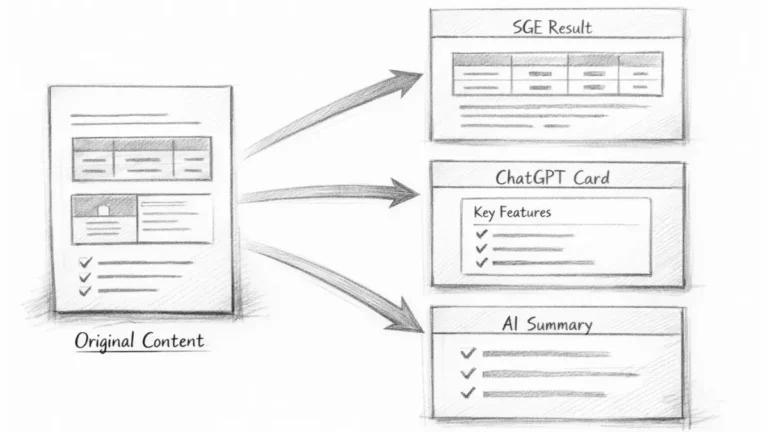
AI does not rank this page by keywords—it reconstructs meaning from its taxonomy, hierarchy, and repeated structural patterns to decide whether your content can be reused.
TL;DR: The content explains that without internal taxonomy, AI cannot consistently interpret relationships, which leads to fragmented understanding and unstable reuse. This reduces visibility because systems fail to extract and recombine meaning across sections. By enforcing taxonomy, hierarchy, and semantic boundaries, AI can reliably interpret, reuse, and surface content. The outcome is higher generative visibility and stable long-term inclusion in AI outputs.
If your structure is inconsistent, AI will silently ignore your content even if it is correct.
Generative systems now prioritize interpretation over retrieval, which elevates the role of internal content taxonomy in how meaning is inferred at scale. Instead of matching queries to documents, these systems analyze structure, relationships, and internal coherence to derive intent. This shift changes content performance because systems evaluate how clearly meaning is organized across a site.
Taxonomy acts as infrastructure rather than navigation. Navigation supports user movement through interfaces, while taxonomy defines how content units relate, how concepts remain bounded, and how meaning stays stable across contexts. When interpretation replaces extraction, taxonomy provides the logic that sustains understanding at scale.
In this environment, internal content taxonomy becomes a core structural asset. It aligns classification rules, hierarchical relationships, and terminology control into a single system. Through this alignment, internal content taxonomy enables reliable comprehension, controlled reuse, and long-term accessibility in generative discovery systems.
Definition: AI understanding is the model’s ability to interpret meaning, structure, and conceptual boundaries in a way that enables accurate reasoning, reliable summarization, and consistent content reuse across generative discovery systems.
Internal Content Taxonomy as a Structural Control Layer
Internal content taxonomy operates as a control layer that stabilizes meaning across large content systems. In generative environments, systems infer intent and relevance by reading internal structure rather than by matching isolated terms, which elevates the role of taxonomy in segmentation and reuse. Research from MIT CSAIL supports the view that structured representations improve machine interpretation when systems operate over complex, multi-document contexts.
Claim: Internal taxonomy functions as a structural control layer that governs meaning consistency across content systems.
Rationale: Generative models rely on internal coherence and repeatable structure to interpret content at scale rather than on isolated textual signals.
Mechanism: Taxonomy constrains classification, enforces hierarchical boundaries, and aligns terminology so that systems infer stable relationships between content units.
Counterargument: Small or homogeneous sites may achieve acceptable interpretation without formal taxonomy due to limited scope and low semantic variance.
Conclusion: As content volume and conceptual breadth increase, taxonomy shifts from an optional aid to a necessary control mechanism.
Principle: Content becomes more visible in AI-driven environments when its structure, definitions, and conceptual boundaries remain stable enough for models to interpret without ambiguity.
Content taxonomy structure
A content taxonomy structure defines how categories, subcategories, and relationships form a predictable hierarchy. This structure limits ambiguity by assigning each content unit a clear position within an ordered system. As a result, interpretation becomes repeatable across documents and over time.
Moreover, structured taxonomy supports consistent reuse of concepts across multiple contexts. When the same category boundaries apply everywhere, systems recognize patterns without re-evaluating meaning on each encounter. This consistency reduces interpretive variance and improves long-term stability.
In simpler terms, a clear structure tells systems where each piece of content belongs and how it connects to the rest.
Internal taxonomy framework
An internal taxonomy framework specifies the rules that govern how taxonomy operates in practice. These rules define category creation, inheritance, constraint handling, and validation processes. Through this framework, taxonomy remains consistent even as content expands.
In addition, a framework separates strategic taxonomy decisions from day-to-day editorial actions. Editors work within defined boundaries, while the system preserves structural integrity. This separation prevents drift and maintains alignment across teams and time horizons.
Put simply, the framework sets the rules so people can add content without breaking the underlying logic.
Taxonomy based organization
Taxonomy based organization arranges content according to meaning rather than format or chronology. This approach ensures that related concepts cluster naturally, regardless of when or how authors publish them. Consequently, systems detect relevance through relationships instead of surface proximity.
Furthermore, organization grounded in taxonomy enables controlled expansion. New topics integrate into existing structures without redefining prior content. This continuity supports scalable growth while preserving interpretive clarity.
In everyday terms, taxonomy based organization keeps the content library orderly even as it grows.
Content Classification Systems and Hierarchical Design
Content classification systems establish predictable layers of interpretation rather than simple page groupings. In generative environments, models infer meaning by tracing hierarchical relationships, which makes classification logic more important than surface organization. Research from the Stanford Natural Language Institute demonstrates that hierarchical representations improve semantic inference when systems operate across large, heterogeneous corpora.
Definition: Content classification systems define how content units are grouped into stable hierarchical layers that constrain interpretation and reuse.
Claim: Hierarchical classification creates predictable interpretation paths that flat grouping cannot provide.
Rationale: Generative systems rely on ordered relationships to infer scope, relevance, and conceptual proximity across documents.
Mechanism: Classification assigns each content unit a fixed position within a hierarchy, which limits semantic overlap and stabilizes meaning propagation.
Counterargument: Flat classification may appear sufficient for small datasets with limited conceptual diversity.
Conclusion: As content scale and topic breadth increase, hierarchical design becomes essential for maintaining interpretive stability.
Content hierarchy design
Content hierarchy design defines how high-level concepts decompose into progressively narrower categories. This design enforces directional interpretation, where systems move from general context to specific detail without ambiguity. As a result, meaning remains anchored even when content spans multiple domains.
At the same time, hierarchy design supports consistent traversal across content sets. When similar concepts occupy similar structural positions, systems recognize patterns without recalculating intent. This predictability strengthens long-term comprehension across updates and expansions.
In practical terms, hierarchy design gives systems a reliable map for reading content in the correct order.
Logical content classification
Logical content classification applies explicit rules to determine category membership. These rules rely on meaning boundaries rather than format, keywords, or publication timing. Consequently, classification decisions remain consistent even when surface signals vary.
Because logic drives classification, systems encounter fewer contradictions during interpretation. Each content unit signals its role through position rather than description alone. This reduces ambiguity and supports stable inference across related materials.
Simply put, logical classification ensures that content ends up in the right place for the right reason.
Information taxonomy layers
Information taxonomy layers separate broad conceptual groupings from operational and granular categories. This layering prevents overload at any single level and allows systems to reason across abstraction levels. Each layer contributes distinct interpretive signals without collapsing into noise.
Moreover, layered taxonomy enables controlled evolution. New layers or sublayers integrate without disrupting existing structures. This modularity supports growth while preserving semantic continuity.
In everyday terms, layers keep complex content organized without mixing unrelated ideas.
Concept hierarchy in content
Concept hierarchy in content defines explicit parent–child relationships between ideas. These relationships clarify scope and dependency, which helps systems determine whether concepts extend, refine, or constrain one another. Clear hierarchy reduces misinterpretation caused by overlapping themes.
In addition, concept hierarchy supports precise reuse. Systems can reference higher-level concepts without importing unnecessary detail. This selective reuse improves efficiency and accuracy in generative responses.
Put simply, concept hierarchy shows which ideas belong under others and why.
| Dimension | Hierarchical Design | Flat Classification |
|---|---|---|
| Interpretation stability | High | Low |
| Semantic reuse | Predictable | Fragmented |
| Ambiguity risk | Controlled | Elevated |
| Scalability | Structured growth | Combinatorial chaos |
This comparison highlights why hierarchy matters as an interpretive structure rather than as a navigational convenience.
Semantic Content Taxonomy and Meaning Stability
Semantic content taxonomy addresses meaning stability as content scales across domains, authors, and time. In generative systems, models infer intent by comparing conceptual boundaries rather than surface labels, which makes semantic alignment a primary control variable. Research from the Allen Institute for Artificial Intelligence shows that stable semantic representations reduce interpretation variance in large language models operating over heterogeneous corpora.
Definition: Semantic content taxonomy aligns categories with meaning boundaries rather than surface labels, ensuring that concepts retain consistent scope across contexts.
Claim: Semantic taxonomy stabilizes meaning by enforcing explicit conceptual boundaries across content systems.
Rationale: Generative models accumulate understanding through repeated exposure to consistent semantic patterns rather than through isolated textual cues.
Mechanism: Taxonomy constrains category definitions, limits overlap, and standardizes terminology so that meaning propagates predictably across documents.
Counterargument: Highly specialized or short-lived content sets may tolerate looser semantic control without immediate degradation.
Conclusion: As content longevity and reuse increase, semantic taxonomy becomes essential for preserving interpretive integrity.
Meaning based classification
Meaning based classification groups content according to conceptual intent rather than stylistic or lexical similarity. This approach ensures that categories reflect what content represents instead of how it is phrased. As a result, systems associate related materials through shared meaning instead of coincidental wording.
Furthermore, meaning based classification supports consistent inference across revisions. When authors update language without altering intent, classification remains stable. This stability allows models to track concepts over time without reinterpreting scope on each update.
At a practical level, meaning based classification keeps ideas grouped by what they mean, not by how they sound.
Semantic consistency structure
Semantic consistency structure defines how terms, categories, and relationships remain uniform across sections and documents. This structure prevents gradual divergence, where similar concepts acquire different labels or scopes in different contexts. Consistency enables systems to treat repeated signals as reinforcement rather than contradiction.
In addition, a consistent structure simplifies expansion. New content inherits existing semantic rules instead of introducing ad hoc interpretations. This inheritance preserves coherence even as volume and complexity grow.
In simple language, consistency structure ensures that the same idea always follows the same rules wherever it appears.
Example: A page with clear conceptual boundaries and stable terminology allows AI systems to segment meaning accurately, increasing the likelihood that its high-confidence sections will appear in assistant-generated summaries.
Controlled terminology systems
Controlled terminology systems formalize approved terms and restrict uncontrolled variation. These systems define preferred labels, disallowed synonyms, and scope notes that clarify usage boundaries. By doing so, they reduce semantic noise and prevent accidental meaning shifts.
At the same time, controlled terminology enables precise reuse. Systems can reference concepts confidently because each term maps to a defined meaning. This precision improves accuracy in generative synthesis and summary tasks.
Put plainly, controlled terminology makes sure everyone uses the same words to mean the same things.
| Risk Factor | With Taxonomy | Without Taxonomy |
|---|---|---|
| Term reuse | Controlled | Inconsistent |
| Meaning overlap | Minimized | Frequent |
| Cross-section coherence | Stable | Unstable |
These contrasts show how semantic taxonomy directly mitigates drift by converting implicit meaning into explicit structure.
Taxonomy for Content Interpretation and Signal Formation
Taxonomy for content interpretation acts as a structural signal layer that guides how systems derive meaning from organized content. Within large publishing environments, internal content taxonomy determines whether models interpret relationships through stable structure or fall back to probabilistic context inference. Research from Carnegie Mellon University LTI demonstrates that structured linguistic representations improve interpretability when models operate across interconnected document sets.
Definition: Interpretation taxonomy defines how meaning is inferred from structure rather than from contextual guessing, with internal content taxonomy serving as the reference system for consistent classification and reuse.
Claim: Taxonomy generates interpretable structural signals that guide meaning extraction across content systems.
Rationale: Generative models prioritize repeatable structural cues over transient contextual hints when forming interpretations at scale.
Mechanism: Taxonomy encodes relationships, boundaries, and hierarchy positions that models read as stable indicators of scope and relevance.
Counterargument: In narrow or highly contextual content sets, models may rely more heavily on local cues without explicit structural signals.
Conclusion: As content complexity increases, taxonomy-based signals become the primary drivers of reliable interpretation.
Structured classification signals
Structured classification signals emerge when categories and relationships follow explicit and repeatable rules. In systems built around internal content taxonomy, these signals communicate scope, priority, and conceptual proximity through position rather than description. As a result, models recognize patterns without re-evaluating meaning at each occurrence.
Additionally, structured signals reduce interpretive conflict. When similar content consistently appears in similar structural positions, systems treat repetition as reinforcement rather than noise. This reinforcement stabilizes interpretation across generations.
At a practical level, structure tells systems what content represents before they analyze linguistic detail.
Internal taxonomy signals
Internal taxonomy signals operate within a closed system of categories and constraints. These signals remain independent of presentation layers such as navigation menus or layout decisions. Because internal content taxonomy governs classification logic, models interpret meaning based on internal relationships rather than visual arrangement.
Moreover, internal signals persist across updates and redesigns. When taxonomy remains stable, systems maintain continuity in interpretation even as interfaces change. This persistence protects meaning from accidental structural disruption.
Put simply, internal taxonomy signals preserve meaning even when surface structure evolves.
Taxonomy supported interpretation
Taxonomy supported interpretation relies on structural alignment instead of probabilistic inference alone. Models read category membership and hierarchical position as direct indicators of intent and scope, especially when internal content taxonomy enforces consistent boundaries. This alignment reduces uncertainty during generation.
At the same time, taxonomy support enables selective reuse. Systems reference higher-level concepts or narrow subtopics without importing irrelevant material. This selectivity improves precision and coherence in generated outputs.
In plain language, taxonomy helps systems understand content correctly without guessing what it might mean.
Taxonomy Governance, Scalability, and Maintenance
Taxonomy governance operates as an engineering discipline that sustains meaning as systems grow. In large environments, scalable taxonomy systems must preserve interpretive integrity while accommodating continuous expansion and change. Standards guidance from the W3C underscores the role of formal governance in maintaining consistency across evolving information architectures.
Definition: Taxonomy governance defines how classification systems evolve without semantic degradation by enforcing rules, validation, and controlled change.
Claim: Governance enables taxonomy to scale without losing interpretive consistency.
Rationale: As content volume and contributor diversity increase, unmanaged changes introduce semantic noise and structural conflict.
Mechanism: Governance establishes ownership, change controls, validation criteria, and review cycles that constrain how categories and terms evolve.
Counterargument: Small teams with limited scope may sustain consistency through informal coordination for short periods.
Conclusion: At scale and over time, formal governance becomes the only reliable mechanism for preserving meaning.
Taxonomy governance model
A taxonomy governance model defines roles, decision rights, and escalation paths for classification changes. This model assigns accountability for category creation, modification, and retirement, which prevents ad hoc decisions from fragmenting structure. Clear ownership ensures that each change aligns with system-wide logic.
In addition, a governance model separates strategic intent from operational execution. Strategic stewards define principles and constraints, while operational teams apply them consistently. This separation reduces conflict and keeps interpretation stable as teams and content multiply.
In simple terms, a governance model decides who can change the taxonomy and how those changes get approved.
Taxonomy maintenance strategy
A taxonomy maintenance strategy specifies how the system remains accurate over time. This strategy includes audits, usage analysis, and scheduled reviews to detect drift early. Regular maintenance prevents small inconsistencies from compounding into systemic failures.
Furthermore, maintenance strategy prioritizes backward compatibility. When categories change, the system preserves historical meaning through mappings and deprecations rather than abrupt removal. This approach protects long-term interpretability for both existing and future content.
Put plainly, maintenance keeps the taxonomy healthy instead of letting problems accumulate.
Long term taxonomy planning
Long term taxonomy planning anticipates growth scenarios and conceptual expansion. Planning defines capacity limits, extension patterns, and criteria for introducing new layers or domains. These preparations reduce reactive restructuring that can disrupt interpretation.
At the same time, long-term planning aligns taxonomy with organizational objectives and publishing roadmaps. When taxonomy evolves in parallel with strategy, classification remains relevant without frequent redesign. This alignment supports continuity across years rather than months.
In everyday language, long-term planning prepares the taxonomy for future growth before it becomes a problem.
| Layer | Responsibility | Failure Risk |
|---|---|---|
| Editorial | Term discipline | Semantic noise |
| Structural | Hierarchy integrity | Collapse |
| Strategic | Long-term planning | Drift |
These responsibilities show how governance distributes control across layers to prevent localized failures from undermining the entire system.
Editorial Taxonomy in Content Publishing Systems
Editorial taxonomy design functions as a control mechanism that connects publishing workflows with structural meaning. In large-scale environments, editorial decisions directly affect how systems interpret content relationships, scope, and relevance. Research from the Oxford Internet Institute highlights that consistent editorial structures improve interpretability and governance in complex digital knowledge systems.
Definition: Editorial taxonomy aligns publishing workflows with structural meaning systems by embedding classification logic into editorial processes.
Claim: Editorial taxonomy enables scalable publishing without sacrificing semantic consistency.
Rationale: As content production accelerates, editorial variability introduces interpretive instability unless constrained by shared classification rules.
Mechanism: Taxonomy embeds classification checkpoints into editorial workflows, ensuring that content enters the system with predefined meaning boundaries.
Counterargument: Low-frequency publishing with a single author may maintain coherence without formal editorial taxonomy for limited periods.
Conclusion: At scale, editorial taxonomy becomes essential for preserving meaning across distributed publishing operations.
Taxonomy in content publishing
Taxonomy in content publishing governs how editors assign categories, labels, and relationships during content creation. These assignments determine how systems later interpret scope and relevance across the site. When taxonomy integrates into publishing steps, classification becomes a deliberate action rather than an afterthought.
Additionally, taxonomy in publishing reduces downstream correction costs. Clear rules at creation time prevent misclassification that would otherwise require remediation. This proactive control supports consistent interpretation across releases and updates.
In practice, taxonomy guides editors so content enters the system with clear meaning from the start.
Taxonomy aligned content
Taxonomy aligned content reflects deliberate conformity to predefined structural rules. Alignment ensures that content expresses its intent through position and relationship, not through explanatory overhead. Systems rely on this alignment to infer relevance efficiently.
Moreover, aligned content supports reuse without reinterpretation. When multiple pieces share consistent classification, systems treat them as part of a coherent set rather than isolated artifacts. This coherence strengthens interpretive confidence across generations.
Put simply, aligned content fits cleanly into the system instead of forcing systems to guess where it belongs.
Taxonomy first content design
Taxonomy first content design prioritizes classification logic before drafting begins. Authors plan content according to category boundaries, inheritance rules, and relationship constraints. This planning prevents structural conflict and reduces revision cycles.
At the same time, taxonomy first design simplifies collaboration. Multiple contributors follow the same structural assumptions, which limits divergence. This shared foundation enables predictable growth without continual restructuring.
In everyday terms, taxonomy first design sets the structure before writing, so content stays consistent as it scales.
Taxonomy Quality, Precision, and Ambiguity Reduction
Taxonomy quality indicators define whether a classification system supports reliable interpretation or introduces hidden risk. In scalable environments, systems judge quality through repeatability, boundary clarity, and resistance to drift rather than through visual order. Measurement guidance from the NIST emphasizes that controlled classification improves interpretability when systems depend on structured meaning over time.
Definition: Taxonomy quality reflects interpretability, precision, and semantic containment by enforcing clear boundaries and consistent usage across content.
Claim: High-quality taxonomy reduces ambiguity and increases interpretive reliability across content systems.
Rationale: Ambiguity accumulates when categories overlap, terms drift, or classification rules vary across contributors.
Mechanism: Quality controls enforce precise category definitions, stable terminology, and validation checks that constrain interpretation paths.
Counterargument: Informal classification may appear adequate in short-lived projects with limited reuse requirements.
Conclusion: As content longevity and reuse increase, measurable taxonomy quality becomes a prerequisite for reliable interpretation.
Classification accuracy content
Classification accuracy content depends on correct placement of each unit within defined categories. Accuracy ensures that systems infer scope from position rather than from compensating textual signals. When accuracy remains high, interpretation remains stable even as language evolves.
In addition, accurate classification enables consistent aggregation. Systems group related content without reconciliation steps because category membership already encodes intent. This efficiency reduces downstream correction and improves confidence in generated outputs.
In simple terms, accuracy means each piece of content sits exactly where it should.
Reducing ambiguity with taxonomy
Reducing ambiguity with taxonomy requires explicit boundary enforcement. Clear category definitions prevent overlap that would otherwise confuse systems about intent and relevance. As ambiguity decreases, systems rely less on probabilistic inference and more on structural certainty.
Furthermore, taxonomy reduces ambiguity by standardizing term usage across sections and authors. When the same term always maps to the same concept, repetition strengthens meaning instead of diluting it. This consistency stabilizes interpretation across scale.
Put plainly, taxonomy removes guesswork by making meaning explicit.
Content precision taxonomy
Content precision taxonomy focuses on minimizing semantic overlap between categories. Precision ensures that each category captures a distinct concept without absorbing adjacent meanings. This separation allows systems to distinguish closely related topics without conflation.
At the same time, precision supports selective reuse. Systems can reference precise categories without importing unrelated context. This selectivity improves clarity and reduces noise in generative synthesis.
In everyday language, precision keeps ideas cleanly separated so systems do not mix them up.
| Indicator | Description | Impact |
|---|---|---|
| Accuracy | Correct classification | Trust |
| Consistency | Stable term usage | Reuse |
| Precision | Low overlap | Interpretability |
These indicators formalize how taxonomy quality directly influences interpretive reliability and long-term usability.
Internal Knowledge Taxonomy as a Reliability Signal
Internal knowledge taxonomy functions as a reliability signal that supports factual consistency and reproducibility across content domains. In generative environments, systems assess trust by detecting stable internal organization rather than by counting external references alone. Evidence from the OECD shows that structured knowledge systems improve comparability and reuse when information must remain consistent across time, jurisdictions, and analytical contexts.
Definition: Internal knowledge taxonomy structures factual consistency across a domain by enforcing shared definitions, category boundaries, and relationship rules.
Claim: Internal knowledge taxonomy signals reliability by stabilizing how facts and concepts persist across content systems.
Rationale: Generative systems infer trust from repeated exposure to consistent structural patterns that reinforce factual alignment.
Mechanism: Taxonomy constrains how knowledge units relate, limits contradictory classification, and preserves definitional continuity across updates.
Counterargument: Rapidly changing domains may temporarily accept lower structural rigidity to accommodate exploratory content.
Conclusion: Where reproducibility and long-term trust matter, internal knowledge taxonomy becomes a primary reliability signal.
Taxonomy and content reliability
Taxonomy and content reliability align when classification rules preserve factual boundaries across documents. Reliable systems ensure that the same concept occupies the same structural position wherever it appears. This alignment prevents subtle contradictions from accumulating unnoticed.
In addition, reliable taxonomy supports verification workflows. Auditors and systems trace claims back to stable categories, which simplifies validation and correction. This traceability reinforces trust without requiring repeated contextual interpretation.
In simple terms, reliability improves when facts always live in the same structural place.
Taxonomy as structural signal
Taxonomy as structural signal communicates trust through organization rather than assertion. Systems read consistent hierarchy placement and category membership as evidence that knowledge follows shared rules. These signals reduce uncertainty during synthesis and summarization.
Moreover, structural signals persist independently of wording changes. Even when language evolves, taxonomy maintains continuity of meaning. This persistence allows systems to treat updates as refinements rather than as replacements.
Put plainly, structure tells systems which information they can rely on.
Internal taxonomy strategy
Internal taxonomy strategy defines how reliability goals translate into structural decisions. Strategy determines which domains require strict control and which tolerate flexibility. This prioritization prevents overengineering while protecting critical knowledge.
At the same time, strategy aligns taxonomy with institutional objectives. When strategy guides classification, reliability supports decision-making rather than constraining it. This alignment sustains trust across operational and analytical use cases.
In everyday language, strategy decides where accuracy matters most and enforces structure there.
| Aspect | With Taxonomy | Without Taxonomy |
|---|---|---|
| Factual consistency | High | Variable |
| Reuse potential | Strong | Limited |
| Interpretive trust | Stable | Fragile |
These outcomes show how internal knowledge taxonomy transforms organization into a measurable signal of reliability.
Micro-case 1: Enterprise knowledge base taxonomy refactor
A multinational organization consolidated several regional knowledge bases into a single system. Before refactoring, identical concepts appeared under different categories, which produced inconsistent summaries in automated reports. After introducing a unified taxonomy with enforced definitions, generated analyses converged on consistent interpretations across regions.
Micro-case 2: Editorial failure caused by uncontrolled category growth
A large publisher allowed editors to create categories freely without governance. Over time, overlapping labels emerged for the same concepts, which confused both users and systems. Generative summaries began mixing unrelated facts until a taxonomy audit reduced categories and restored boundary discipline.
Conclusion
Across all sections, the DRC chains converge on a single principle: interpretation quality depends on structural control. This principle becomes clearer when examining how structural control operates at the page architecture level. A broader framework appears in this guide to AI page structure optimization, which explains how headings, semantic blocks, and layout hierarchy enable reliable interpretation in generative search systems. Taxonomy governs classification, hierarchy, semantics, governance, editorial discipline, precision, and reliability as parts of one system. When taxonomy functions as infrastructure, generative systems achieve stable comprehension, controlled reuse, and long-term accessibility without relying on surface signals alone.
Checklist:
- Does the page define its core concepts with precise terminology?
- Are sections organized with stable H2–H4 boundaries?
- Does each paragraph express one clear reasoning unit?
- Are examples used to reinforce abstract concepts?
- Is ambiguity eliminated through consistent transitions and local definitions?
- Does the structure support step-by-step AI interpretation?
Interpretive Structure of Taxonomy-Centered Page Architecture
- Hierarchical semantic containment. Multi-level heading depth establishes clear containment boundaries that allow generative systems to distinguish core concepts from supporting structures.
- Taxonomy-aligned sectioning. Sections organized around stable conceptual domains signal internal classification logic that models use to resolve topical scope.
- Definition-first anchoring. Early placement of local definitions provides fixed semantic reference points that reduce interpretive drift during long-context processing.
- Reasoning chain regularity. Repeating analytical patterns across sections creates predictable interpretive frames that support comparative reasoning and synthesis.
- Structural isolation of concepts. Discrete conceptual blocks prevent semantic bleed-through, enabling models to process each unit as an independent knowledge component.
This structural composition clarifies how generative systems interpret taxonomy-focused content through hierarchy, containment, and repeatable analytical form rather than through surface signals.
FAQ: Generative Engine Optimization (GEO)
What is Generative Engine Optimization?
Generative Engine Optimization describes how content is structured so that AI systems can interpret meaning, resolve context, and reuse knowledge in generative outputs.
How does GEO differ from traditional SEO?
Traditional SEO focuses on ranking signals, while GEO focuses on interpretability, structural clarity, and semantic stability within generative systems.
Why is GEO relevant to generative search systems?
Generative systems synthesize answers instead of listing results, which makes structural meaning, internal consistency, and taxonomy-driven interpretation critical.
How do generative engines interpret content?
Generative engines evaluate hierarchical structure, semantic boundaries, and internal relationships to infer intent and factual scope.
What role does taxonomy play in GEO?
Taxonomy provides stable classification and meaning boundaries that generative systems use as structural signals during interpretation.
Why are structural signals important for AI interpretation?
Structural signals reduce ambiguity by encoding meaning through hierarchy, definitions, and consistent organization rather than surface wording.
How does GEO relate to knowledge reliability?
GEO supports reliability by reinforcing consistent internal organization, which allows generative systems to trust and reuse content accurately.
Is GEO dependent on specific technologies or tools?
GEO is independent of tools and instead relies on structural principles such as taxonomy, hierarchy, and semantic containment.
How does GEO influence long-term generative visibility?
GEO improves long-term visibility by aligning content with how generative systems reason, interpret, and preserve meaning over time.
What distinguishes AI-readable content in GEO?
AI-readable content exhibits clear structure, stable terminology, explicit definitions, and consistent internal relationships.
Glossary: Key Terms in Internal Taxonomy and Interpretation
This glossary defines core terminology used throughout the article to ensure consistent interpretation of taxonomy, structure, and generative reasoning.
Internal Content Taxonomy
A controlled system of categories and relationships that defines how content is classified, related, and interpreted within a single knowledge environment.
Semantic Boundary
An explicit limit that defines the scope of a concept, preventing overlap and ambiguity during machine interpretation.
Hierarchical Classification
A layered organization of content where concepts inherit meaning from higher-level categories, enabling predictable interpretation paths.
Interpretive Signal
A structural cue, such as category position or hierarchy depth, that AI systems use to infer meaning without relying on surface text alone.
Terminology Control
The practice of enforcing consistent term usage to prevent semantic drift and maintain stable interpretation across content systems.
Semantic Drift
The gradual change in meaning that occurs when concepts lose consistent boundaries across documents or over time.
Taxonomy Governance
A set of rules and responsibilities that control how taxonomy evolves without compromising semantic integrity.
Content Reuse Integrity
The ability to reuse content or concepts across contexts without altering their original meaning.
Generative Interpretation
The process by which AI systems infer intent and meaning by evaluating structure, relationships, and semantic constraints.
Structural Consistency
The stability of classification and hierarchy patterns that allows AI systems to interpret content predictably across sections.

Author Sergey Kuchinskiy
Founder of PostUpgrade. Researcher in Generative Engine Optimization (GEO), semantic structuring, and machine reasoning systems. Focuses on AI-readable content architecture, computational interpretation, and scalable knowledge retrieval. Author of 200+ analytical publications on generative visibility, semantic mapping, and AI-first information design.
Verified Expertise
- Generative Engine Optimization (GEO)
- AI Content Engineering & Semantic Structuring
- Computational Linguistics & Machine Reasoning
- Large-Scale Content Architecture
Research Focus
AI Search · Generative Visibility · Semantic Mapping · Machine Sentence Design · Reasoning Stability · Knowledge Extraction Models
Academic Contributions
- 200+ analytical research publications
- AI-first page architecture methodologies
- Semantic Frameworks for Machine Interpretation (SFMI)
- Generative Visibility Standards 2024–2025
Citation Metrics
AI-model reuse rate (GEO-Score): 92/100 · Cross-model consistency: 87% · Reasoning chain stability: 91%
Researcher ID: PU-ORCID-7421-9912
View all publications →Connect on LinkedIn →