Last Updated on January 13, 2026 by PostUpgrade
The Future of Search: From Queries to Conversations
Search systems are entering a structural transition that changes how people discover and interpret information. Traditional keyword-based search depends on isolated queries and assumes that users can clearly express intent in a single step. However, modern information environments challenge this model. Users now refine intent through follow-up questions, clarifications, and natural language interaction. This shift defines the conversational search future, where discovery unfolds as a continuous process rather than a reactive lookup.
Search no longer operates as a simple matching mechanism between terms and documents. Instead, systems track context, adjust understanding across turns, and synthesize meaning incrementally. These changes reshape ranking logic, content visibility, and retrieval architecture. As a result, search behavior moves away from static queries toward interaction-driven discovery. The conversational search future requires analysis at the system level, not only at the interface level. This article delivers an architectural and behavioral examination of that transition, focusing on mechanisms, user adaptation, and long-term consequences for information discovery.
Search Evolution Beyond Queries
Search systems developed around keyword matching because early information environments favored precision over context. Over time, however, growth in content volume and intent complexity exposed structural limits in query-response models, creating the foundation for the conversational search future.
As a result, the conversational search future began to emerge, shifting retrieval away from single-step inputs toward dialogue-based interaction. This section defines that transition and establishes clear boundaries between query-centric retrieval and conversational discovery, using insights grounded in research from the Stanford Natural Language Institute.
Conversational search is defined as a search paradigm where information retrieval occurs through multi-turn dialogue rather than isolated keyword queries. This model treats intent as progressive and contextual instead of static and fully specified at the outset, which directly aligns with the conversational search future.
Claim: Search systems are moving away from explicit query dependency.
Rationale: Query-based interaction limits intent resolution and contextual depth because it assumes complete intent expression upfront.
Mechanism: Conversational layers accumulate intent across turns by retaining context, refining meaning, and adjusting retrieval dynamically.
Counterargument: Simple navigational queries still rely on keywords because their intent scope remains narrow and well-defined.
Conclusion: Queries persist as a functional input method, but they no longer dominate discovery logic, which defines the conversational search future.
Definition: AI understanding in conversational search describes a system’s ability to interpret evolving intent, contextual dependencies, and structural boundaries across multi-turn interactions in order to support coherent reasoning and reliable information synthesis.
Historical Limits of Query-Based Search
Early search engines optimized for exact matching between query terms and indexed documents. This approach worked well when users searched for clearly named entities, known pages, or factual lookups. However, as topics grew abstract and exploratory, keyword matching struggled to represent user intent accurately. Consequently, systems often returned results that matched terms but failed to address underlying informational needs.
Over time, these limits of keyword based search became structural rather than incremental. Keyword models forced users to translate complex questions into simplified phrases, which reduced expressive accuracy. In addition, ranking systems optimized around term frequency favored surface relevance over conceptual alignment. This dynamic pushed search toward a post keyword search paradigm, where systems needed to reason beyond literal terms and move beyond traditional search queries.
Structural constraints of classic search include:
- dependence on exact or near-exact term matching
- lack of persistent context across interactions
- limited ability to infer evolving intent
- ranking bias toward document-level relevance
These constraints collectively reduced interpretability as information ecosystems expanded.
Early Signals of Conversational Transition
Several early signals indicated that search was moving to conversations rather than remaining bound to static queries. Voice interfaces introduced interaction patterns where users naturally followed up, corrected, or refined requests without restating full intent. These systems treated search as a sequence rather than a single event, which marked a departure from traditional interaction models.
Another signal emerged through search experiences that operated without explicit queries. Recommendation systems, proactive suggestions, and assistant-driven discovery began surfacing information based on inferred context rather than direct input. These patterns demonstrated that retrieval could function through accumulated signals instead of keyword prompts alone.
A clear microcase appears in voice assistant usage. Users often begin with a broad request, then narrow it through follow-up questions. The system maintains conversational state to adjust results accordingly. Over time, this interaction pattern trains users to expect continuity rather than repetition.
Conversational Search as a System Model
Conversational search can no longer be understood as a surface interaction pattern layered on top of traditional retrieval. Instead, it functions as a system model with its own internal logic, data flow, and state management rules. This shift marks a clear stage in conversational search evolution, where the boundary between interface behavior and underlying architecture becomes structurally important, as demonstrated in system-level research from MIT CSAIL.
Conversational retrieval systems are architectures that maintain state, context, and intent across multiple user interactions. Unlike stateless query processors, these systems treat each interaction as part of a continuous reasoning process rather than an isolated request.
Claim: Conversational search operates as a stateful system.
Rationale: Stateless queries cannot preserve reasoning continuity because each request resets context and intent interpretation.
Mechanism: Dialogue memory layers store contextual signals that accumulate meaning across interactions and guide retrieval decisions.
Counterargument: Stateless systems scale more easily because they avoid memory overhead and context tracking.
Conclusion: Context persistence outweighs scaling simplicity when accuracy and interpretability matter.
Principle: Conversational search systems remain interpretable to AI models when intent progression, context retention, and structural segmentation form a continuous and predictable reasoning sequence.
Dialogue-Based Search Systems
Dialogue based search systems rely on interaction sequences rather than single inputs to resolve user intent. Each exchange refines understanding by incorporating previous turns, which allows the system to disambiguate goals and adjust retrieval strategies dynamically. As a result, these systems move beyond matching queries to documents and instead manage conversational state as a core function.
Conversation driven search models also shift system responsibility from ranking documents to managing interaction flow. The system must decide when to ask for clarification, when to infer missing information, and when to deliver synthesized responses. This logic introduces architectural requirements that did not exist in query-first search environments.
In simpler terms, these systems behave less like search boxes and more like reasoning processes that unfold step by step. Meaning emerges through interaction rather than being assumed upfront.
Conversational Retrieval Systems
Conversational retrieval systems formalize conversation based information access by integrating memory, intent modeling, and retrieval into a single pipeline. Context memory stores prior signals, while intent models interpret user direction across turns. Retrieval then operates on this enriched context instead of raw input text.
Because conversational retrieval systems must coordinate multiple subsystems, they introduce trade-offs between responsiveness, accuracy, and resource usage. Memory retention improves relevance but increases computational cost. However, without this retention, conversational behavior collapses back into fragmented query handling.
Put simply, these systems remember what the conversation is about and use that memory to guide what information to retrieve next.
| Model Type | Context Memory | Intent Resolution | Limitations |
|---|---|---|---|
| Query-based retrieval | None | Single-turn | Loses intent continuity |
| Session-based retrieval | Short-term | Partial | Context decay |
| Conversational retrieval | Persistent | Multi-turn | Higher system complexity |
Each model reflects a different balance between simplicity and interpretive depth, which determines how effectively it can support conversational discovery.
User Behavior in Conversational Discovery
User interaction with search systems has shifted as interfaces support ongoing dialogue instead of isolated requests. This change reflects a broader adjustment in how people formulate questions, refine intent, and evaluate results over time. Conversational search behavior captures this transition, framing search as a continuous process rather than a single event, a pattern documented in longitudinal studies of digital interaction by the Pew Research Center.
Conversational discovery refers to information seeking through iterative clarification rather than direct lookup. In this model, users expect systems to remember prior context, interpret follow-up input, and adjust responses incrementally as understanding develops.
Claim: Users adapt behavior to conversational interfaces.
Rationale: Dialogue reduces cognitive load by allowing users to express intent gradually instead of compressing meaning into a single query.
Mechanism: Natural language lowers formulation cost because users can speak or type in familiar patterns rather than engineered keywords.
Counterargument: Expert users prefer precision queries when tasks are narrow, technical, or time-sensitive.
Conclusion: Mass behavior trends toward conversation as systems normalize dialogue-driven discovery.
Natural Language Interaction Patterns
Natural language search interactions encourage users to express intent in complete thoughts rather than fragmented terms. When systems accept conversational input, users rely less on query construction skills and more on iterative refinement. This shift changes interaction pacing, as users expect systems to handle ambiguity and resolve meaning progressively.
As the search experience as dialogue becomes more common, users also adjust expectations around response quality. Instead of scanning lists of links, they look for synthesized answers that reflect prior context. This behavior reinforces conversational loops where each response informs the next input.
In practice, people now treat search interactions as exchanges rather than commands. They continue the conversation until the system satisfies the underlying need.
Intent Expression Through Conversations
Intent expression in conversations evolves across multiple turns as users clarify goals, constraints, and preferences. Initial input often remains broad, while follow-up messages narrow scope or correct assumptions. This pattern allows systems to infer intent more accurately than single-turn queries.
Research on how users search with conversations shows that people frequently revise phrasing based on system feedback. When responses partially match expectations, users adjust direction instead of restarting the search. This behavior creates a feedback loop between system output and user intent.
Simply put, users say what they mean step by step, and the system learns what they want along the way.
Behavioral signals accumulated across turns include:
- follow-up questions that narrow scope
- corrections that resolve ambiguity
- confirmations that validate understanding
- reformulations that adjust emphasis
Together, these signals form a dynamic intent profile that conversational systems use to guide retrieval and response generation.
Multi-Turn Search and Context Accumulation
Search interactions increasingly unfold across sequences rather than single requests, which elevates the role of memory and temporal context. This shift places multi turn search interactions at the center of modern retrieval, where each exchange reshapes understanding instead of resetting it. As multi turn search interactions become more common, systems must account for how context evolves across time rather than treating relevance as static. Research on conversational systems from the Allen Institute for Artificial Intelligence highlights how context persistence changes relevance outcomes over time.
Multi-turn search refers to retrieval processes where each interaction modifies the search context. In this model, the system treats prior inputs and responses as active signals that influence subsequent interpretation and retrieval decisions, which directly supports multi turn search interactions.
Claim: Context accumulation improves relevance accuracy.
Rationale: Single-turn queries lack situational memory and cannot incorporate evolving constraints or clarifications.
Mechanism: Each turn refines intent vectors by adding contextual signals that adjust retrieval scope and weighting.
Counterargument: Context drift can reduce accuracy when accumulated signals introduce noise or outdated assumptions.
Conclusion: Controlled context improves discovery when systems manage memory boundaries explicitly in multi turn search interactions.
Conversational Relevance Modeling
Conversational relevance modeling evaluates information based on cumulative context rather than isolated input. Each turn contributes signals that influence ranking, filtering, and synthesis decisions. As a result, relevance becomes a function of interaction history, not just textual similarity.
This approach requires models to balance recent input with prior intent. Weighting mechanisms prioritize newer signals while preserving core constraints established earlier. When implemented correctly, conversational relevance modeling reduces false positives and improves alignment with user goals.
In simple terms, the system learns what matters by remembering what the conversation has already established.
Conversational Reasoning in Search
Conversational reasoning in search extends relevance modeling by enabling systems to infer relationships across turns. Instead of reacting to each message independently, the system reasons over sequences to identify intent trajectories and implicit dependencies. This capability supports clarification, comparison, and synthesis tasks that single-turn retrieval cannot handle.
Reasoning layers also help systems detect contradictions or gaps in understanding. When responses conflict with earlier signals, the system can request clarification or adjust assumptions. This process maintains coherence across extended interactions.
Put simply, the system thinks across the conversation, not just within one message.
A practical microcase appears in research assistant workflows. Users begin with a broad topic request, then ask for sources, summaries, and comparisons in sequence. The assistant maintains context to avoid repeating background information. Over time, responses become more targeted as intent crystallizes. This pattern demonstrates how context accumulation supports efficient discovery.
AI as the Conversational Search Engine
Large language models have shifted from peripheral tools to central components of search systems. This transition positions models not only as interfaces but also as reasoning engines that coordinate retrieval, interpretation, and synthesis. As AI driven conversational search matures, systems move beyond document matching toward intent-aware reasoning loops. The architectural importance of AI driven conversational search becomes evident as models increasingly determine what information is retrieved and how it is presented, a direction supported by research from DeepMind Research.
AI-mediated search conversations are interactions where language models orchestrate retrieval and synthesis. Within AI driven conversational search, the system treats understanding, selection, and explanation as a single continuous process rather than separate pipeline stages, which distinguishes it from traditional retrieval models.
Claim: AI systems mediate conversational search.
Rationale: Language models integrate reasoning and retrieval within a unified interpretive framework that defines AI driven conversational search.
Mechanism: LLMs interpret intent signals and fetch relevant knowledge while maintaining conversational context across turns in AI driven conversational search.
Counterargument: AI hallucination risks exist when models infer beyond verified information in AI driven conversational search environments.
Conclusion: Controlled AI mediation enhances discovery when systems constrain reasoning with reliable sources in AI driven conversational search.
Example: When a conversational search article separates system architecture, user behavior, and interface logic into distinct sections, AI models can reference specific fragments during dialogue generation instead of relying on broad page-level summarization.
Language Models as Search Interfaces
Language models as search interfaces replace rigid input fields with natural interaction layers. In AI driven conversational search, users express intent in complete statements, while the model interprets meaning without requiring explicit query construction. This interaction pattern reduces formulation effort and supports continuous intent refinement.
Large language models in search also reshape how systems respond. Within AI driven conversational search, models generate structured explanations instead of ranked lists. This shift requires models to manage coherence, relevance, and factual grounding at the same time.
In simple terms, the interface feels conversational because the model handles interpretation and response generation together.
AI-Mediated Search Conversations
AI mediated search conversations rely on models that coordinate multiple tasks within one interaction flow. In AI driven conversational search, the system interprets user input, identifies missing context, retrieves supporting information, and synthesizes responses in sequence. Each step influences the next, forming a reasoning loop rather than a linear pipeline.
Conversational search powered by AI also changes how systems handle uncertainty. When ambiguity appears, AI driven conversational search allows models to request clarification or adjust assumptions instead of returning irrelevant results. This behavior supports adaptive discovery but requires strict grounding controls.
Put simply, AI driven conversational search positions the model as an active intermediary that reasons through the conversation while guiding what information appears and how it is framed.
From Query Interfaces to Conversational Interfaces
Search interfaces shape how users think, act, and refine intent during discovery. Within the conversational search future, interface design functions as applied logic rather than visual presentation, directly influencing how intent evolves during interaction. Within this shift, conversational vs query search highlights how dialogue alters cognitive flow, a transition aligned with interface principles standardized by the World Wide Web Consortium.
Conversational interfaces allow continuous intent refinement through dialogue. They replace single-input dependence with iterative exchange, enabling systems to adjust understanding as users clarify goals over time.
Claim: Interfaces define search behavior.
Rationale: Interface constraints shape cognition by limiting or expanding how users express intent and evaluate responses.
Mechanism: Conversational UI encourages exploration by supporting follow-up, correction, and incremental clarification within the same interaction.
Counterargument: Query interfaces remain efficient for narrow tasks that require speed and precision.
Conclusion: Interface diversity will persist because different tasks favor different interaction models.
Replacing Query-Based Search
Replacing query based search does not imply eliminating keyword input altogether. Instead, it reflects a redistribution of responsibility between user and system. Conversational interfaces absorb part of the intent-formulation burden by interpreting partial input and guiding clarification.
This shift changes how users approach discovery. Rather than crafting optimal queries, users focus on expressing goals and constraints in natural language. As systems handle interpretation dynamically, reliance on exact phrasing decreases, and interaction becomes more adaptive.
In simple terms, users stop thinking about how to ask and start focusing on what they want to achieve.
Future Search Interfaces
Future search interfaces prioritize continuity, context awareness, and adaptive response generation. They support ongoing interaction rather than discrete requests, which allows systems to align results with evolving intent. This design favors synthesis and explanation over static result lists.
The next generation search experience integrates reasoning into interface behavior. Systems decide when to request clarification, when to infer missing details, and when to present summarized outcomes. Interface logic therefore becomes part of the retrieval and reasoning pipeline.
Put simply, the interface no longer just accepts input; it actively shapes how discovery unfolds.
| Interface Model | Interaction Pattern | Intent Handling | Limitations |
|---|---|---|---|
| Query interface | Single input | Explicit | Requires precise formulation |
| Session-based interface | Short sequence | Partial | Context decay |
| Conversational interface | Ongoing dialogue | Progressive | Higher system complexity |
Each interface model balances efficiency, interpretability, and user effort differently, which explains why multiple interaction paradigms continue to coexist.
Checklist:
- Are conversational concepts defined before reuse across sections?
- Do H2–H4 boundaries reflect shifts in system logic or interaction models?
- Does each paragraph represent a single reasoning unit?
- Are examples aligned with dialogue-based discovery rather than static queries?
- Is contextual continuity preserved across multi-turn discussion points?
- Does the structure support fragment-level reuse in AI-generated conversations?
Content Visibility in Conversational Search
Conversational systems alter how content gains exposure by shifting attention from result lists to synthesized answers. This change carries direct consequences for publishers, who must account for selection logic that prioritizes relevance within dialogue rather than rank position on a page. Content visibility in conversational search captures this redistribution, reflecting patterns observed in policy and platform analyses published by the OECD.
Conversational visibility refers to how content is selected and reused in dialogue responses. In this model, systems extract fragments, facts, or explanations that fit conversational context instead of directing users to full documents by default.
Claim: Conversational search redistributes visibility.
Rationale: Answers replace result lists as the primary interaction surface, reducing direct exposure to ranked pages.
Mechanism: AI selects authoritative fragments that align with conversational intent and contextual constraints.
Counterargument: Some content remains discoverable via links when users seek sources or deeper exploration.
Conclusion: Visibility becomes contextual, depending on how well content fits conversational needs.
How Content Appears in Conversations
How content appears in conversations depends on its ability to support partial reuse. Systems identify segments that answer specific questions, clarify concepts, or provide supporting evidence within an ongoing dialogue. These segments often originate from longer documents but appear detached from their original layout.
This process changes attribution dynamics. Content may surface as summarized statements, cited facts, or synthesized explanations rather than as standalone pages. As a result, visibility shifts from page-level exposure to fragment-level inclusion.
In practice, content shows up as pieces that solve immediate conversational needs, not as destinations users must visit.
Publishing for Conversational Search
Publishing for conversational search requires structuring content so systems can extract meaning reliably. Authors must separate concepts, mechanisms, and implications into clear units that models can reference independently. This approach reduces ambiguity during selection and synthesis.
Content adaptation for dialogue search also emphasizes clarity over persuasion. Declarative statements, stable terminology, and explicit definitions improve the likelihood that systems will reuse material accurately. These properties support consistent inclusion across varied conversational contexts.
Simply put, content must work well when read in parts, not only as a whole.
Structural requirements for conversational reuse include:
- clear separation of concepts and explanations
- explicit definitions placed near first mention
- consistent terminology across sections
- declarative statements with minimal ambiguity
Together, these requirements enable systems to select and reuse content fragments without losing meaning or context.
The Conversational Search Future
Search systems are approaching a structural inflection point where interaction, reasoning, and retrieval converge into a single continuous process that defines the conversational search future. This shift defines the conversational discovery future, framing search not as a tool that reacts to prompts but as a system that participates in ongoing knowledge formation. System-level analysis from the Oxford Internet Institute supports this direction by documenting how adaptive digital systems reshape information access at scale.
Conversational discovery future describes search systems operating as continuous knowledge partners. These systems maintain context, learn from interaction history, and adapt responses as user goals evolve across time.
Claim: Search will become conversational-first.
Rationale: Users prefer adaptive systems that reduce effort and improve alignment with evolving intent.
Mechanism: AI integrates context, memory, and reasoning to sustain coherent interaction across multiple turns.
Counterargument: Regulatory and trust constraints apply when systems mediate information access at scale.
Conclusion: Conversational search defines the next paradigm by transforming discovery into an interactive process.
Search as Ongoing Conversation
Search as ongoing conversation reframes discovery as a sequence of connected exchanges rather than isolated requests. Each interaction builds on prior context, allowing systems to refine understanding and adjust responses incrementally. This model supports complex tasks that require clarification, comparison, or synthesis over time.
When search operates as a conversation, systems manage continuity explicitly. They track assumptions, constraints, and preferences established earlier, which reduces repetition and improves relevance. This continuity shifts user expectations toward dialogue-driven engagement.
In practice, users continue interacting until the system resolves the underlying need, not until a single result appears.
How Search Will Evolve
How search will evolve depends on how systems balance adaptability with reliability. Conversational search trends indicate growing emphasis on context management, intent modeling, and explanation quality. These elements support discovery that adapts as users think through problems.
Future systems will also integrate governance mechanisms that address accuracy, attribution, and accountability. As conversational interfaces gain influence, search evolution will prioritize transparency and trust alongside performance.
Put simply, search will evolve into a guided interaction that helps users explore, decide, and understand rather than merely locate information.
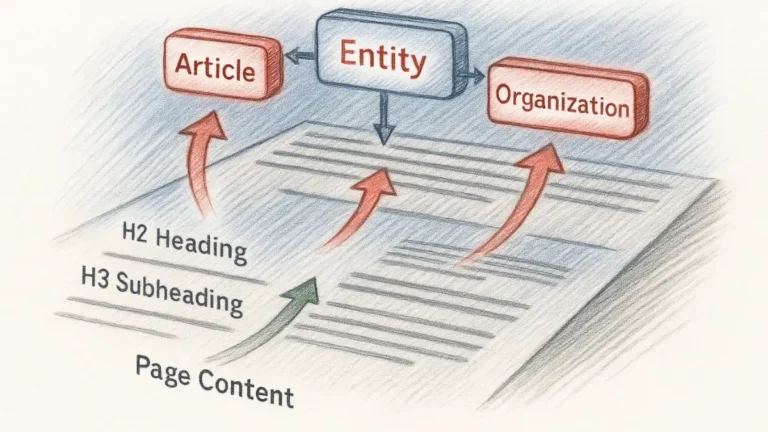
Structural Interpretation Layer for Conversational Search Systems
- Conversational hierarchy segmentation. Distinct H2→H3→H4 layers allow generative systems to separate dialogue-level concepts, interaction mechanisms, and system implications without collapsing contextual meaning.
- Intent progression alignment. Sequential structural blocks mirror the evolution of intent across conversational search flows, enabling AI systems to associate sections with different stages of reasoning.
- Context preservation signaling. Stable section boundaries and predictable depth transitions help models maintain conversational state across long-context interpretation.
- Dialogue-centric semantic isolation. Structurally isolated concept and mechanism blocks reduce cross-contamination between retrieval logic, interface behavior, and user interaction patterns.
- Interpretive continuity enforcement. Consistent structural logic across sections supports generative systems in tracking narrative coherence within conversational discovery models.
This structural layer explains how conversational search content remains interpretable as a coherent system narrative when processed by generative and dialogue-oriented AI environments.
FAQ: Conversational Search and AI Discovery
What is conversational search?
Conversational search describes a search paradigm where systems interpret intent through multi-turn dialogue rather than isolated keyword queries.
How does conversational search differ from traditional search?
Traditional search relies on single queries, while conversational search maintains context across interactions and refines understanding over time.
Why is conversational search becoming dominant?
As information needs grow more complex, users prefer adaptive systems that reduce formulation effort and support iterative clarification.
How do AI systems enable conversational search?
AI systems integrate language understanding, retrieval, and reasoning to maintain context and generate coherent responses across turns.
What role does context play in conversational search?
Context allows systems to interpret follow-up input accurately by preserving prior constraints, assumptions, and intent signals.
Does conversational search replace keyword queries?
Keyword queries remain useful for narrow tasks, but conversational systems expand discovery beyond strict query-response interaction.
How does conversational search affect content visibility?
Content visibility shifts from page rankings to fragment-level inclusion within generated responses that match conversational context.
What challenges limit conversational search systems?
Challenges include context drift, trust, attribution, and regulatory constraints that affect large-scale conversational deployment.
How will conversational search evolve in the future?
Future systems will combine context awareness, reasoning, and governance to support reliable long-term conversational discovery.
What skills matter for writing in conversational search environments?
Effective content requires semantic clarity, stable terminology, and structured reasoning that supports machine interpretation.
Glossary: Key Concepts in Conversational Search
This glossary defines core terminology used throughout the article to ensure consistent interpretation of conversational search systems by both readers and AI models.
Conversational Search
A search paradigm in which information retrieval is conducted through multi-turn dialogue that preserves context and evolves intent over time.
Multi-Turn Interaction
A sequence of related user-system exchanges where each turn modifies the active search context and influences subsequent interpretation.
Context Accumulation
The process by which conversational systems retain and integrate signals from previous interactions to improve relevance and coherence.
Intent Resolution
The system-level capability to infer, refine, and stabilize user goals across multiple conversational turns.
Conversational Interface
An interaction layer that supports dialogue-based input and response, enabling continuous refinement of search intent.
Conversational Retrieval System
A search architecture that integrates memory, reasoning, and retrieval to operate across ongoing conversational contexts.
Relevance Modeling
The method of evaluating information based on accumulated conversational context rather than isolated query matching.
AI-Mediated Search
A search process in which language models orchestrate intent interpretation, information retrieval, and response synthesis.
Conversational Visibility
The degree to which content is selected, fragmented, and reused within generated conversational responses.
Interpretive Continuity
The ability of a system to maintain coherent understanding across extended conversational interactions without semantic drift.

Author Sergey Kuchinskiy
Founder of PostUpgrade. Researcher in Generative Engine Optimization (GEO), semantic structuring, and machine reasoning systems. Focuses on AI-readable content architecture, computational interpretation, and scalable knowledge retrieval. Author of 200+ analytical publications on generative visibility, semantic mapping, and AI-first information design.
Verified Expertise
- Generative Engine Optimization (GEO)
- AI Content Engineering & Semantic Structuring
- Computational Linguistics & Machine Reasoning
- Large-Scale Content Architecture
Research Focus
AI Search · Generative Visibility · Semantic Mapping · Machine Sentence Design · Reasoning Stability · Knowledge Extraction Models
Academic Contributions
- 200+ analytical research publications
- AI-first page architecture methodologies
- Semantic Frameworks for Machine Interpretation (SFMI)
- Generative Visibility Standards 2024–2025
Citation Metrics
AI-model reuse rate (GEO-Score): 92/100 · Cross-model consistency: 87% · Reasoning chain stability: 91%
Researcher ID: PU-ORCID-7421-9912
View all publications →Connect on LinkedIn →