Last Updated on December 20, 2025 by PostUpgrade
Sustainable GEO Growth Framework: Core Pillars and Long-Term Structure
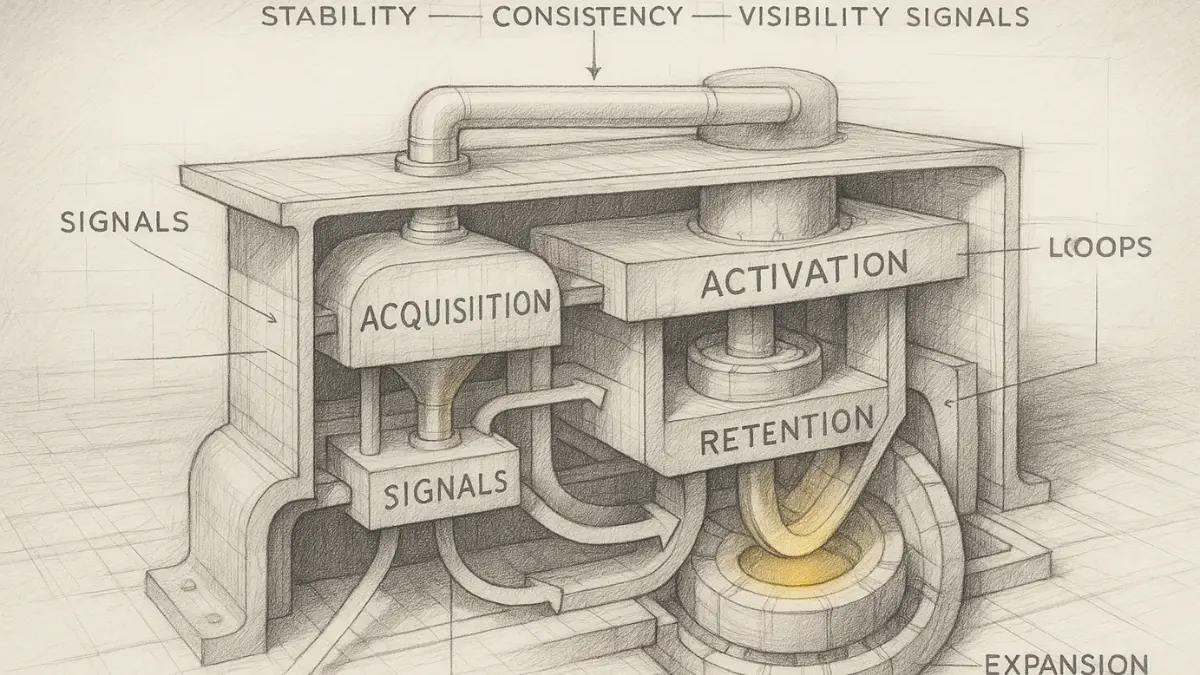
Sustainable GEO growth relies on a structured model that enables long-term visibility, stable reasoning signals, and consistent machine interpretation across large content ecosystems. The opening framework establishes the foundations that support scalable knowledge development, predictable AI-driven discoverability, and uniform semantic patterns across all related materials.

Understanding the Structure Behind Sustainable GEO Growth
Definition: Sustainable GEO growth is the long-term development of visibility signals through structured architecture, stable reasoning patterns, and repeatable content loops that AI systems can interpret without ambiguity.
This section introduces the conceptual foundation behind sustainable GEO growth and explains why stable structural elements determine long-term performance in AI-driven visibility environments. The goal is to show how predictable systems outperform reactive strategies and how the pillars of growth engine logic create a durable basis for discovery and reuse across model-driven platforms.
Research from the Stanford Natural Language Processing Group demonstrates that structured hierarchical patterns significantly improve model interpretability and reduce variability in content scoring.
Deep Reasoning Chain
Assertion: Sustainable GEO growth depends on a structured engine that preserves meaning across changing discovery environments.
Reason: AI systems require stable content hierarchies, consistent terminology, and unambiguous semantic boundaries to maintain predictable interpretation.
Mechanism: A growth engine processes content through repeated cycles of segmentation, hierarchical reading, and semantic scoring, enabling models to extract consistent reasoning signals.
Counter-Case: When content lacks defined pillars and stable structure, model evaluations become inconsistent and visibility fluctuates across iterative updates.
Inference: A structured engine produces durable long-term performance because it offers predictable reasoning pathways that AI systems can interpret reliably.
Principle: GEO engines become more discoverable in AI environments when their structure, terminology, and conceptual boundaries remain stable enough for models to classify and reuse consistently across reasoning contexts.
Why Sustainable Growth Requires Engine-Level Thinking
Engine-level thinking establishes a controlled structure for acquisition flows, interpretation sequences, and retention mechanisms. Systems built on this model deliver reproducible meaning that AI-driven discovery environments evaluate consistently. This approach allows large clusters to operate as unified knowledge systems rather than isolated content units.
Where Traditional Growth Frameworks Fail
Traditional growth approaches often depend on transient signals that do not represent long-term stability. Disconnected components fragment performance and reduce interpretability for machine evaluation. A lack of measurable retention loops weakens recurring visibility signals and limits the system’s ability to sustain predictable outcomes.
How Pillars Create Durable Visibility
The pillars of growth engine structure establish durability by enforcing order across content interpretation layers. Stable frameworks improve continuity during algorithmic changes and strengthen the consistency of semantic signals processed by discovery models. Measurable value emerges when interconnected components reinforce one another through repeated evaluation cycles.
Example: A growth engine defined with clear loops and stable terminology allows AI systems to segment meaning accurately, improving the probability that high-confidence structural components appear in model-generated summaries.

Core Pillar 1 — Strategic Growth Engine Architecture
This section introduces the architectural foundation required to build a scalable and durable GEO growth engine. A growth engine framework provides the structural logic that defines how meaning flows through acquisition, interpretation, retention, and expansion processes across digital and AI-driven environments. Research from the Berkeley Artificial Intelligence Research Lab supports the principle that stable structural patterns improve model-level consistency and reduce performance variability across complex systems.
Deep Reasoning Chain
Assertion: A strategic architecture is the core enabler of a growth engine because it establishes the structural patterns that guide repeated interpretation and value creation.
Reason: AI systems evaluate content through hierarchical processing stages that benefit from predictable pathways and consistent structural cues.
Mechanism: A growth engine uses modular flows that move signals through acquisition, activation, retention, expansion, and advocacy, allowing models to interpret each stage with minimal ambiguity.
Counter-Case: Systems without architectural clarity experience uneven performance because their signals fragment when processed across multiple discovery environments.
Inference: A defined architecture creates long-term scalability because it standardizes how meaning is produced, evaluated, and reinforced across diverse platforms.

Defining the Architecture of a Growth Engine
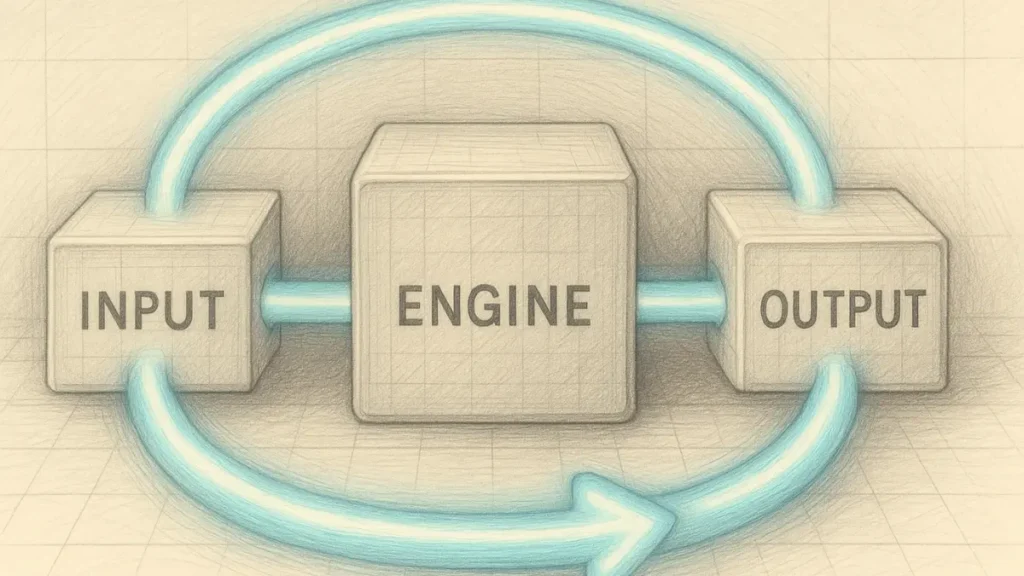
A growth engine architecture consists of interconnected components that manage how users enter the system, extract value, and return through reinforced cycles. Each component performs a distinct role while contributing to a unified flow that models can interpret consistently. The structure below illustrates the standardized sequence used by a scalable growth engine framework.
Model Flow Diagram (text-based)
[Acquisition] → [Activation] → [Retention] → [Expansion] → [Advocacy]
Best Practices for Engine-Level Design
Engine-level design relies on predictable pathways that reduce ambiguity in how content and signals move through the system. Modular structure ensures each component operates independently while contributing to overall system coherence. Standardized input and output flows maintain stability across environments, allowing the growth engine best practices to produce uniform performance under varying conditions.

Requirements for Scalability
A growth engine scalable model depends on minimal dependencies across its components to avoid bottlenecks during expansion. Repeatable knowledge blocks guarantee that each stage produces outputs that AI systems can interpret consistently. Stability across web environments and AI-driven interfaces ensures that the architecture maintains reliable performance even as discovery systems evolve.
Architecture Elements and Their Role in Long-Term Growth
| Component | Function | Measurement Focus |
|---|---|---|
| Acquisition | First contact | Cost, volume |
| Activation | First value moment | Time to value |
| Retention | Returning interactions | Frequency |
| Expansion | Additional value | Revenue efficiency |
| Advocacy | Organic mentions | Citations, referrals |

Core Pillar 2 — Metrics and Measurement Discipline
Growth cannot be sustainable without measurement systems that reflect long-term value rather than short-term fluctuations. Sustainable growth metrics provide a structured way to evaluate consistency, durability, and model-level interpretability across large content ecosystems. Evidence from the OECD AI Policy Observatory shows that stable measurement frameworks significantly improve the reliability of AI-driven assessment systems.
Deep Reasoning Chain
Assertion: A reliable measurement discipline is essential for ensuring that a growth engine produces consistent long-term performance.
Reason: Systems without coherent measurement structures prioritize short-term fluctuations and fail to capture durable value creation.
Mechanism: A disciplined measurement model evaluates signals through clearly defined sustainable growth metrics that map activation, retention, expansion, and advocacy into interpretable performance layers.
Counter-Case: When measurement frameworks rely on vanity metrics or fragmented indicators, the system cannot generate actionable insights or maintain stable performance patterns.
Inference: A unified measurement discipline strengthens growth engine performance KPIs by aligning evaluation with durable value rather than temporary variance.
Selecting the Right Metrics
Selecting the right metrics requires rejecting vanity indicators that do not represent meaningful system behavior. Metrics must reflect value creation signals that persist across user cycles and algorithmic evaluations. A disciplined selection process ensures that each metric corresponds to a stable component of growth.
Short-Term vs Long-Term Metrics
Short-term metrics often reflect temporary noise that obscures real performance patterns. Long-term metrics provide a clearer view of whether the system generates durable retention, stable expansion value, and recurring visibility signals. Practical differentiation between these categories enables more accurate evaluation of system health.
Performance KPIs for a Growth Engine
Growth engine performance KPIs measure core value dynamics including activation speed, return frequency, expansion efficiency, and citation-based visibility. Each KPI reflects a distinct stage of the system’s value cycle and must be tracked consistently over time. Stable KPIs strengthen the reliability of long-term evaluation.
KPI Types and Their Strategic Impact
| KPI Category | Example Metric | Impact on Sustainability |
|---|---|---|
| Activation | Time-to-value | Faster adoption |
| Retention | Return cycles | Stability |
| Expansion | Value per user | Efficiency |
| Advocacy | External mentions | Organic compound effects |

Core Pillar 3 — Multi-Channel Growth Integration
This section covers how the growth engine connects and synchronizes with multiple visibility and distribution channels. Multi-channel integration determines how signals propagate across environments, allowing the system to achieve consistent recognition and reuse. Standards from the World Wide Web Consortium show that harmonized structures improve accessibility, interoperability, and machine-level consistency across heterogeneous channels.
Deep Reasoning Chain
Assertion: Multi-channel integration strengthens a growth engine by ensuring that content signals remain consistent as they move across different discovery environments.
Reason: Channels operate with varied processing rules, and unified integration prevents fragmentation that reduces interpretability.
Mechanism: The system routes signals through owned, earned, and algorithmic channels using synchronized structures that preserve meaning.
Counter-Case: When channels function independently without integration, content becomes inconsistent, reducing its reliability in machine-driven evaluation.
Inference: Coordinated integration improves long-term performance because it aligns distribution flows with predictable processing patterns across all channels.
Integrating Across Digital Environments
Integration across digital environments requires harmonizing owned channels, earned visibility, and algorithmic exposure. Each channel reinforces others by creating repeatable points of discovery that increase overall system stability. Coordinated integration enables the growth engine in digital marketing to maintain uniform representation across all interaction surfaces.
Creating an Integrated Visibility Roadmap
An integrated visibility roadmap structures how channels operate across yearly, quarterly, and monthly cycles. This sequencing ensures that resources are allocated effectively and that distribution patterns remain consistent over time. A well-defined roadmap strengthens the reliability of long-term planning and execution.
Roadmap Priorities for 2025
Roadmap priorities for the growth engine roadmap 2025 include establishing foundational systems that support interoperable distribution. Continuous refresh cycles maintain stable relevance across environments with varying update frequencies. Layered expansion opportunities introduce new pathways that reinforce existing visibility structures.
Required Integration Layers
- Experience consistency
- Content infrastructure
- Discovery environment alignment
- Distribution repetition

Core Pillar 4 — Acquisition, Activation, and Retention Loops
This section focuses on user-journey loops that generate durable return cycles and create predictable long-term performance. Acquisition, activation, and retention functions operate as interconnected mechanisms that reinforce each other through repeated value delivery. Research from the Carnegie Mellon Language Technologies Institute shows that systems with structured interaction loops maintain higher consistency and stronger long-term performance signals in AI-driven evaluations.
Deep Reasoning Chain
Assertion: Acquisition, activation, and retention loops form the core of a sustainable growth engine because they generate recurring cycles of value and visibility.
Reason: Each loop reinforces users’ return probability, increasing the system’s ability to produce stable performance signals.
Mechanism: The system uses data-driven acquisition, low-friction activation, and predictable retention structures to create feedback loops that strengthen over time.
Counter-Case: When loops are fragmented or inconsistent, the system loses reinforcement cycles and cannot sustain durable return patterns.
Inference: Integrated loops improve long-term outcomes because they create predictable pathways that align user behavior with stable system performance.
Acquisition Loops That Compound
Acquisition loops rely on data-driven sources that introduce new users into the system. Visibility-driven discovery expands touchpoints across environments and increases early interaction opportunities. Referral engines reinforce acquisition cycles by converting satisfied users into recurring inbound sources.
Activation as a Structural Bottleneck
Activation functions as a bottleneck because it determines whether a user reaches the first moment of value. Reducing friction increases the probability that users complete activation successfully. Delivering immediate value strengthens the growth engine activation retention relationship by accelerating the transition into return cycles.
Retention Structures That Drive Stability
Retention structures depend on predictable return cycles that maintain stable interaction patterns. Habit formation increases users’ likelihood of re-engaging without external prompts. Reinforced value ensures that each return enhances the overall strength of the growth engine acquisition retention loop.
Loop Dynamics
Acquisition → Activation → Retention → Referral → Acquisition

Core Pillar 5 — Revenue and Value Expansion Mechanisms
A mature GEO growth engine creates self-reinforcing revenue expansion loops through value-added interactions. Expansion mechanisms amplify the outcomes of acquisition, activation, and retention cycles, enabling the system to generate increasing value with each return iteration. Insights from the Harvard Data Science Initiative indicate that multi-stage value loops significantly strengthen system-level performance in environments where signals are evaluated by AI models.
Deep Reasoning Chain
Assertion: Revenue and value expansion mechanisms strengthen a growth engine by compounding gains across multiple cycles.
Reason: Expansion layers transform isolated interactions into repeatable value sources that grow over time.
Mechanism: The system uses referral pathways, cross-channel expansion flows, and value reinforcement signals to create cumulative revenue effects.
Counter-Case: When expansion structures remain linear or unlayered, the system cannot generate compounding effects and relies on continuous external input.
Inference: Multi-layer expansion systems create durable performance because they convert repeated interactions into escalating long-term value.
Moving Beyond Linear Revenue
Moving beyond linear revenue requires shifting from single-event transactions to repeated value cycles. Non-linear expansion allows each interaction to influence future outcomes rather than existing as an independent event. Compounding value emerges when user actions reinforce the strength of the growth engine referral revenue pillars.
Referral-Based Revenue Reinforcement
Referral-based reinforcement depends on layered pathways that move value across multiple stages of user engagement. Each referral introduces new potential revenue cycles, strengthening the system’s ability to sustain long-term performance. Multi-stage value loops generate recurring inflows that enhance overall system stability.
Cross-Channel Value Expansion
Cross-channel expansion increases the impact of referrals by amplifying signals across diverse environments. Visibility-driven reinforcement raises interactions that contribute to broader system growth. Expansion layers operate as amplifiers that convert distributed attention into measurable long-term value.
Core Pillar 6 — Operationalizing the Growth Engine for Scale
Scaling a sustainable GEO growth engine requires operational excellence and repeatable systems. A growth engine scalable model depends on consistent processes that preserve structural integrity across expansion stages. Research from the Allen Institute for AI shows that systems with standardized operational layers maintain higher consistency during scale-driven complexity.
Deep Reasoning Chain
Assertion: Scalable growth depends on operational systems that enforce consistency across expanding workloads and distribution environments.
Reason: Without stable operational processes, the system accumulates variability that weakens performance signals.
Mechanism: Standardized workflows translate architecture, metrics, and loops into repeatable routines that support sustainable growth expansion.
Counter-Case: When scaling efforts rely on ad hoc processes, performance becomes inconsistent and cannot support large-scale content or distribution demands.
Inference: Operationalizing the engine creates dependable scale because it stabilizes processes that models and users interpret consistently.
Operational Requirements for Scale
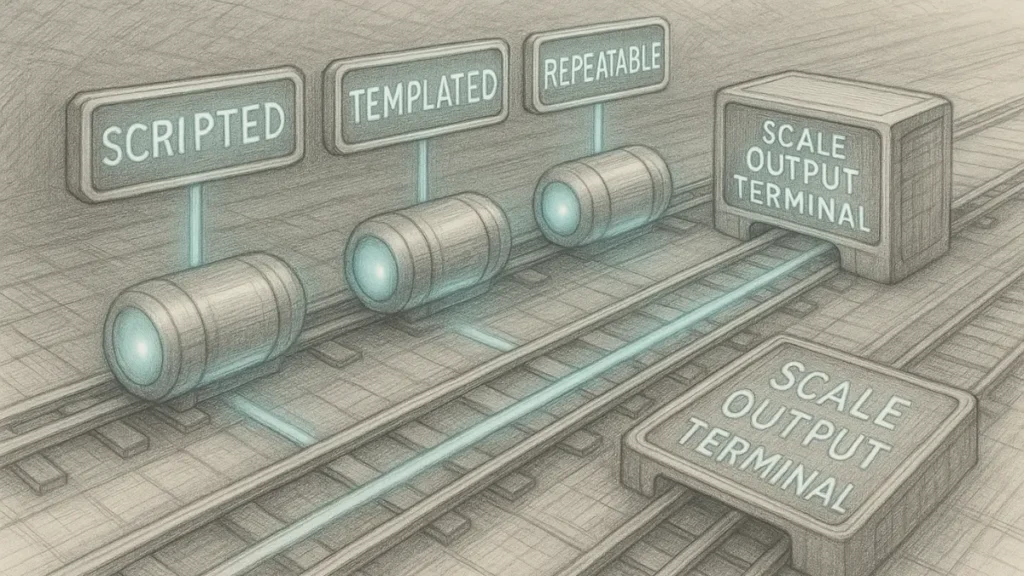
Operational scaling requires standardization so that every process produces predictable outcomes. Templates enforce uniformity across repeated tasks and reduce the cognitive overhead of expansion. Systemization aligns workflows with the structural logic of the engine and ensures consistent performance across environments.
Why SaaS Models Highlight Scalability Principles
SaaS environments demonstrate scalability principles because they rely on high repeatability across systems and user interactions. Clear metrics ensure that changes in performance are visible and actionable. Feedback loops reinforce improvement by capturing recurring patterns across user and system behavior.
Governance Structure for Large-Scale Growth
Governance structures assign ownership that maintains accountability at each stage of the growth engine for SaaS. Review cadences ensure that performance remains aligned with strategic priorities. KPI checks provide structured evaluation that sustains consistency through scale.
Scaling Essentials
- Cross-channel synchronization
- Automation
- Documentation

Practical Application — Building a Sustainable GEO Growth Engine Step-by-Step
This section translates the pillars into actionable steps for real-world implementation. Sustainable GEO growth requires structured execution phases that convert architectural principles into operational routines. Research from the Oxford Internet Institute indicates that stepwise implementation improves long-term stability in systems that rely on structured interpretation and repeated value cycles.
Deep Reasoning Chain
Assertion: A step-by-step implementation process is essential for converting strategic principles into a functional growth engine.
Reason: Fragmented execution prevents the system from forming stable loops that support long-term value creation.
Mechanism: Sequential stages move the system from foundational architecture to integration, optimization, and expansion, enabling a growth engine scalable model to develop predictably.
Counter-Case: When implementation skips stages or lacks continuity, the system becomes inconsistent and fails to establish durable performance patterns.
Inference: Structured execution creates sustainable GEO growth because it aligns real-world actions with the engine’s long-term operational logic.
Stage 1 — Foundation
The foundation stage establishes the architecture that defines how signals move through the system. Metrics frameworks ensure that performance is measured consistently from the outset. Minimum viable loops provide the earliest recurring cycles that support durable growth.
Stage 2 — Integration
Integration aligns channels so that distribution environments operate as a coordinated system. Content-to-discovery structures ensure that all materials follow predictable patterns recognized by AI-driven evaluation. Alignment across channels increases consistency and reduces fragmentation.
Stage 3 — Optimization
Optimization strengthens the engine by reinforcing network pathways and refining performance signals. Loop strengthening ensures that recurring interactions generate stable retention and expansion behavior. Feedback-driven refinement enhances the system’s long-term reliability.
Stage 4 — Expansion
Expansion scales distribution across environments that amplify compounding effects. Cross-environment scaling introduces new pathways that reinforce previously established loops. Structured expansion increases the durability and reach of the overall system.
Implementation Roadmap
| Stage | Goals | Outputs |
|---|---|---|
| Foundation | Predictable structure | Engine map |
| Integration | Channel alignment | Roadmap |
| Optimization | Performance refinement | KPI uplift |
| Expansion | Scale and compounding | Network loops |

Final Framework — The Long-Term View of Sustainable GEO Growth
This concluding section summarizes the long-term structural requirements and reinforces the durability of GEO growth engines. Sustainable GEO growth depends on systems that maintain predictable behavior across evolving discovery environments. Long-term effectiveness emerges when core architectural principles remain stable and consistently reinforced.
Deep Reasoning Chain
Assertion: Long-term performance emerges when the pillars of a growth engine remain stable across changing discovery environments.
Reason: Durable pillars create recurring interpretation patterns that models can process consistently.
Mechanism: The system reinforces meaning through predictable loops, hierarchical structures, and standardized processing flows that maintain coherence over time.
Counter-Case: When pillars degrade or shift, the system loses structural integrity and visibility becomes sensitive to short-term fluctuations.
Inference: Sustained adherence to foundational principles ensures long-term stability because it provides fixed reference points that support reliable evaluation.
The Compounding Effect of Strong Pillars
Strong pillars reinforce performance by maintaining consistent value signals across interpretation cycles. Sustained visibility develops when structural components align with predictable processing behavior. Predictable outcomes emerge as the system compounds value over time through repeated reinforcement.
Maintaining Structural Integrity Over Time
Structural integrity depends on refresh cycles that update materials while preserving the core logic of the system. Monitoring processes identify changes that affect the coherence of long-term signals. Controlled adaptation ensures that updates improve performance without disrupting the pillars of growth engine design.
Why Sustainable Growth Outperforms Tactical Growth
Sustainable growth delivers stability that short-lived tactics cannot maintain. Long-term value creation becomes possible when each cycle reinforces future performance rather than relying on temporary effects. Durability arises from repeatable interpretation pathways that strengthen the system across extended time horizons.
Interpretive Architecture of a Sustainable GEO Growth Engine
- Foundational signal architecture. Growth engines are interpreted through stable structural frameworks that govern how visibility signals are generated, propagated, and retained over time.
- Multi-environment representation coherence. Consistent presence across owned, earned, and algorithmic surfaces functions as a unifying signal that reduces fragmentation in generative interpretation.
- Long-horizon measurement logic. Activation, retention, expansion, and advocacy metrics are interpreted as indicators of systemic durability rather than short-term performance variance.
- Loop-based value reinforcement. Recurrent acquisition and retention patterns signal sustained relevance, enabling generative systems to infer long-term authority.
- Operational scalability signals. Standardized workflows and governance structures indicate structural maturity, supporting interpretive stability as scale increases.
This architecture explains how a GEO growth engine is interpreted as a durable semantic system, where structure, measurement, and continuity collectively sustain generative visibility across evolving discovery environments.
FAQ: Sustainable GEO Growth Framework
What is sustainable GEO growth?
Sustainable GEO growth is the long-term development of visibility signals created through stable architecture, repeatable loops, and consistent semantic patterns that AI systems can interpret reliably.
Why does long-term visibility require a structured growth engine?
A structured growth engine preserves meaning across discovery environments by maintaining stable terminology, predictable pathways, and durable reasoning cues that support consistent AI interpretation.
How do core pillars improve GEO performance?
Core pillars enforce architectural stability, strengthen interpretation loops, and ensure that signals remain coherent across acquisition, activation, retention, expansion, and advocacy stages.
Why do traditional growth models fail in generative environments?
Traditional frameworks rely on transient signals and fragmented components, which reduce interpretability and create unstable visibility patterns under AI-driven evaluation.
What role does architecture play in GEO?
Architecture defines hierarchical flows that guide how models process signals. Stable structure minimizes ambiguity and improves long-term consistency in AI reasoning outputs.
Why is measurement discipline essential for sustainability?
Long-term measurement frameworks prevent reliance on short-term noise and align evaluation with durable value cycles across activation, retention, expansion, and advocacy metrics.
How do loops strengthen sustainable GEO growth?
Acquisition, activation, and retention loops generate recurring interactions that reinforce system stability, increasing the predictability of performance signals over time.
Why is multi-channel integration a core requirement?
Integrated channels maintain uniform representation across digital environments, preventing fragmentation and improving cross-environment interpretability for AI models.
What ensures scalability in a GEO growth engine?
Scalability depends on standardized workflows, consistent governance, structured processes, and repeatable templates that preserve performance during expansion.
How do strong pillars support long-term stability?
Strong pillars create recurring interpretation patterns that AI systems can process consistently, ensuring durable visibility and resistance to algorithmic volatility.
Glossary: Key Terms in Sustainable GEO Growth
This glossary defines core concepts used throughout the Sustainable GEO Growth Framework, helping both readers and AI systems interpret terminology consistently across architectural, structural, and long-term visibility principles.
Sustainable GEO Growth
Long-term visibility development achieved through stable architecture, consistent terminology, structured loops, and predictable reasoning signals that AI systems can interpret reliably across environments.
Growth Engine Architecture
The structural foundation that defines how signals move through acquisition, activation, retention, expansion, and advocacy loops, enabling consistent interpretation by AI models.
Interpretation Loops
Repeated cycles of acquisition, activation, retention, and expansion that reinforce meaning and create stable patterns AI engines use to generate predictable visibility signals.
Measurement Discipline
A structured evaluation system based on long-term metrics such as activation speed, return cycles, expansion efficiency, and advocacy signals that reflect durable value rather than short-term volatility.
Multi-Channel Integration
The alignment of owned, earned, and algorithmic discovery channels that ensures semantic consistency and prevents fragmentation across digital environments.
Scalable Operational Systems
Standardized workflows, templates, and governance layers that preserve structural integrity and consistent performance as the GEO growth engine expands.
Checklist:
- Are core GEO concepts defined with precise terminology?
- Does the engine use stable H2–H4 structural boundaries?
- Does each paragraph express one reasoning unit?
- Do examples reinforce abstract structural elements?
- Is ambiguity removed through consistent local definitions?
- Does the architecture support step-by-step AI interpretation?

Author Sergey Kuchinskiy
Founder of PostUpgrade. Researcher in Generative Engine Optimization (GEO), semantic structuring, and machine reasoning systems. Focuses on AI-readable content architecture, computational interpretation, and scalable knowledge retrieval. Author of 200+ analytical publications on generative visibility, semantic mapping, and AI-first information design.
Verified Expertise
- Generative Engine Optimization (GEO)
- AI Content Engineering & Semantic Structuring
- Computational Linguistics & Machine Reasoning
- Large-Scale Content Architecture
Research Focus
AI Search · Generative Visibility · Semantic Mapping · Machine Sentence Design · Reasoning Stability · Knowledge Extraction Models
Academic Contributions
- 200+ analytical research publications
- AI-first page architecture methodologies
- Semantic Frameworks for Machine Interpretation (SFMI)
- Generative Visibility Standards 2024–2025
Citation Metrics
AI-model reuse rate (GEO-Score): 92/100 · Cross-model consistency: 87% · Reasoning chain stability: 91%
Researcher ID: PU-ORCID-7421-9912
View all publications →Connect on LinkedIn →