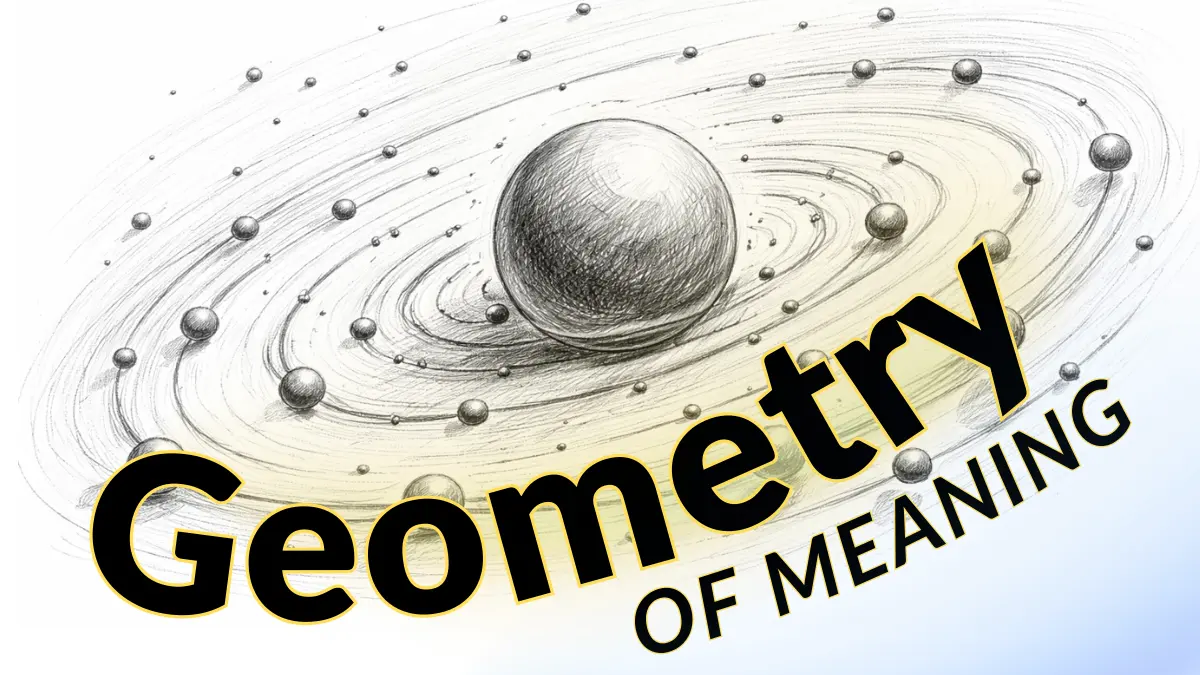
Last Updated on April 21, 2026 by PostUpgrade
The Geometry of Meaning: Spatial Logic for AI
AI does not read your definitions—it maps your concepts into coordinates and only understands what forms stable semantic clusters in space.
TL;DR: The article explains that AI interprets meaning through spatial relationships between concepts, not isolated text. If content is not structured into clear semantic units, models cannot reliably extract, cluster, or reuse it, reducing visibility and interpretation accuracy. By aligning content with semantic geometry (clear structure, proximity, hierarchy), AI improves extraction, reuse, and generates more stable outputs.
If your content does not form clear semantic clusters, AI will fragment it—and users will leave before understanding it.
Artificial intelligence increasingly interprets language through structured representations where concepts occupy positions inside organized semantic environments. The framework of meaning geometry describes how AI systems model relationships between ideas using distance, coordinates, and semantic proximity within computational spaces. Instead of treating words as isolated symbols, modern language models represent them as structured elements positioned within a measurable conceptual landscape.
Research in language modeling demonstrates that meaning emerges from relationships between concepts rather than from individual definitions alone. Consequently, large language models organize semantic knowledge inside multidimensional vector spaces where proximity reflects contextual similarity and relational logic. Within this framework, meaning geometry allows AI systems to evaluate contextual alignment, detect conceptual clusters, and identify patterns across large information environments.
Modern machine learning architectures rely on spatial semantic modeling to interpret language at scale. Systems developed by organizations such as Stanford Natural Language Processing Group, MIT CSAIL, and DeepMind Research increasingly rely on embedding-based representations that position words, entities, and ideas inside mathematical coordinate systems. These structures allow AI models to calculate similarity, track contextual shifts, and perform reasoning tasks across billions of semantic relationships.
At the same time, spatial representations enable AI systems to construct internal knowledge graphs that link concepts across domains. As a result, meaning geometry functions as a structural logic layer that connects language interpretation, contextual reasoning, and information retrieval. This spatial logic supports generative AI systems that must interpret complex informational environments, summarize knowledge, and synthesize structured responses.
Understanding how semantic space operates is therefore essential for both AI development and content architecture. When meaning is organized through spatial relationships, structured writing becomes easier for machines to interpret and reuse. Consequently, the principles behind meaning geometry influence not only language models but also the design of AI-readable content systems.
This article explains the structural foundations that define semantic space, the mechanisms used by AI systems to compute conceptual relationships, and the architectural implications for designing information environments that align with machine interpretation. By examining the geometry of meaning, it becomes possible to understand how artificial intelligence transforms language into navigable knowledge structures.
Conceptual Foundations of Meaning Geometry
Meaning geometry defines a framework where semantic information becomes spatially organized inside computational environments. The concept of meaning geometry explains how artificial intelligence systems evaluate relationships between ideas by measuring distance and proximity within structured semantic spaces. Research in representation learning increasingly shows that language models interpret conceptual relationships through spatial arrangements rather than isolated symbolic rules, as demonstrated in studies published by MIT CSAIL.
Meaning geometry is a computational representation of meaning where concepts occupy positions inside a structured semantic space defined by measurable distances and relational coordinates. Within this model, words, entities, and ideas function as points inside a multidimensional environment where proximity reflects contextual similarity and relational relevance. Consequently, AI systems analyze language by calculating spatial relationships between concepts instead of relying only on dictionary-style definitions.
This spatial interpretation of meaning also influences how information should be organized on individual pages. A practical architectural perspective appears in this guide to AI page structure optimization, which explains how hierarchical layout, semantic boundaries, and structured sections help generative systems interpret relationships between ideas inside complex documents.
Definition: Meaning geometry is a computational model where concepts occupy coordinates inside semantic space, allowing AI systems to interpret relationships through measurable distance, proximity, and contextual positioning.
Claim: Meaning geometry enables AI systems to represent conceptual relationships as measurable spatial distances.
Rationale: Language models rely on structured semantic environments where related concepts appear close to each other.
Mechanism: Vector representations map words or concepts into multidimensional coordinates that encode similarity and contextual alignment.
Counterargument: Symbolic knowledge systems without spatial representations can model conceptual relations but scale poorly when information environments become large and dynamic.
Conclusion: Spatial semantic modeling increases interpretability and scalability in modern AI language systems.
Semantic Geometry in Computational Linguistics
Computational linguistics increasingly relies on spatial representations of language where semantic geometry defines how concepts interact inside machine learning architectures. In this framework, the geometry of meaning describes the mathematical relationships that connect words, phrases, and entities within vector-based semantic environments. These relationships allow AI systems to detect similarity, infer context, and organize conceptual structures across large corpora.
Modern transformer models implement semantic geometry through embedding mechanisms that convert textual tokens into numerical vectors. These vectors occupy positions within high-dimensional spaces where semantic similarity corresponds to measurable distance between coordinates. Research conducted by the Stanford Natural Language Processing Group on contextual embeddings demonstrated that models such as BERT generate stable semantic structures in which related concepts cluster within shared spatial regions.
This means that language models do not simply store meanings individually. Instead, they organize concepts as positions inside a structured system where proximity indicates conceptual relevance. As a result, computational linguistics increasingly interprets language through spatial relationships rather than isolated definitions.
The Structure of Semantic Spaces
Semantic interpretation in AI depends on the internal organization of conceptual environments known as semantic spaces. A semantic spatial structure defines how concepts are distributed across a multidimensional system where each dimension captures a specific contextual or linguistic feature. Within this environment, meaning topology describes how conceptual regions connect and how semantic neighborhoods emerge through repeated contextual associations.
Large language models construct these spaces during training by analyzing statistical patterns in massive text datasets. Each token becomes associated with a coordinate vector, and groups of related concepts form clusters within the semantic environment. Consequently, the overall architecture of semantic spaces determines how AI systems detect conceptual similarity, track contextual transitions, and build internal knowledge structures.
Topology of Meaning
Semantic topology in text refers to the structural arrangement of conceptual regions within meaning space. Concepts that frequently appear together in similar contexts develop strong spatial proximity, which forms clusters representing thematic domains or knowledge areas. These clusters define the topological structure of semantic environments and influence how AI systems interpret relationships between ideas.
Topological analysis allows AI models to identify boundaries between conceptual regions and detect patterns that indicate semantic transitions. When clusters overlap or connect through shared contextual features, models can infer relationships between different knowledge domains. This structural organization improves the ability of AI systems to navigate complex information environments.
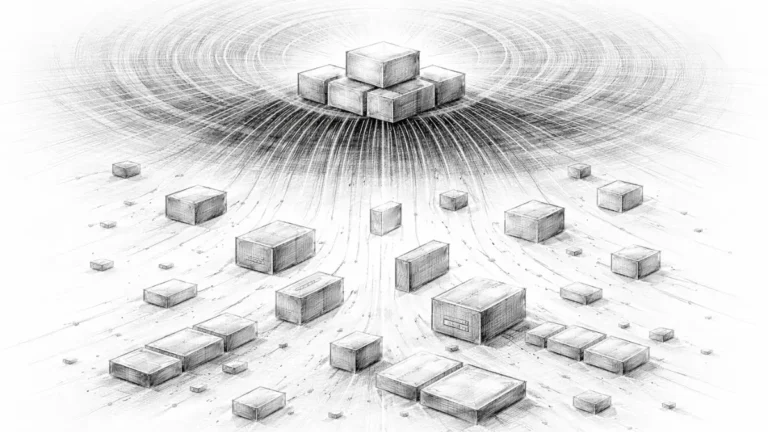
In practical terms, semantic topology determines how language models group ideas together. Concepts that belong to the same conceptual domain appear close to each other, while unrelated ideas remain separated by larger distances inside the semantic space. As a result, topological structures provide the foundation that allows AI systems to organize knowledge efficiently and maintain stable conceptual interpretation.
Modeling Meaning as Spatial Coordinates
Artificial intelligence systems interpret language through coordinate-based structures that allow concepts to occupy measurable positions inside semantic environments. Semantic spatial modeling provides a framework where AI systems evaluate similarity and contextual relationships using geometric proximity rather than symbolic comparison. Research in modern natural language processing demonstrates that these coordinate systems form the mathematical backbone of language models, as described in studies conducted by the Vector Institute.
Semantic coordinate systems represent words, phrases, or entities as vectors positioned inside multidimensional mathematical spaces. Each dimension captures a contextual property learned during model training, while vector distance indicates conceptual similarity between elements. Consequently, language models analyze meaning by calculating spatial relationships between vectors instead of relying solely on rule-based linguistic definitions.
Claim: Spatial coordinate models enable scalable representation of meaning in AI systems.
Rationale: Concept relationships become measurable through distance calculations that quantify similarity and contextual relevance.
Mechanism: Embedding algorithms convert textual tokens into numerical vectors and position them within high-dimensional semantic spaces.
Counterargument: Some contextual relationships require additional symbolic reasoning layers because spatial models alone may not capture complex logical structures.
Conclusion: Coordinate-based representations remain the dominant method for scalable semantic interpretation across modern language models.
Vector Space Semantics
Vector space semantics defines a computational framework where meaning emerges from the spatial distribution of vectors within high-dimensional environments. Semantic vector space logic explains how AI systems detect conceptual relationships through mathematical operations applied to vector coordinates. In practice, meaning dimensional mapping allows language models to transform textual information into structured numerical representations that preserve contextual relationships between concepts.
Modern NLP architectures train embedding models on extremely large corpora where statistical patterns shape the position of vectors in semantic space. Research from the Vector Institute for Artificial Intelligence demonstrated that embedding models such as Word2Vec, GloVe, and transformer-based architectures create stable semantic regions where related concepts cluster together. These clusters form structured landscapes that enable machines to infer meaning, detect analogies, and maintain contextual continuity.
In practical terms, vector semantics allows AI systems to measure conceptual similarity through mathematical distance. Concepts that frequently appear in similar linguistic environments become positioned close together in semantic space, while unrelated concepts remain distant. As a result, vector space modeling provides the structural mechanism through which machines interpret language patterns.
Concept Positioning Systems
Concept positioning systems describe how AI models organize semantic elements within coordinate environments that preserve contextual relationships. A concept positioning system determines how words, entities, and ideas are mapped into vector spaces where semantic coordinate mapping defines their relative positions. These systems enable machines to construct structured knowledge environments that support reasoning, clustering, and similarity detection.
Embedding models differ in dimensional complexity and representational capacity depending on the architecture and training objectives. For example, early embedding models used relatively small vector dimensions, while modern transformer architectures operate within significantly larger semantic coordinate spaces that capture more contextual nuance.
| Model Type | Dimensionality | Purpose |
|---|---|---|
| Word2Vec | 300 | word similarity |
| BERT embeddings | 768 | contextual meaning |
| GPT embeddings | 1536+ | semantic reasoning |
Higher dimensional vector spaces allow models to encode increasingly complex semantic relationships. As models scale, they capture subtle contextual variations that improve interpretation accuracy across diverse language tasks.
In practical terms, concept positioning systems function as internal maps that allow AI models to navigate semantic environments. Each concept receives a coordinate position that reflects its contextual relationships within the training data. Vector spaces therefore provide measurable representations of conceptual relationships that enable scalable language interpretation.
Distance and Proximity in Semantic Structures
Semantic interpretation inside artificial intelligence relies heavily on measurable spatial relationships between concepts. Concept distance modeling allows AI systems to determine how closely ideas relate by calculating distances between vectors within semantic environments. Studies on representation learning published through the Allen Institute for Artificial Intelligence demonstrate that distance-based reasoning enables machines to detect contextual alignment across extremely large language datasets.
Semantic distance measures how similar two concepts are based on their positions inside embedding space. When vectors appear close together in this space, the model interprets the corresponding concepts as semantically related. Conversely, when vectors are far apart, the model interprets the concepts as belonging to different conceptual domains.
Claim: Concept distance determines semantic similarity in AI language models.
Rationale: Concepts that frequently appear in similar contexts tend to occupy nearby coordinates within semantic environments.
Mechanism: Distance functions such as cosine similarity or Euclidean distance evaluate the spatial relationship between vectors that represent concepts.
Counterargument: Contextual meaning may shift across different linguistic environments, which can dynamically modify the relative positions of vectors.
Conclusion: Distance metrics remain the primary method through which language models evaluate conceptual similarity at scale.
Semantic Proximity Models
Meaning proximity modeling describes how AI systems estimate the strength of conceptual relationships using spatial distance inside semantic environments. A semantic neighborhood structure emerges when clusters of vectors represent groups of concepts that frequently occur in similar contexts. Consequently, proximity becomes an operational signal that allows language models to infer semantic similarity without explicit symbolic rules.
Large language models rely on these proximity structures to interpret context and generate coherent responses. For example, if the vectors representing “planet,” “orbit,” and “gravity” appear within the same semantic region, the model interprets them as conceptually related elements within a shared knowledge domain. As a result, proximity patterns become essential signals for semantic interpretation and contextual reasoning.
Proximity models therefore allow AI systems to navigate semantic spaces efficiently. Instead of evaluating individual definitions, the model examines the relative positions of concepts within a structured environment. This spatial logic enables machines to interpret relationships between ideas across large datasets with consistent reliability.
Meaning Clustering
Meaning clustering logic explains how AI systems group semantically related vectors into conceptual regions inside embedding space. Clusters emerge when repeated contextual patterns cause certain concepts to appear close to each other across training data. Over time, these clusters form stable knowledge regions that represent thematic domains within semantic space.
Clustering algorithms analyze vector distributions and detect dense areas where conceptual proximity remains consistent. These regions often correspond to subject areas such as science, economics, or technology. As a result, clustering provides a structural mechanism through which language models organize knowledge internally.
- clustering identifies semantic groups
- clusters reveal conceptual domains
- clusters stabilize AI interpretation
Cluster formation supports large-scale semantic organization because it transforms raw textual information into structured conceptual environments where AI systems can navigate relationships efficiently.
Architecture of Meaning Spaces in AI Systems
Artificial intelligence systems rely on structured environments where conceptual relationships remain stable across large datasets. Meaning space architecture describes how semantic environments are organized so that concepts interact within a coherent spatial framework. Research on representation learning conducted by MIT CSAIL demonstrates that structured semantic architectures allow models to maintain consistent interpretation even when processing billions of contextual relationships.
Meaning space architecture refers to the structural design of semantic environments where concepts interact and maintain relational coherence. Within these environments, vectors representing ideas are organized through layered structures that allow AI models to detect clusters, conceptual hierarchies, and contextual transitions. Consequently, the architecture of semantic space determines how knowledge expands, connects, and evolves inside machine learning systems.
Claim: Meaning space architecture determines the scalability of AI reasoning systems.
Rationale: Structured semantic environments prevent conceptual drift and maintain interpretability when models process large datasets.
Mechanism: Hierarchical embedding layers organize vectors into clusters and sub-clusters that represent conceptual domains and subdomains.
Counterargument: Flat vector spaces can still perform effectively in narrow language tasks where contextual complexity remains limited.
Conclusion: Hierarchical semantic architecture increases reasoning depth and improves the stability of conceptual interpretation.
Principle: AI language models interpret conceptual relationships more reliably when semantic environments maintain stable spatial structures where related concepts consistently appear within the same regions of embedding space.
Semantic Structure Mapping
Semantic structure mapping explains how AI systems organize conceptual relationships inside meaning distribution space. In this process, the model analyzes the spatial positions of vectors and constructs structural maps that represent how ideas connect across knowledge domains. As a result, semantic structure mapping becomes a central mechanism for maintaining coherence inside complex semantic environments.
Modern language models continuously update these maps during training by analyzing contextual patterns in large corpora. When similar concepts appear together repeatedly, their vectors converge within shared regions of the semantic environment. Consequently, the model gradually forms stable structural layers that represent thematic areas of knowledge.
This structural mapping allows AI systems to navigate semantic environments with greater precision. Instead of evaluating isolated concepts, the model interprets how ideas distribute across a structured meaning distribution space where clusters, boundaries, and relational pathways define the architecture of knowledge.
Conceptual Landscapes and Meaning Orientation
Artificial intelligence systems interpret complex information environments by organizing concepts into structured spatial regions. A semantic meaning landscape represents how knowledge appears as clusters of related concepts distributed across semantic space. Research in large-scale language modeling conducted by DeepMind Research shows that transformer models naturally produce stable conceptual landscapes during training, which allows machines to interpret context through spatial relationships.
A semantic landscape is a structured region of conceptual space where related ideas cluster and form coherent conceptual territories. These regions emerge when embedding models position semantically related vectors close to each other within high-dimensional semantic environments. Consequently, language models rely on these landscapes to navigate knowledge structures and interpret contextual relationships across large datasets.
Claim: Semantic landscapes enable large-scale knowledge organization in AI systems.
Rationale: Concept clusters create interpretable regions of meaning that stabilize contextual interpretation.
Mechanism: Embedding models group vectors into clusters that represent conceptual domains within semantic environments.
Counterargument: Sparse or biased datasets can distort cluster formation and produce unstable semantic landscapes.
Conclusion: When models train on sufficiently large and diverse corpora, semantic landscapes become stable structures that support reliable language interpretation.
Meaning Orientation Systems
Meaning orientation systems describe how AI models determine the relative position of concepts within semantic environments. A meaning orientation system relies on a semantic positioning model that evaluates how vectors align within conceptual landscapes. These positioning mechanisms allow models to detect contextual relevance, navigate conceptual domains, and maintain coherent interpretation across complex informational structures.
Embedding architectures achieve orientation by analyzing contextual co-occurrence patterns during training. When words appear together frequently in similar linguistic environments, their vectors converge within the same conceptual region. Consequently, orientation emerges as a natural property of semantic space where clusters reveal the underlying structure of knowledge domains.
DeepMind researchers demonstrated in 2022 that transformer models trained on large corpora form stable semantic clusters representing conceptual domains. These clusters correspond to semantic neighborhoods inside vector spaces and reveal how models organize conceptual relationships during training. The findings described in a DeepMind research publication confirmed that spatial organization of meaning emerges naturally in large language models. These results illustrate how semantic landscapes function as operational structures within modern AI systems.
Example: When a language model repeatedly encounters concepts such as “orbit,” “planet,” and “gravity” in similar contexts, their vectors converge inside the same semantic cluster, forming a stable conceptual region within the model’s semantic landscape.
Frameworks for Semantic Geometry Modeling
Artificial intelligence systems require formal structures that regulate how conceptual relationships are represented and interpreted across semantic environments. A concept geometry framework provides a structured methodology that allows AI models to maintain stable spatial relationships between ideas inside vector-based knowledge systems. Research on representation learning published through the Allen Institute for Artificial Intelligence highlights that consistent architectural frameworks are necessary for maintaining interpretability and reliability across large-scale language models.
A semantic geometry framework defines the operational rules that govern how conceptual relationships appear inside vector spaces. These frameworks determine how embeddings are generated, how similarity is measured, and how clusters form within semantic environments. Consequently, framework design becomes a structural layer that maintains consistency across meaning geometry systems used in modern AI architectures.
Claim: Formal frameworks stabilize meaning geometry across large language systems.
Rationale: Structured frameworks enforce consistent interpretation rules that prevent semantic drift during model training and deployment.
Mechanism: Embedding training pipelines apply relational constraints that control how vectors organize into clusters and conceptual domains.
Counterargument: Purely unsupervised models may generate unstable semantic clusters when training data lacks structural diversity.
Conclusion: Framework governance strengthens semantic reliability and improves interpretability across AI language systems.
Mapping Frameworks
Mapping frameworks describe how AI systems construct structured relationships between vectors within semantic environments. A meaning mapping framework organizes conceptual positions by defining how semantic geometry framework components interact within embedding systems. These mapping mechanisms transform raw language data into structured conceptual environments where meaning relationships become measurable and reproducible.
During model training, mapping frameworks analyze statistical patterns across large corpora and translate them into spatial relationships between vectors. As these patterns accumulate, the framework constructs a consistent conceptual map that represents knowledge domains and their internal relationships. Consequently, semantic modeling becomes a controlled process where vector relationships follow predefined structural principles.
| Framework Component | Function |
|---|---|
| Embedding training | concept representation |
| Distance metrics | similarity evaluation |
| clustering algorithms | semantic grouping |
| evaluation datasets | model validation |
Framework structure determines the reliability of semantic modeling because consistent architectural rules ensure that conceptual relationships remain stable across large language environments.
Implications for AI-Readable Content Design
Modern information systems increasingly depend on structured writing that aligns with the internal logic of machine interpretation. Semantic geometry modeling influences how digital content should be organized so that AI systems can identify relationships between ideas without ambiguity. Research from the W3C on structured web data emphasizes that semantic consistency and clear information architecture significantly improve machine readability across digital environments.
Semantic content design organizes information so AI systems can map concepts consistently within meaning space. When content follows structured semantic patterns, language models can recognize conceptual relationships more accurately and maintain stable contextual interpretation. As a result, well-structured writing aligns naturally with the spatial logic that underlies meaning geometry systems used by modern AI models.
Claim: Content aligned with semantic geometry improves AI interpretability.
Rationale: Spatial semantic consistency reduces ambiguity by preserving clear conceptual boundaries between ideas.
Mechanism: Structured content containers organize concepts into defined semantic units that AI systems can map within conceptual space.
Counterargument: Highly creative or ambiguous language may disrupt semantic mapping because it blurs conceptual boundaries within the information structure.
Conclusion: Structured semantic architecture improves machine comprehension and supports reliable interpretation by AI systems.
Design Principles for Semantic Content
Effective AI-readable writing depends on structural principles that maintain consistent conceptual relationships across text. Semantic structure topology describes how ideas should appear within a document so that machines can detect connections between concepts without confusion. In parallel, concept relation geometry determines how related ideas remain positioned within clear semantic boundaries that reflect their contextual relationships.
When content maintains structural coherence, AI systems interpret relationships between concepts with greater reliability. Language models analyze documents as structured environments where conceptual units form stable relationships across sections, paragraphs, and definitions. Consequently, writers who apply semantic design principles produce content that remains interpretable across both human readers and machine learning systems.
- maintain stable terminology
- define concepts explicitly
- preserve semantic boundaries
- structure hierarchical meaning
Structured semantic writing improves machine interpretation because consistent conceptual organization mirrors the spatial logic used by AI systems to process language.
Checklist:
- Are core concepts defined with stable semantic terminology?
- Do sections reflect clear conceptual regions within the topic structure?
- Does each paragraph represent a single semantic unit?
- Are examples used to illustrate relationships between concepts?
- Is semantic distance between ideas reduced through consistent context?
- Does the article structure support reliable interpretation by AI language models?
Future Research in Meaning Geometry
Advances in artificial intelligence continue to expand the theoretical and practical scope of semantic representation systems. A semantic dimensional structure determines how many dimensions a model uses to encode conceptual relationships inside computational environments. Research communities working through platforms such as arXiv increasingly investigate how expanding dimensionality affects reasoning ability, contextual interpretation, and knowledge integration within large language models.
Semantic dimensional structure refers to the number of dimensions used to represent conceptual relationships inside AI models. Each dimension captures contextual variation learned during training, while the combination of dimensions defines the geometry through which models interpret meaning. Consequently, dimensional architecture becomes a critical factor that determines how effectively machines encode conceptual relationships within meaning geometry environments.
Claim: Future AI systems will expand semantic geometry to integrate reasoning and symbolic knowledge.
Rationale: Current embedding models capture similarity effectively but often struggle with structured reasoning and logical inference.
Mechanism: Hybrid architectures combine vector representations with symbolic reasoning layers that interpret relationships between conceptual structures.
Counterargument: Increasing model scale alone may partially improve reasoning ability because larger datasets generate richer semantic environments.
Conclusion: Hybrid semantic geometry architectures will likely define the next generation of AI systems capable of integrating contextual similarity with structured reasoning.
Emerging Research Directions
Recent research focuses on how semantic representation systems can evolve beyond similarity-based vector models. A concept distance architecture explores how conceptual relationships can be structured to support reasoning operations rather than simple proximity evaluation. Meanwhile, meaning vector relations describe how vector structures may encode more complex relational patterns that represent causal, hierarchical, or logical relationships between ideas.
Researchers increasingly investigate hybrid systems that combine vector semantics with symbolic reasoning frameworks. These architectures aim to preserve the strengths of spatial modeling while introducing mechanisms capable of handling structured inference tasks. Publications indexed in the arXiv research archive highlight experiments where graph-based reasoning modules interact with embedding systems to improve interpretability and reasoning accuracy.
These developments suggest that meaning geometry will continue to evolve alongside advances in machine learning architecture. Future systems may rely on multi-layer semantic environments where vector spaces encode contextual similarity while symbolic layers evaluate structured relationships between concepts. As a result, the architecture of semantic systems will increasingly integrate spatial modeling with formal reasoning frameworks to support more reliable knowledge interpretation.
Architectural Signals in Semantic Geometry Content Structures
- Semantic coordinate segmentation. Section boundaries reflect conceptual regions similar to coordinates within meaning geometry, allowing AI systems to associate each structural unit with a defined semantic position.
- Concept–mechanism separation. Distinct structural layers separating definitions, reasoning chains, and explanatory blocks enable models to distinguish conceptual statements from interpretive logic.
- Distance-preserving paragraph structure. Short, single-idea paragraphs maintain semantic isolation between concepts, which reduces overlap and improves vector-space representation stability.
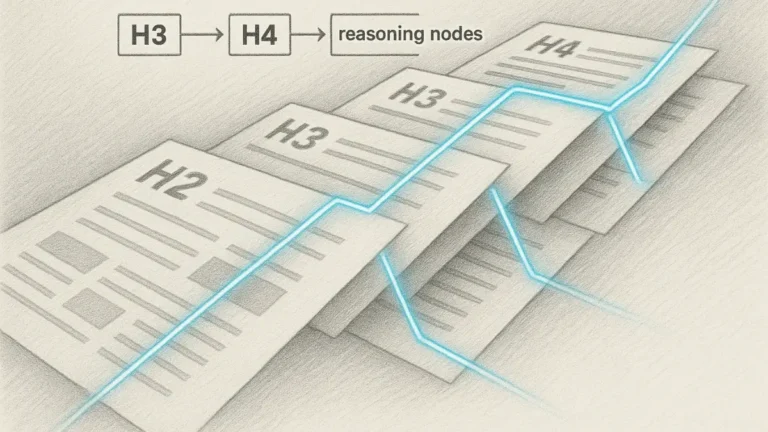
- Reasoning chain encapsulation. Deep reasoning blocks create bounded semantic units where claims, rationale, and mechanisms remain structurally grouped, supporting reliable extraction during generative interpretation.
- Hierarchical concept topology. The H2→H3→H4 hierarchy forms a layered semantic topology that allows AI systems to interpret conceptual scope and depth without ambiguity.
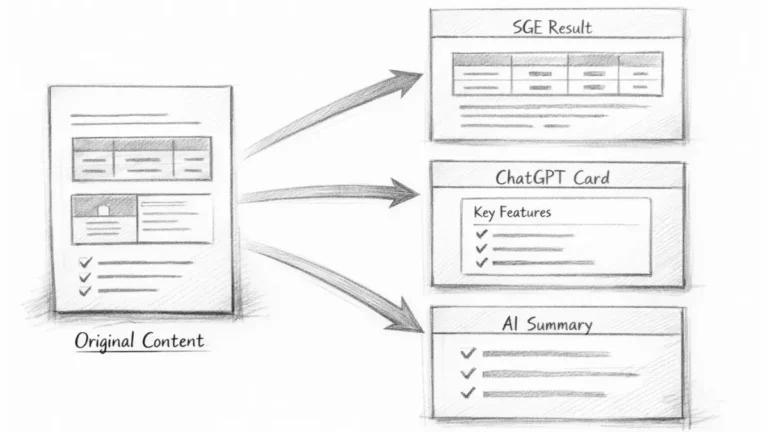
This structural configuration allows the document to function as a spatially organized semantic environment where AI systems interpret concepts, relationships, and reasoning chains through consistent architectural signals.
FAQ: Meaning Geometry and Semantic Space in AI
What is meaning geometry in artificial intelligence?
Meaning geometry describes how AI systems represent concepts as coordinates inside semantic space, allowing models to evaluate similarity, context, and relationships between ideas.
How do language models represent meaning in space?
Language models convert words and concepts into numerical vectors positioned in multidimensional embedding spaces where distance reflects semantic similarity.
What is semantic distance in AI models?
Semantic distance measures how closely related two concepts are based on the distance between their vector representations inside embedding space.
Why do AI systems use vector spaces for language?
Vector spaces allow AI systems to compute relationships between concepts using mathematical distance, enabling scalable interpretation across large text datasets.
What is a semantic landscape in AI?
A semantic landscape is a structured region of conceptual space where related ideas cluster together, forming stable knowledge domains inside language models.
How do AI models organize conceptual clusters?
Embedding algorithms group vectors with similar contextual patterns into clusters that represent thematic areas such as science, economics, or technology.
What determines the architecture of semantic space?
Semantic space architecture is shaped by embedding dimensions, distance metrics, clustering algorithms, and training data that influence how concepts are organized.
Why is spatial modeling important for AI reasoning?
Spatial semantic models allow AI systems to detect similarity, track context, and organize knowledge through measurable relationships between concepts.
How does meaning geometry influence AI content interpretation?
Structured semantic writing aligns with spatial language models, making it easier for AI systems to map concepts, detect relationships, and interpret information.
What research directions are shaping future semantic modeling?
Emerging research explores hybrid architectures that combine vector embeddings with symbolic reasoning to improve interpretation of complex conceptual relationships.
Glossary: Key Terms in Meaning Geometry
This glossary defines the core concepts used to explain how AI systems represent meaning, organize concepts, and interpret relationships inside semantic space.
Meaning Geometry
A computational model where concepts occupy positions inside semantic space, allowing AI systems to evaluate relationships through distance and spatial proximity.
Semantic Vector
A numerical representation of a word or concept used by AI systems to position meaning within multidimensional embedding space.
Embedding Space
A mathematical environment where words, entities, or ideas are represented as vectors whose spatial relationships encode semantic similarity.
Semantic Distance
A measurement used by AI models to determine how closely related two concepts are based on the distance between their vectors in semantic space.
Semantic Cluster
A group of related concepts positioned close to each other within embedding space, representing a coherent conceptual domain.
Semantic Landscape
A structured region of conceptual space where clusters of related ideas form interpretable knowledge domains inside AI models.
Concept Positioning
The process by which AI systems assign coordinates to concepts within semantic space based on contextual relationships in training data.
Semantic Topology
The structural organization of conceptual regions within semantic space that determines how knowledge domains connect and interact.
Concept Distance Modeling
A method used by AI systems to evaluate similarity between ideas through mathematical distance calculations in vector space.
Semantic Space Architecture
The structural design of embedding environments that determines how concepts cluster, interact, and maintain interpretability within AI systems.

Author Sergey Kuchinskiy
Founder of PostUpgrade. Researcher in Generative Engine Optimization (GEO), semantic structuring, and machine reasoning systems. Focuses on AI-readable content architecture, computational interpretation, and scalable knowledge retrieval. Author of 200+ analytical publications on generative visibility, semantic mapping, and AI-first information design.
Verified Expertise
- Generative Engine Optimization (GEO)
- AI Content Engineering & Semantic Structuring
- Computational Linguistics & Machine Reasoning
- Large-Scale Content Architecture
Research Focus
AI Search · Generative Visibility · Semantic Mapping · Machine Sentence Design · Reasoning Stability · Knowledge Extraction Models
Academic Contributions
- 200+ analytical research publications
- AI-first page architecture methodologies
- Semantic Frameworks for Machine Interpretation (SFMI)
- Generative Visibility Standards 2024–2025
Citation Metrics
AI-model reuse rate (GEO-Score): 92/100 · Cross-model consistency: 87% · Reasoning chain stability: 91%
Researcher ID: PU-ORCID-7421-9912
View all publications →Connect on LinkedIn →