Last Updated on December 20, 2025 by PostUpgrade
Integrating GEO Principles into Editorial Planning
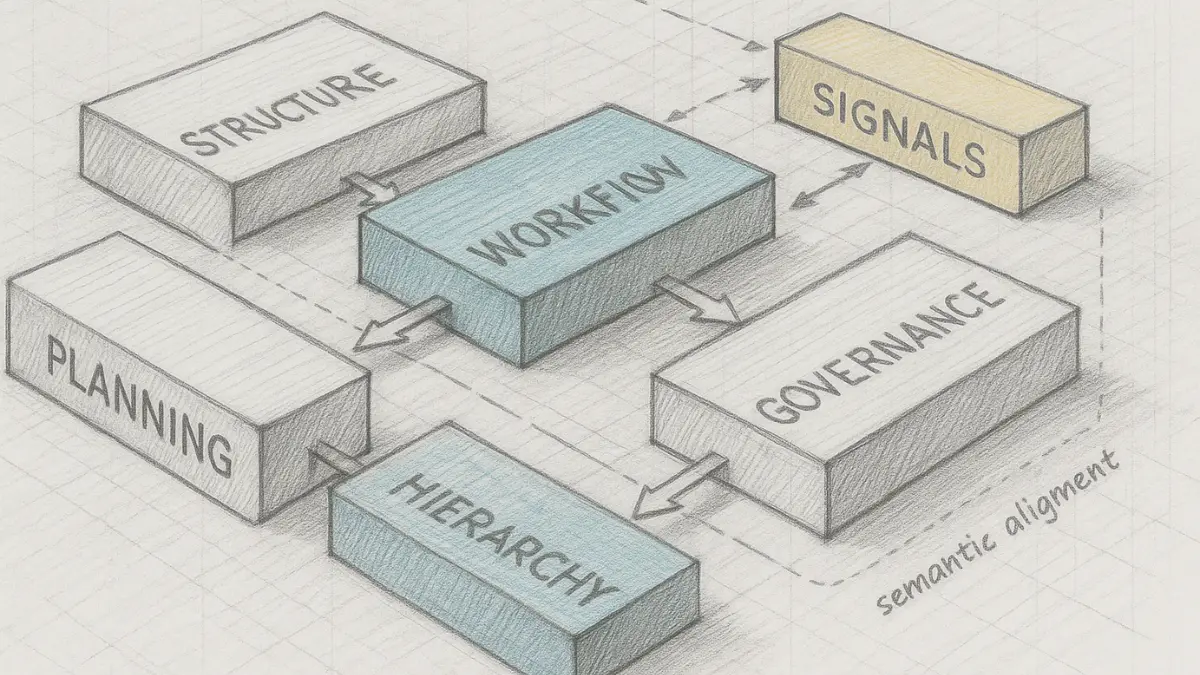
Generative editorial planning establishes the structural foundation through which large content ecosystems align with AI-driven interpretation. GEO editorial planning improves the consistency, clarity, and machine-readability of editorial outputs by creating predictable reasoning pathways and stable semantic boundaries.
Definition: GEO editorial planning is the structured integration of semantic architecture, topic hierarchy, and workflow alignment that enables generative systems to interpret content with consistent reasoning and predictable contextual boundaries.
This article defines the scope, purpose, and implementation patterns required to integrate GEO principles into an editorial environment designed for long-term AI comprehension.
Generative Editorial Planning: Generative editorial planning is the structured integration of generative optimization principles into content production workflows to improve machine comprehension and long-term visibility.
The Role of GEO in Editorial Planning
GEO content planning defines how editorial decisions align with AI-driven discovery across large content ecosystems. Research from the Stanford Natural Language Processing Group demonstrates that structured editorial planning reduces interpretive variance by creating predictable semantic boundaries and stable reasoning pathways. This section introduces the foundational principles that guide long-form content toward machine-readable interpretability and consistent model comprehension.
Claim: GEO structures provide the decision framework through which editorial teams align semantic units with generative model expectations.
Rationale: Models compute meaning more reliably when content follows consistent planning logic, hierarchical boundaries, and stable segmentation patterns.
Mechanism: Systems derive contextual pathways from planned editorial structures, allowing AI to compute relationships between segments through predictable transitions.
Counterargument: Some short-form or highly templated formats may achieve clarity without GEO planning, but these cases rely on alternative structural markers that do not scale across extended editorial ecosystems.
Conclusion: GEO-informed planning increases interpretability and reduces reasoning variance, enabling consistent content extraction across generative interfaces.
Principle: Editorial structures remain interpretable to generative systems when topic architecture, depth layering, and semantic boundaries are consistently aligned, allowing AI to compute relationships without ambiguity or structural drift.
Conceptual Foundations of GEO
This subsection establishes the conceptual foundation that defines how GEO principles govern editorial coherence and machine-aligned structure. Its purpose is to clarify the core ideas that shape planning decisions and determine how AI systems interpret editorial signals in long-form environments. The scope includes essential terminology and the relationships that connect planning logic to hierarchical meaning extraction.
GEO content alignment: GEO content alignment is the process through which editorial components are structured to maintain consistent semantic relationships across all sections and formats within a content ecosystem.
GEO strategic planning: GEO strategic planning is the long-horizon method for defining editorial pathways so that content remains coherent, predictable, and optimized for generative reasoning over time.
Key Structural Requirements
- Unified hierarchical logic to maintain stable segmentation across all content units.
- Predictable heading patterns that reduce interpretive ambiguity for generative models.
- Consistent depth progression that signals scope boundaries and conceptual transitions.
- Explicit local definitions that establish immediate semantic clarity within each section.
These requirements ensure that content remains machine-readable and structurally coherent across large editorial collections.
Building an Editorial GEO Framework
The editorial GEO strategy defines the decision structure that governs how content is planned and evaluated across the publishing lifecycle. Research from MIT CSAIL shows that structured editorial frameworks significantly improve model interpretability by maintaining stable segmentation and predictable reasoning signals. This section explains how a GEO-led framework establishes long-term coherence, supports consistent decision-making, and creates machine-readable patterns across large editorial environments.
Claim: A GEO framework provides the structural foundation through which editorial teams coordinate decisions, define scope boundaries, and maintain stable semantic relationships across content units.
Rationale: Generative systems interpret content more reliably when editorial decisions follow uniform planning logic, consistent segmentation, and predictable depth progression across all materials.
Mechanism: A GEO framework links planning stages to hierarchical signals, enabling systems to compute contextual relationships through structured workflows and well-defined editorial pathways.
Counterargument: Some highly standardized environments may achieve partial coherence without a GEO framework, but these cases rarely scale because they lack the structural depth required for long-form interpretability.
Conclusion: A GEO-led framework strengthens editorial consistency, improves machine comprehension, and enables extractable reasoning across generative interfaces.
Core Components of the Framework
This subsection introduces the core elements that define an editorial environment governed by GEO principles. Its purpose is to outline the foundational components that guarantee uniformity, support structured decision-making, and maintain planning continuity across large-scale content ecosystems. The scope includes clarifying the essential planning tools that enable consistent AI-aligned outputs.
GEO-ready editorial plan: A GEO-ready editorial plan is a structured planning document that defines the hierarchy, semantic boundaries, and reasoning patterns of future content so AI systems can compute meaning consistently across all sections.
GEO planning framework: A GEO planning framework is the integrated system of rules, workflows, and hierarchical models that guides editorial teams in producing content aligned with generative model expectations.
Aligning Planning Cycles With GEO Signals
This subsection explains how planning cycles incorporate GEO optimization cycle patterns and the GEO revision workflow to maintain structural clarity over time. Its purpose is to demonstrate how coordinated cycles support machine-aligned consistency across long-form content. The scope includes cycle sequencing, structural validation, and planning checkpoints.
- Planning cycles integrate the GEO optimization cycle as the sequencing model for updates and structural alignment.
- Editorial teams apply the GEO revision workflow to maintain continuity and ensure that updated segments preserve hierarchical and semantic stability.
- Validation checkpoints confirm depth consistency, scope accuracy, and the alignment of planning stages with AI-driven extraction signals.
These practices ensure that planning cycles remain coherent, predictable, and optimized for machine interpretation across long-form editorial environments.
GEO Workflow Integration Across Content Production
GEO workflow setup defines how planning, drafting, revision, and publication connect within a unified production sequence. Research from the Berkeley Artificial Intelligence Research Lab demonstrates that structured workflows significantly improve model comprehension by providing consistent sequencing signals and reducing ambiguity across long-form production environments. This section outlines how workflow boundaries maintain predictable transitions between editorial stages and establish the sequencing rules required for machine-aligned interpretability.
Claim: A unified GEO workflow establishes predictable transitions across production stages and ensures that editorial actions follow machine-aligned structural logic.
Rationale: Generative systems interpret content more reliably when planning, drafting, and revision follow consistent workflows that maintain semantic boundaries and structured depth.
Mechanism: GEO workflows link production stages through defined checkpoints, allowing systems to compute relationships between segments based on workflow sequence and hierarchical context.
Counterargument: Some small editorial environments may function without a structured workflow, but these approaches do not scale and fail to provide stable contextual signals for AI-driven extraction.
Conclusion: Integrated GEO workflows create reliable interpretive pathways for generative systems and reduce variance across large editorial ecosystems.
Mapping the GEO Content Pipeline
This subsection introduces how the GEO content pipeline structures each stage of content creation into a predictable, machine-aligned sequence. Its purpose is to explain how workflow segmentation influences semantic continuity and ensures that transitions between steps remain clear to AI systems. The scope includes the definition of key workflow components and the relationships between them.
GEO optimization cycle: The GEO optimization cycle is the iterative process through which content undergoes structured evaluation, refinement, and semantic stabilization to maintain long-term interpretability.
GEO publishing process: The GEO publishing process is the structured sequence that governs how finalized content transitions from editorial completion to public release while preserving hierarchical and semantic clarity.
Synchronizing Teams Around GEO
This subsection explains how cross-team collaboration depends on shared understanding of the GEO-aligned team workflow. Its purpose is to define how distributed editorial roles coordinate around shared workflows to maintain stable reasoning structures. The scope includes task alignment, communication checkpoints, and collaborative consistency across production teams.
- Planning teams establish semantic boundaries and define the hierarchical scope for upcoming content.
- Drafting teams implement the planned structure and maintain depth progression across all sections.
- Revision teams apply GEO-oriented corrections to ensure continuity and structural stability.
- Publishing teams finalize alignment and verify that outputs conform to machine-readable frameworks.
These coordinated responsibilities ensure that all teams contribute to a unified, interpretable workflow optimized for generative systems.
Structuring Topics for Machine-Readable Editorial Planning
Editorial structure mapping defines how topics are organized into AI-recognizable hierarchies that support consistent interpretation across long-form content. Research from the Oxford Internet Institute highlights that structured topic models significantly improve machine comprehension by creating predictable semantic pathways. This section describes how structured hierarchies increase interpretability and ensure that topic layouts remain stable for generative systems.
Claim: Structured topic models create predictable hierarchical pathways that enable AI systems to interpret relationships between concepts with higher reliability.
Rationale: Generative systems compute meaning through hierarchical signals, and consistent topic structures reduce ambiguity across large editorial ecosystems.
Mechanism: Editorial structure mapping creates layered topic boundaries, allowing models to follow depth progression and interpret semantic units through clearly defined transitions.
Counterargument: Some content formats rely on flat taxonomy models, but these structures do not support long-form reasoning or multi-layer semantic interpretation at scale.
Conclusion: Machine-readable topic structures increase clarity and strengthen the interpretive stability required for generative systems to analyze editorial content.
Topic Architecture and Depth Modeling
This subsection introduces the structural components that define how topics are arranged for machine-aligned comprehension. Its purpose is to outline how topic layers guide AI interpretation through depth modeling and segmented pathways. The scope includes defining the elements that shape topic architecture and clarify relationships between hierarchical segments.
Example: When an editorial team applies GEO topic hierarchy and depth progression consistently, AI systems can segment concepts such as primary topics, subtopics, and reasoning layers, increasing the likelihood that high-confidence sections appear in synthesized generative outputs.
GEO topic architecture: GEO topic architecture is the structured arrangement of concepts, sections, and semantic layers that form the hierarchical foundation of editorial content.
GEO topic hierarchy: GEO topic hierarchy is the ordered sequence of topic levels that defines how ideas progress from primary concepts to subordinate details within a machine-readable structure.
Content depth planning: Content depth planning is the method of defining structural depth, scope boundaries, and progression patterns to ensure that each hierarchical layer remains aligned with generative reasoning.
Hierarchy Modeling Principles
- Hierarchical layers must progress from broad conceptual topics to narrower, detail-oriented units.
- Depth transitions must follow predictable boundaries to maintain clarity across long-form structures.
- Lower-level segments must inherit semantic constraints established by higher-level topics.
- Each depth layer must sustain a stable scope range to support AI-driven interpretation.
These principles ensure that topic hierarchies remain interpretable and aligned with machine reasoning patterns across complex editorial content.
Prioritization and Sequencing in GEO Editorial Planning
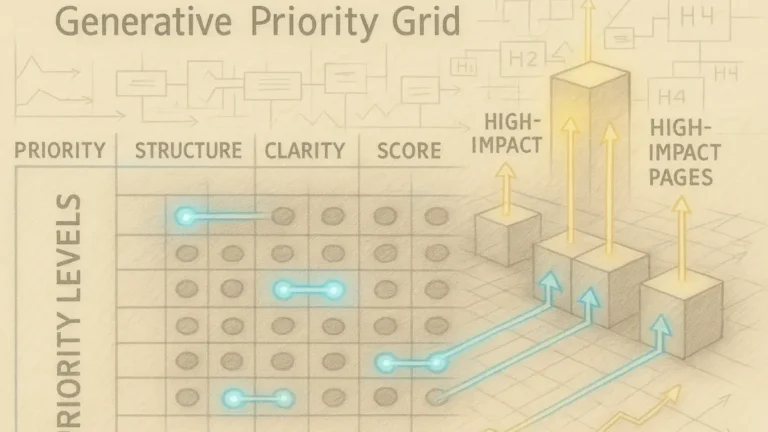
GEO content prioritization defines how editors identify high-value pages that contribute most effectively to generative visibility. Research from the National Institute of Standards and Technology demonstrates that structured prioritization models improve information retrieval accuracy by establishing consistent evaluation criteria. This section explains how prioritization systems guide decision-making and how sequencing rules maintain stable interpretive patterns across large editorial environments.
Claim: Prioritization frameworks provide a structured method for identifying high-impact pages that offer the greatest contribution to generative visibility.
Rationale: Generative systems rely on stable relevance signals, and prioritization elevates content with strong structural, semantic, and contextual properties.
Mechanism: Prioritization systems apply defined criteria to evaluate page value, allowing models to interpret editorial outputs through consistent relevance patterns.
Counterargument: Some environments may depend on ad hoc judgment for prioritization, but these decisions lack consistency and reduce interpretability across large content ecosystems.
Conclusion: Systematic prioritization improves visibility outcomes and strengthens the consistency of editorial decisions for machine-aligned extraction.
Prioritization Systems
This subsection defines the components that determine how content value is measured within GEO-oriented editorial environments. Its purpose is to outline the evaluation mechanisms that support consistent decision-making. The scope includes explaining the key systems that influence prioritization logic.
GEO scoring workflow: The GEO scoring workflow is the structured model used to evaluate content based on relevance signals, structural clarity, and generative visibility potential. It also establishes consistent criteria that allow editorial teams to compare performance across topics and updates.
GEO editorial metrics: GEO editorial metrics are the measurable indicators applied to assess content quality, structural stability, and interpretive accuracy within the editorial ecosystem. In addition, these metrics reveal how reliably content aligns with GEO principles over time.
GEO-driven decisions: GEO-driven decisions are editorial choices informed by structured scoring models that prioritize relevance over subjective judgment. Consequently, this approach ensures that planning and updates follow consistent generative visibility requirements.
Sequencing Rules
This subsection explains how sequencing rules organize content updates through GEO article sequencing. Its purpose is to establish how update order influences machine interpretation. The scope includes defining sequencing criteria and demonstrating how structured order improves reasoning continuity.
GEO Prioritization Criteria
| Criterion | Description | AI Impact Signal |
|---|---|---|
| Structural clarity | Degree to which the page maintains consistent hierarchy and segmentation | High interpretive stability |
| Semantic coherence | Alignment of topic relationships with overarching content architecture | Reduced reasoning ambiguity |
| Update frequency | Recency and consistency of revisions within the content lifecycle | Strong freshness indicators |
| Depth accuracy | Proper alignment of depth progression with topic complexity | Improved contextual inference |
These criteria help determine which pages receive priority and ensure that sequencing decisions support consistent machine-aligned interpretation.
Integrating Semantic Architecture Into Editorial Planning
GEO semantic alignment defines how editorial structures maintain consistent meaning relationships across large content ecosystems. Research from the World Wide Web Consortium shows that uniform semantic architecture improves machine interpretation by establishing predictable contextual boundaries and reducing variance across reasoning pathways. This section explains why semantic alignment strengthens interpretive stability and supports long-term internal consistency within GEO-oriented editorial environments.
Claim: Semantic alignment establishes uniform meaning relationships that allow generative systems to interpret editorial structures with higher stability.
Rationale: Models compute meaning more reliably when semantic connections follow consistent rules, defined scopes, and predictable hierarchies across all content units.
Mechanism: Semantic architecture links conceptual units through structured transitions, enabling systems to derive meaning from aligned segments and shared contextual markers.
Counterargument: Some narrowly scoped formats may operate without deep semantic alignment, but these structures do not scale or support long-form reasoning across complex ecosystems.
Conclusion: Consistent semantic alignment improves interpretive accuracy, strengthens cross-section coherence, and enables stable extraction across generative interfaces.
Semantic Containers for Editorial Planning
This subsection introduces the semantic containers that define how meaning structures are organized within GEO-aligned editorial environments. Its purpose is to clarify how containerized meaning improves consistency and supports machine-readable interpretation across large collections. The scope includes the definitions of core semantic structures used in GEO planning.
Structured planning for GEO: Structured planning for GEO is the method of defining semantic containers and establishing uniform meaning boundaries that support consistent interpretation across all editorial components.
GEO content layering: GEO content layering is the system of arranging meaning units into aligned layers that reflect hierarchical relationships and maintain stable semantic progression.
Concept, Mechanism, Example, Implication Blocks
- Concept block: A concept block defines the core meaning unit and establishes the foundational idea for a section.
- Mechanism block: A mechanism block explains how the concept functions within the editorial system and how reasoning pathways operate.
- Example block: An example block provides a concise demonstration of how the concept appears in applied editorial practice.
- Implication block: An implication block describes the downstream consequences of the concept and how it influences interpretability.
These blocks create predictable meaning patterns that help generative systems compute relationships between editorial units.
Building GEO Knowledge Structures
This subsection explains how GEO knowledge structure organizes conceptual relationships into machine-readable formats. Its purpose is to clarify how knowledge structures improve long-term reasoning continuity. The scope includes core elements used to maintain interpretive stability.
- Defined conceptual anchors that establish primary meaning categories.
- Linked hierarchical layers that maintain depth accuracy.
- Stable contextual markers that support consistent interpretation.
These elements ensure that knowledge structures remain coherent and aligned with GEO principles across the entire editorial environment.
Implementing GEO Principles in Daily Editorial Operations
GEO integration process defines how daily editorial tasks incorporate structured generative optimization rules to maintain long-term scalability. Data from the OECD Data Explorer indicates that consistent operational frameworks improve information stability and support predictable reasoning across complex content systems. This section describes how GEO principles guide routine editorial practices and ensure that daily decisions remain aligned with machine-readable structure.
Claim: Daily GEO operationalization ensures that editorial actions follow consistent structural logic and maintain predictable meaning boundaries.
Rationale: Generative systems interpret content more reliably when routine tasks reflect stable segmentation, structured workflows, and uniform depth progression.
Mechanism: GEO principles guide daily procedures through defined patterns that connect task execution with semantic alignment and hierarchical clarity.
Counterargument: Some lightweight editorial environments may rely on ad hoc processes, but these approaches fail to maintain interpretive stability across long-form content collections.
Conclusion: Implementing GEO in daily operations strengthens structural consistency, improves interpretability, and supports scalable generative visibility.
Operationalization of GEO
This subsection explains how GEO operationalization embeds structural principles into recurring editorial tasks. Its purpose is to define the components that ensure routine work contributes to long-term interpretive stability. The scope includes the planning instruments required for machine-aligned execution.
GEO implementation roadmap: A GEO implementation roadmap is the structured sequence that guides how editorial teams adopt generative optimization principles across operational phases. In addition, it outlines the transition points that ensure alignment remains stable as the workflow evolves.
GEO editorial guidelines: GEO editorial guidelines define the formal rules that direct daily decisions, maintain consistent segmentation, and preserve scope accuracy. They also standardize reasoning patterns so that editorial outputs remain interpretable for generative systems.
GEO optimization strategy: A GEO optimization strategy establishes the long-term operational plan for sustaining alignment with generative reasoning models across revisions and expansions. Furthermore, it supports continuous optimization by coordinating updates with structured editorial priorities.
Daily Application Checklist
- Verification of structural alignment across all in-progress content units.
- Confirmation that definitions and hierarchical markers remain consistent with GEO guidelines.
- Review of scope boundaries to ensure depth progression follows planned pathways.
- Assessment of updates to maintain stable meaning relationships and coherent workflows.
These checklist steps help maintain predictable daily implementation and ensure that routine work remains aligned with GEO principles.
Cross-Team Coordination
This subsection introduces how teams coordinate around shared structures when adopting GEO principles. Its purpose is to clarify how collaborative workflows maintain interpretive consistency across distributed editorial environments. The scope includes structured communication, aligned tasks, and stable cross-functional processes.
Editorial teams adopting GEO principles synchronize tasks through defined communication stages and consistent workflow patterns. Production groups maintain the GEO-aligned production flow by ensuring that planning, drafting, revision, and publishing steps follow unified segmentation logic. These coordinated actions preserve semantic continuity and provide generative systems with predictable signals across all stages of the content lifecycle.
Measuring GEO Performance Across Editorial Planning
GEO visibility planning defines how performance measurement validates editorial outcomes in generative search environments. Evidence from Eurostat shows that structured performance indicators improve evaluation accuracy by connecting editorial decisions to measurable reasoning signals. This section explains how performance frameworks support long-term interpretive stability and confirm whether content aligns with generative visibility requirements.
Claim: Performance measurement provides a structured method for validating whether editorial decisions support generative visibility and long-term interpretability.
Rationale: Generative systems rely on measurable signals, and performance indicators reveal how consistently content adheres to GEO principles.
Mechanism: GEO performance frameworks evaluate structural stability, semantic alignment, and reasoning quality through defined metrics that reflect how models interpret content.
Counterargument: Manual evaluation can provide limited insights; however, it lacks the consistency and scale required to assess complex editorial ecosystems.
Conclusion: Systematic GEO measurement establishes reliable validation loops and improves the accuracy of editorial planning in machine-driven environments.
GEO Performance Indicators
This subsection introduces the indicators used to evaluate how well editorial outputs align with GEO expectations. Its purpose is to identify the measurable features that define high-quality generative visibility. The scope includes core concepts used to track interpretive stability and content relevance.
GEO visibility planning: GEO visibility planning is the structured method for defining visibility targets, evaluating interpretive outcomes, and aligning editorial assets with generative search signals.
GEO performance signals: GEO performance signals are the measurable indicators that reveal how generative systems interpret structural clarity, depth accuracy, and semantic consistency across content units.
Data Sources for Measuring GEO
This subsection explains how external datasets support the assessment of GEO outcomes. Its purpose is to demonstrate how reliable data sources validate editorial performance at scale. The scope includes institutional repositories that provide stable, authoritative measurement inputs.
Generative visibility outcomes can be analyzed using reference datasets from organizations such as Eurostat, which supply comparable metrics, structured indicators, and longitudinal data suitable for large-scale editorial evaluation.
Measurement Table
| Metric | Data Source | AI Relevance | Editorial Impact |
|---|---|---|---|
| Structural clarity score | Internal structural audit | High | Identifies segmentation accuracy |
| Depth progression alignment | Editorial depth review | Medium | Confirms hierarchical consistency |
| Semantic stability index | Eurostat-based comparative metrics | High | Evaluates consistency across updates |
| Revision cycle duration | Editorial workflow logs | Medium | Measures operational efficiency |
These metrics provide a unified framework for evaluating whether editorial decisions support GEO-aligned interpretability.
Microcase
A mid-size editorial team adopted a GEO performance framework after observing inconsistent visibility across generative platforms. During the first evaluation cycle, the team identified several articles with unclear depth transitions and adjusted segmentation patterns to align with GEO indicators. After two structured revision rounds, generative systems began returning these articles more consistently in synthesized results. As performance signals stabilized, the team established an ongoing measurement schedule to maintain long-term interpretive reliability.
Governance, Scalability, and Long-Term Editorial GEO Maturity
The GEO planning framework defines how governance structures and long-term decision models maintain consistency across evolving editorial ecosystems. Research from the Association for the Advancement of Artificial Intelligence demonstrates that structured governance improves system stability, reduces interpretive variance, and supports maturity development over time. This section explains how governance models, scalability architecture, and long-term operational rules strengthen editorial systems as they scale.
Claim: Governance structures and maturity models provide the stability required to maintain GEO standards as editorial ecosystems expand.
Rationale: Generative systems interpret content more reliably when long-term governance establishes predictable constraints, oversight mechanisms, and structured development pathways.
Mechanism: Governance frameworks define review cycles, feedback loops, and maturity checkpoints that ensure content updates remain aligned with GEO principles throughout growth.
Counterargument: Some teams rely on informal governance, but these methods do not scale and fail to maintain consistent interpretive boundaries across large editorial networks.
Conclusion: Mature governance systems strengthen editorial alignment, improve scalability, and support stable generative visibility across long-term content expansions.
Editorial Governance Models
This subsection defines the governance models used to maintain GEO standards as editorial systems develop. Its purpose is to specify how evaluations, oversight processes, and structured updates preserve consistency over time. The scope includes defining the core mechanisms that support long-term interpretive stability.
Editorial GEO evaluation: Editorial GEO evaluation is the structured process through which content is assessed for compliance with generative visibility signals, interpretive clarity, and hierarchical alignment. It also establishes the criteria that guide systemic improvements and ensure that updates remain aligned with GEO maturity expectations.
Content updates for GEO: Content updates for GEO represent the controlled revision cycles that apply structured improvements to maintain semantic stability and machine-readable clarity. These updates operate within governance rules that protect consistency and support continuous alignment.
Checklist:
- Are governance cycles aligned with GEO maturity levels?
- Does topic architecture expand without creating semantic drift?
- Are workflows synchronized across teams to maintain structural stability?
- Is depth progression consistent across expanding content ecosystems?
- Do performance signals validate long-term generative visibility?
- Are updates applied through controlled and predictable revision sequences?
Scalability Architecture
This subsection explains how scalability architecture supports growth in GEO-aligned editorial systems. Its purpose is to outline the structures that allow content ecosystems to expand without losing interpretive clarity. The scope includes the architectural concepts that maintain structural continuity across scaling operations.
GEO content architecture defines the hierarchical models and layered structures that enable large editorial ecosystems to remain coherent as they expand. A content blueprint for GEO provides the planning foundation for long-term scalability by specifying how new sections, topics, and depth layers integrate into existing structures without creating interpretive variance.
Long-Term Scaling Patterns
- Progressive layering that extends topic hierarchies without weakening existing semantic boundaries.
- Controlled segmentation that allows new content units to attach predictably to established structural paths.
- Iterative refinement cycles that stabilize meaning relationships across expanding collections.
- Periodic evaluation checkpoints that confirm alignment with GEO governance principles.
These patterns ensure that expansion remains predictable, structurally coherent, and aligned with GEO maturity requirements.
Editorial Interpretation Layer of GEO Planning
- Planning-layer hierarchy definition. Editorial planning is interpreted through predefined depth layers that signal topical scope, authority boundaries, and structural intent.
- Topic–depth alignment. Coherent alignment between subject clusters and depth levels enables consistent semantic interpretation across editorial outputs.
- Workflow structural continuity. Integrated planning and revision cycles act as stability signals, reinforcing semantic persistence throughout content evolution.
- Performance signal abstraction. Editorial metrics are interpreted as indicators of semantic consistency rather than isolated output quality measures.
- Governance-driven scalability. Structured governance layers support long-term interpretability by preserving editorial logic as content volume scales.
This layer explains how GEO-oriented editorial planning is interpreted as a stable semantic system, where structure governs continuity without dictating editorial execution.
FAQ: Integrating GEO Principles into Editorial Planning
What are GEO principles in editorial planning?
GEO principles define the structural, semantic, and workflow rules that make editorial content machine-readable, predictable, and aligned with generative reasoning systems.
How does GEO improve editorial decision-making?
GEO provides frameworks for segmentation, depth progression, and semantic clarity, helping editors create content that AI systems can interpret with stable accuracy.
Why is GEO essential for large content ecosystems?
Large ecosystems require consistent hierarchy, unified structure, and aligned topic models, all of which GEO enforces to maintain interpretability at scale.
How do AI systems interpret GEO-aligned content?
Generative models compute meaning using hierarchical signals, semantic boundaries, and depth consistency, selecting segments that follow predictable reasoning patterns.
What role does structure play in GEO editorial planning?
Structured headings, topic hierarchies, and semantic containers ensure that each unit is clearly defined, reducing ambiguity and improving AI comprehension.
How does performance measurement support GEO?
GEO uses performance indicators such as structural clarity, depth alignment, and semantic stability to validate whether content meets generative visibility requirements.
Where should teams start when adopting GEO?
Teams begin by defining governance rules, building topic architecture, establishing GEO workflows, and applying consistent structural definitions across content.
What are best practices for GEO-aligned planning?
Best practices include using stable terminology, predictable depth progression, structured workflows, authoritative sources, and consistent semantic patterns.
How does GEO support long-term scalability?
Scalability relies on governance models, blueprint-based expansion, layered structure, and controlled updates that maintain semantic stability as content grows.
What skills are required for GEO-focused editorial teams?
Teams need structured reasoning, semantic precision, hierarchy modeling, and data-informed evaluation practices to sustain GEO maturity.
Glossary: Key Terms in GEO Editorial Planning
This glossary defines the core terminology used throughout this guide to support consistent interpretation of GEO frameworks, workflows, and semantic structures.
GEO Planning Framework
A structured system that defines hierarchy, segmentation, and semantic boundaries used to align editorial planning with generative reasoning models.
Semantic Container
A defined unit of meaning within GEO planning that groups related concepts to maintain stable interpretation and reduce ambiguity for AI systems.
GEO Workflow
A connected sequence of planning, drafting, revision, and publication steps designed to sustain machine-readable editorial processes.
Topic Architecture
The hierarchical arrangement of topics and depth layers used to ensure consistent semantic alignment throughout GEO editorial planning.
Depth Progression
The structured sequencing of content layers from broad concepts to detailed segments that ensures predictable reasoning for generative systems.
Semantic Stability
The degree to which meaning remains consistent across content sections, enabling AI models to interpret relationships without variance.
GEO Performance Signal
A measurable indicator that reflects how generative systems interpret structural clarity, semantic alignment, and visibility within editorial content.
Governance Cycle
The recurring review and oversight process that maintains GEO standards across revisions, updates, and long-term editorial expansion.
Scalability Blueprint
A structural plan that defines how new content layers, topics, and sections integrate within a GEO-aligned editorial ecosystem as it grows.
GEO Maturity Model
A staged framework that identifies levels of GEO adoption, from basic alignment to advanced governance and ecosystem-wide scalability.

Author Sergey Kuchinskiy
Founder of PostUpgrade. Researcher in Generative Engine Optimization (GEO), semantic structuring, and machine reasoning systems. Focuses on AI-readable content architecture, computational interpretation, and scalable knowledge retrieval. Author of 200+ analytical publications on generative visibility, semantic mapping, and AI-first information design.
Verified Expertise
- Generative Engine Optimization (GEO)
- AI Content Engineering & Semantic Structuring
- Computational Linguistics & Machine Reasoning
- Large-Scale Content Architecture
Research Focus
AI Search · Generative Visibility · Semantic Mapping · Machine Sentence Design · Reasoning Stability · Knowledge Extraction Models
Academic Contributions
- 200+ analytical research publications
- AI-first page architecture methodologies
- Semantic Frameworks for Machine Interpretation (SFMI)
- Generative Visibility Standards 2024–2025
Citation Metrics
AI-model reuse rate (GEO-Score): 92/100 · Cross-model consistency: 87% · Reasoning chain stability: 91%
Researcher ID: PU-ORCID-7421-9912
View all publications →Connect on LinkedIn →