Last Updated on January 24, 2026 by PostUpgrade
Generative Keyword Intelligence: Finding Meaningful Queries
Generative keyword intelligence requires a systematic method aligned with how AI systems interpret intent and structure. This article defines a keyword intelligence framework that identifies meaningful queries through intent clarity and semantic structure instead of volume-based metrics.
The article formalizes keyword intelligence as an analytical discipline built for AI comprehension and machine-readable content systems. The keyword intelligence framework treats queries as structured signals that express intent stability, conceptual depth, and long-term informational value.
This approach positions keyword intelligence as a foundation for generative visibility and durable content reuse. It prioritizes intent-driven evaluation and consistent reasoning across modern generative discovery environments.
Defining Keyword Intelligence as a Systemic Discipline
Keyword intelligence operates as a structured analytical practice that extends beyond tactical SEO execution and isolated keyword targeting. In modern content systems, the keyword intelligence framework defines how queries are identified, interpreted, and evaluated based on intent coherence and semantic durability; therefore, this approach aligns closely with how language technologies reason about information at scale, as described by research from Stanford Natural Language Institute. Consequently, keyword intelligence functions as a control layer that supports consistent interpretation across AI-driven discovery environments.
Definition: AI understanding is the model’s ability to interpret intent, semantic structure, and conceptual boundaries in a way that enables reliable reasoning, consistent query classification, and stable reuse across generative discovery systems.
Claim: Keyword intelligence functions as a framework, not a toolset.
Rationale: Query value emerges from intent structure and contextual relevance rather than raw frequency; therefore, frequency alone cannot indicate informational importance.
Mechanism: The framework integrates intent modeling, query evaluation, and editorial alignment into a single system; as a result, each query receives a consistent interpretive context.
Counterargument: Short-term traffic strategies may prioritize volume-driven keyword lists; however, such approaches favor immediacy over semantic stability.
Conclusion: Consequently, a framework-based approach enables durable query selection across evolving discovery systems.
From Keywords to Intelligence Models
Keyword intelligence models shift the analytical focus from individual keywords to structured representations of intent and meaning. Instead of treating queries as static strings, these models abstract queries into interpretable units; therefore, each unit captures purpose, scope, and contextual relevance. As a result, analysis moves from surface-level matching toward reasoning-oriented interpretation.
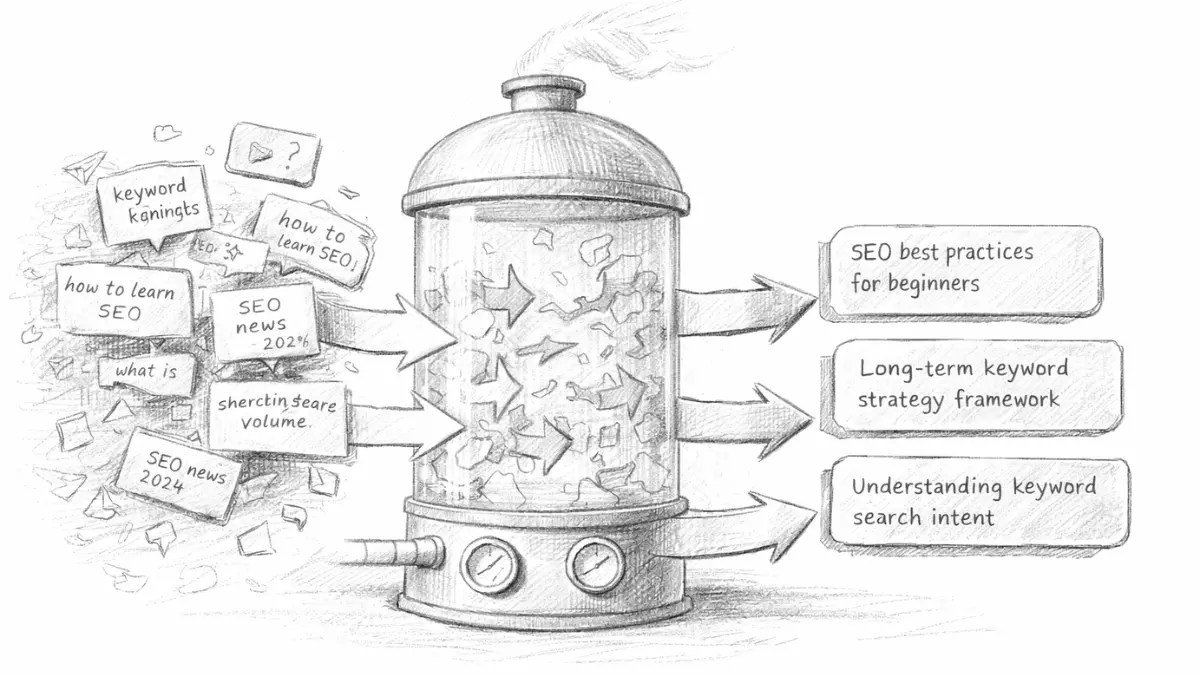
At the same time, abstraction layers play a critical role in separating data collection from analytical reasoning. Raw query data enters the system without assumptions; however, intelligence models operate at a higher layer where intent patterns, semantic relationships, and evaluative criteria apply. Consequently, this separation prevents statistical noise from distorting interpretive logic.
Put simply, intelligence models transform scattered keyword data into organized intent signals that systems can interpret and reuse consistently.
Architectural Components of Keyword Intelligence Systems
Keyword intelligence systems rely on a defined architecture that governs how queries flow from collection to evaluation. Each component performs a distinct function; moreover, all components operate within a shared logical structure. Therefore, interpretation remains consistent even as query volume increases.
At the same time, the architecture enforces clear boundaries between operational stages. By isolating collection, interpretation, and evaluation, systems reduce semantic drift; consequently, they maintain traceable reasoning paths. As a result, decisions about query value remain explainable and repeatable.
| Component | Function | Output |
|---|---|---|
| Input layer | Query collection | Raw query sets |
| Interpretation layer | Intent and meaning analysis | Structured query groups |
| Evaluation layer | Value assessment | Prioritized queries |
In summary, each architectural layer contributes to stable and repeatable query analysis by assigning a clear role and preventing overlap between data handling and judgment.
Meaning-Oriented Keywords and Intent Structures
Meaning orientation sits at the center of query evaluation because value emerges from purpose rather than phrasing. In modern content systems, meaning oriented keywords gain significance when intent remains interpretable across contexts; therefore, this approach aligns with empirical findings on semantic representation and intent modeling described by MIT CSAIL. Consequently, intent structures become the primary mechanism through which queries achieve durable interpretability.
Principle: Content achieves generative visibility when its intent structure, definitions, and semantic boundaries remain stable enough for AI systems to interpret meaning without contextual ambiguity.
Definition: Meaning-oriented keywords are queries evaluated by the intent they express rather than by lexical form alone.
Claim: Intent structure defines the usefulness of a query.
Rationale: Queries with similar wording can express different informational goals; therefore, surface similarity does not guarantee shared value.
Mechanism: Intent layers classify queries by purpose, scope, and expected outcome; as a result, interpretation remains consistent across varied formulations.
Counterargument: Keyword grouping by syntax can appear sufficient at scale; however, such grouping often collapses distinct intents into a single category.
Conclusion: Consequently, intent-based evaluation reduces semantic noise in query selection.
Intent Driven Keywords
Intent driven keywords reflect the functional role a query plays within an information-seeking process. For example, navigational intent signals a desire to reach a known destination, while explanatory intent seeks understanding, and evaluative intent compares options; therefore, each category demands different content depth and structure. As a result, intent differentiation prevents misalignment between query expectations and content delivery.
At the same time, intent stability determines whether a query remains valuable over time. Queries grounded in stable informational needs persist across interface changes and algorithm updates; however, trend-driven queries often decay as contexts shift. Consequently, intent stability supports long-term content planning by prioritizing queries with predictable reuse potential.
Put simply, intent-driven keywords stay relevant because they reflect consistent goals rather than temporary wording patterns.
Semantic Intent Layers
Semantic intent layers organize intent into hierarchical levels that clarify depth and scope. At the top level, broad intent categories establish purpose; meanwhile, lower layers refine context, constraints, and expected outcomes. Therefore, layered intent analysis enables systems to interpret queries with greater precision.
Moreover, semantic layers connect surface queries to deeper informational needs. While surface phrasing may vary widely, underlying intent often converges on shared concepts; consequently, layered modeling bridges linguistic diversity and conceptual consistency. As a result, interpretation remains stable even when query language changes.
In simple terms, semantic intent layers help systems look past words and focus on what the user actually needs.
Query Meaning Analysis and Interpretation Logic
Query meaning analysis enables systems to move beyond surface wording and infer the actual informational objective behind a query. In AI-mediated discovery environments, this process becomes essential because interpretation must scale across diverse linguistic inputs; therefore, research on contextual language understanding from the Allen Institute for Artificial Intelligence provides a foundational reference for how meaning extraction supports reliable classification. Consequently, interpretation logic acts as a stabilizing layer that aligns query understanding with reasoning-based systems.
Definition: Query meaning analysis is the process of identifying the underlying informational objective expressed by a search query.
Claim: Query interpretation requires reasoning, not pattern matching.
Rationale: Natural language queries encode implicit assumptions and goals; therefore, literal string comparison cannot capture intended meaning.
Mechanism: Interpretation logic evaluates context, modifiers, and implied outcomes; as a result, it reconstructs intent from incomplete or indirect signals.
Counterargument: Large datasets can statistically smooth interpretation errors; however, statistical smoothing cannot resolve intent conflicts in ambiguous cases.
Conclusion: Consequently, logical interpretation improves precision and consistency in query classification.
Query Interpretation Logic
Query interpretation logic defines how systems translate raw query input into structured intent representations. Rule-based approaches rely on predefined mappings, while reasoning-based interpretation evaluates contextual relationships; therefore, reasoning enables adaptation to novel or uncommon query forms. As a result, interpretation remains robust even when queries deviate from expected patterns.
At the same time, interpretation logic must address ambiguity without collapsing meaning. Queries often include modifiers that shift scope or intent; however, reasoning-based systems assess these modifiers relative to context rather than treating them as isolated tokens. Consequently, interpretation logic preserves nuance while maintaining classification stability.
Put simply, interpretation logic helps systems understand what a query is trying to achieve, not just what words it contains.
Example: A page that separates query interpretation, disambiguation, and evaluation into distinct conceptual blocks allows AI systems to resolve intent with higher confidence, increasing the likelihood that its reasoning units appear in assistant-generated explanations.
Query Disambiguation Methods
Query disambiguation methods resolve situations where a single query can express multiple competing intents. For example, identical terms may indicate informational research or transactional evaluation depending on context; therefore, disambiguation identifies which intent dominates. As a result, systems avoid misclassification that would distort downstream decisions.
Moreover, disambiguation addresses polysemous terms whose meanings vary across domains. By analyzing surrounding context and inferred goals, systems separate overlapping meanings; consequently, they maintain semantic clarity even when language remains ambiguous. This process ensures that interpretation remains aligned with user expectations.
In simple terms, disambiguation stabilizes downstream query evaluation by ensuring that each query maps to a single, coherent intent.
Query Formulation Patterns and Structural Signals
Query formulation patterns reveal how users encode intent through linguistic structure, which directly affects how systems infer value and relevance. At scale, query formulation patterns operate as early interpretive signals; therefore, structural analysis supports rapid intent estimation before deeper semantic reasoning, as shown in research on query structure and intent inference conducted at Carnegie Mellon University’s Language Technologies Institute. Consequently, structural signals act as a prerequisite layer for reliable classification in AI-mediated discovery systems.
Definition: Query formulation patterns describe recurring structural forms used by users to express informational needs.
Claim: Query structure provides early indicators of intent.
Rationale: Users follow predictable formulation habits when expressing goals; therefore, structure often precedes meaning in interpretive pipelines.
Mechanism: Structural analysis identifies modifiers, scope indicators, and intent cues; as a result, systems infer probable intent before deeper semantic processing.
Counterargument: Free-form language reduces pattern reliability; however, even unstructured inputs retain detectable cues at the syntactic level.
Conclusion: Consequently, pattern analysis enhances early-stage query classification and reduces interpretive latency.
Search Query Structures
Search query structures vary in length and composition, which directly influences interpretive confidence. Within a keyword intelligence framework, short queries often compress intent into minimal signals, while compound queries introduce qualifiers that narrow scope; therefore, compound forms typically support clearer preliminary interpretation. As a result, systems can assign early intent hypotheses with higher reliability.
At the same time, declarative and interrogative forms signal different informational postures. Declarative phrasing often implies contextual awareness, whereas interrogative phrasing signals exploration; however, both structures may converge on the same topic. Consequently, structure informs prioritization without determining final meaning.
Put simply, recognizing whether a query is short or compound, declarative or interrogative, helps systems estimate how much reasoning effort interpretation will require.
Query Intent Signals
Query intent signals emerge from linguistic markers that indicate depth and specificity. Qualifiers, comparatives, and temporal constraints increase interpretive resolution; therefore, within a keyword intelligence framework, systems treat these markers as early indicators of informational depth. As a result, intent assessment improves before full semantic parsing.
Moreover, intent signals distinguish evaluative intent from exploratory intent through comparative language and decision-oriented phrasing. Exploratory queries emphasize understanding, while evaluative queries emphasize choice; however, both may share vocabulary. Consequently, structural signals prevent intent collapse even when lexical overlap exists.
In simple terms, intent signals embedded in query structure allow systems to infer whether a user seeks broad understanding or a specific decision.
Evaluating Query Value and Relevance
Evaluating query value requires a consistent method that separates durable informational contribution from short-term performance signals. In practice, query value assessment defines how queries support long-term knowledge systems and editorial coherence; therefore, within a keyword intelligence framework, evaluation logic must prioritize relevance and interpretability over immediate metrics, as reflected in guidance on evidence-based information assessment from the OECD. Consequently, value evaluation becomes a strategic process rather than a reactive optimization step.
Definition: Query value assessment is the process of determining a query’s contribution to durable knowledge creation.
Claim: Query value is independent of search volume.
Rationale: High-volume queries often lack informational depth; therefore, volume alone cannot indicate lasting relevance.
Mechanism: Evaluation frameworks score relevance, intent clarity, and reuse potential; as a result, queries receive rankings based on contribution rather than popularity.
Counterargument: Commercial contexts may prioritize immediate traffic; however, such prioritization often sacrifices long-term coherence.
Conclusion: Consequently, value-based evaluation supports sustainable content systems that remain interpretable over time.
Query Quality Indicators
Query quality indicators define the measurable properties that signal whether a query warrants structured content investment. First, intent clarity determines whether a query expresses a stable informational goal; therefore, ambiguous intent reduces evaluative confidence. At the same time, conceptual depth reflects how much explanatory structure a query can support.
In addition, editorial alignment measures whether a query fits within an existing knowledge architecture. Queries that align with established concepts integrate more effectively; consequently, they reinforce topical consistency instead of fragmenting coverage.
- Intent clarity
- Conceptual depth
- Editorial alignment
Taken together, these indicators enable consistent query scoring across diverse topics and publishing cycles.
Query Evaluation Framework
Query evaluation framework logic formalizes how indicators translate into prioritization decisions. Rather than relying on isolated signals, the framework combines dimensions into a single evaluative view; therefore, each query receives a balanced assessment. As a result, evaluation remains repeatable and auditable across teams.
Moreover, structured evaluation prevents drift caused by subjective judgment. By applying the same scoring logic across queries, systems maintain comparability; consequently, editorial decisions remain aligned with long-term objectives.
| Dimension | Evaluation focus | Decision outcome |
|---|---|---|
| Relevance | Alignment with core topics | Inclusion or exclusion |
| Intent clarity | Stability of informational goal | Confidence level |
| Reuse potential | Applicability across contexts | Priority ranking |
In simple terms, the framework ensures that query selection reflects contribution to knowledge rather than short-term demand.
Selecting and Prioritizing Meaningful Queries
Selecting queries for production requires a disciplined filtering process that aligns editorial capacity with long-term knowledge goals. In practice, meaningful query selection operates within a keyword intelligence framework that determines which evaluated queries justify structured investment; therefore, principles for systematic prioritization and information quality management outlined by the National Institute of Standards and Technology provide a relevant reference for decision-making beyond ad hoc judgment. Consequently, prioritization functions as a control mechanism that stabilizes content systems over time.
Definition: Meaningful query selection is the process of choosing queries that justify long-form, structured content.
Claim: Query prioritization determines content system quality.
Rationale: Resources limit the number of queries that can be addressed; therefore, not all evaluated queries can receive equal treatment.
Mechanism: Prioritization ranks queries by strategic relevance and reuse potential; as a result, systems allocate effort where long-term value concentrates.
Counterargument: Broad coverage strategies may favor quantity; however, such strategies often dilute conceptual focus.
Conclusion: Consequently, selective prioritization improves coherence and authority across content systems.
Identifying Valuable Queries
Identifying valuable queries requires distinguishing between informational potential and superficial demand. In this context, identifying valuable queries focuses on whether a query supports explanation, synthesis, or durable reference; therefore, value emerges from conceptual contribution rather than immediacy. As a result, queries that enable structured reasoning receive higher priority.
At the same time, value identification depends on alignment with existing knowledge architecture. Queries that extend or deepen established concepts integrate more effectively; consequently, they strengthen topical continuity instead of fragmenting coverage. This alignment reduces redundancy while increasing cumulative insight.
In simple terms, valuable queries are those that help build knowledge, not just attract attention.
Filtering Low Value Queries
Filtering low value queries protects editorial systems from dilution and overload. Here, filtering low value queries targets inputs that lack intent clarity, conceptual depth, or reuse potential; therefore, exclusion becomes an intentional design choice rather than a loss. As a result, systems preserve capacity for higher-impact work.
Moreover, filtering prevents strategic drift caused by reactive inclusion. Queries driven by transient phrasing or narrow context often fail to generalize; consequently, removing them early maintains structural integrity. This discipline ensures that prioritization remains aligned with long-term objectives.
Put simply, filtering removes queries that consume resources without contributing lasting value.
Integrating Keyword Intelligence into Editorial Planning
Editorial planning becomes more predictable when intelligence outputs connect directly to publishing workflows and decision gates. In practice, query driven content planning operates inside a keyword intelligence framework that governs how evaluated queries translate into formats, depth, and sequencing; therefore, evidence on workflow alignment and information governance from the W3C supports the need for standardized mappings between intent signals and editorial actions. Consequently, integration shifts planning from intuition-led selection to system-guided execution.
Definition: Query-driven content planning aligns editorial decisions with structured query insights.
Claim: Editorial planning benefits from query intelligence integration.
Rationale: Intelligence reduces topic redundancy and misalignment; therefore, planning decisions reflect verified intent rather than ad hoc preference.
Mechanism: Queries are mapped to content formats and depth levels; as a result, each item receives a predefined production path.
Counterargument: Editorial intuition can guide topic choice; however, intuition alone scales poorly across large portfolios.
Conclusion: Consequently, integrated planning increases consistency and reuse across publishing systems.
Editorial Query Selection
Editorial query selection determines which evaluated queries enter the production pipeline. First, selection applies intent and value thresholds so that only queries with stable informational goals proceed; therefore, editors avoid investing in topics that cannot sustain structured treatment. As a result, selection narrows scope while preserving relevance.
Moreover, selection benefits from transparent criteria that teams can apply consistently. When editors share a common understanding of value signals, decisions converge; consequently, collaboration improves without sacrificing editorial judgment. This alignment reduces rework and accelerates planning cycles.
In simple terms, editorial query selection ensures that teams work on the right topics at the right depth.
Query to Content Mapping
Query to content mapping translates selected queries into concrete publishing decisions. Each query aligns with a content format, depth level, and update cadence; therefore, production becomes predictable and measurable. As a result, teams can estimate effort and maintain balance across formats.
At the same time, mapping enforces structural consistency across outputs. Queries that share intent profiles receive comparable treatment; consequently, content systems maintain coherence even as volume grows. This consistency supports reuse and simplifies future expansion.
Put simply, mapping turns abstract query insights into clear instructions for what to publish and how.
Checklist:
- Are core query concepts defined with stable and precise terminology?
- Do H2–H4 sections reflect clear intent and reasoning boundaries?
- Does each paragraph express one isolated reasoning unit?
- Are abstract query concepts reinforced with concrete interpretive examples?
- Is semantic ambiguity reduced through consistent transitions and local definitions?
- Does the structure support progressive AI interpretation across the page?
Strategic Keyword Intelligence Workflows
Strategic execution depends on workflows that translate analytical intent into repeatable action across teams and time. In practice, query intelligence workflows operationalize how discovery, evaluation, and deployment occur at scale; therefore, research on workflow standardization and system reliability from the IEEE underpins the need for defined stages that preserve meaning under growth. Consequently, workflows function as the connective tissue between analysis and consistent output.
Definition: Query intelligence workflows define repeatable steps for query discovery, evaluation, and deployment.
Claim: Structured workflows ensure repeatability.
Rationale: Ad hoc processes introduce semantic drift; therefore, outcomes vary as teams and volumes change.
Mechanism: Defined stages enforce consistency across teams; as a result, each query follows the same interpretive and evaluative path.
Counterargument: Small teams may rely on informal processes; however, informality breaks down as scope and turnover increase.
Conclusion: Consequently, workflows enable scalable intelligence systems without sacrificing interpretive stability.
Keyword Intelligence Strategy
Keyword intelligence strategy establishes how workflows align with organizational objectives and constraints. First, strategy defines priorities that guide which queries enter workflows; therefore, effort concentrates on areas with the highest long-term return. As a result, teams avoid dispersing attention across low-impact initiatives.
Moreover, strategy synchronizes workflow stages with editorial and technical capacities. When discovery, evaluation, and deployment share strategic direction, handoffs remain efficient; consequently, execution accelerates without compromising quality. This alignment ensures that workflows support goals rather than operate in isolation.
In simple terms, strategy sets the direction that workflows consistently follow.
Strategic Query Modeling
Strategic query modeling determines how queries represent intent, scope, and reuse potential within workflows. By modeling queries as structured entities, systems maintain clarity across stages; therefore, evaluation and deployment reference the same conceptual object. As a result, decisions remain traceable from discovery to publication.
At the same time, modeling supports adaptation without redefinition. When context changes, models adjust parameters rather than reset logic; consequently, workflows absorb change while preserving continuity. This capability sustains scale without introducing inconsistency.
Put simply, strategic modeling keeps workflows coherent even as complexity increases.
Microcases: Real-World Patterns in Keyword Intelligence
Practical application reveals how abstract models translate into durable editorial systems. In applied environments, a query research framework operates within a keyword intelligence framework that governs how intent evaluation connects with long-term publishing decisions; therefore, empirical observations on information organization and knowledge systems documented by the Oxford Internet Institute provide a relevant reference for understanding how structured query intelligence functions outside theoretical models. Consequently, microcases clarify how systems behave under real constraints.
Definition: A query research framework is a structured approach that governs how queries are discovered, evaluated, and applied within operational content systems.
Claim: Real-world performance validates structured keyword intelligence.
Rationale: Practical constraints expose weaknesses in ad hoc query selection.
Mechanism: Applied systems test whether intent modeling, evaluation, and prioritization remain stable under scale and change.
Counterargument: Controlled environments may not reflect real operational complexity.
Conclusion: Consequently, observed patterns in production environments confirm the necessity of structured keyword intelligence.
Microcase 1: Enterprise Knowledge Platform
An enterprise knowledge platform aligned query selection with a long-term documentation strategy rather than short-term demand. Queries entered the system only after intent stability and reuse potential were confirmed; therefore, within a keyword intelligence framework, documentation expanded cumulatively instead of fragmenting across isolated topics. As a result, content assets retained relevance despite evolving terminology.
At the same time, the platform used consistent query evaluation to guide updates instead of replacements. When user needs shifted, existing content absorbed new context; consequently, maintenance costs decreased while interpretability improved. This approach preserved continuity across growth phases.
In simple terms, the platform treated queries as long-term knowledge anchors, not disposable traffic inputs.
Microcase 2: Research-Driven Publisher
A research-driven publisher filtered incoming queries to favor explanatory depth over trend volume. Queries that could not support structured reasoning were excluded early; therefore, editorial resources focused on synthesis rather than reaction within a keyword intelligence framework. As a result, published content maintained consistent analytical depth.
Moreover, the publisher mapped queries to predefined explanatory formats. Each accepted query justified a clear scope and outcome; consequently, readers encountered predictable structure across publications. This consistency strengthened trust and reuse.
Put simply, the publisher prioritized understanding over immediacy.
These cases illustrate how structured keyword intelligence improves editorial outcomes by aligning query selection with durable informational goals.
Interpretive Structure of Generative Query Intelligence Pages
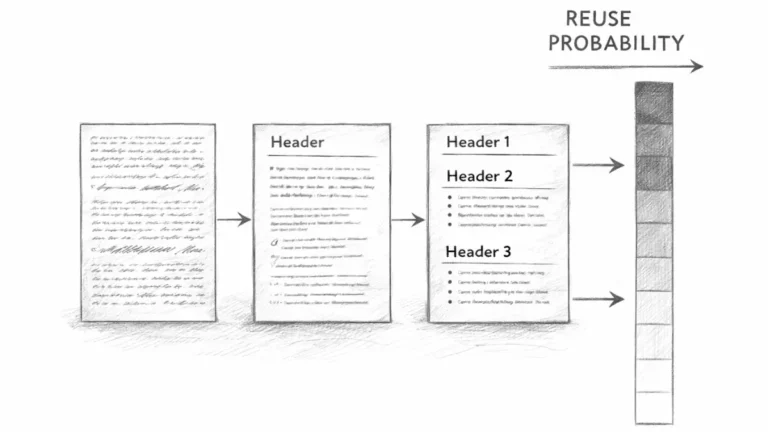
- Intent-centric sectioning. The separation of conceptual layers around intent, meaning, evaluation, and prioritization enables AI systems to interpret query logic as a progressive reasoning chain rather than isolated topics.
- Reasoning-aligned hierarchy. The consistent H2→H3 depth reflects analytical dependency between concepts, allowing generative models to reconstruct how conclusions emerge from prior definitions and claims.
- Embedded definitional grounding. Local micro-definitions placed at structural entry points stabilize terminology and reduce semantic drift during long-context interpretation.
- Modular reasoning containment. Discrete reasoning blocks constrain inference within bounded conceptual units, improving extraction accuracy and cross-section reference resolution.
- System-level coherence signaling. Recurrent structural patterns across sections signal a unified analytical system, which supports consistent interpretation under generative indexing.
This structural configuration explains how generative systems interpret the page as a coherent reasoning artifact, preserving intent continuity and semantic stability across extended analytical contexts.
FAQ: Generative Keyword Intelligence
What is generative keyword intelligence?
Generative keyword intelligence is an analytical discipline that evaluates search queries based on intent, meaning, and long-term informational value rather than volume metrics.
How does keyword intelligence differ from traditional keyword research?
Traditional keyword research focuses on frequency and competition, while keyword intelligence focuses on intent structure, semantic clarity, and reuse potential.
Why is intent more important than query wording?
Intent defines the informational goal behind a query, whereas wording may vary widely without changing the underlying meaning.
How do AI systems interpret query meaning?
AI systems evaluate contextual signals, modifiers, and inferred objectives to reconstruct intent beyond literal string matching.
What makes a query meaningful for content systems?
A meaningful query supports structured explanation, aligns with existing knowledge architecture, and remains relevant across changing contexts.
Why is query value independent of search volume?
High search volume does not guarantee informational depth, while low-volume queries may justify durable, high-value content.
How are queries prioritized in keyword intelligence systems?
Queries are prioritized based on strategic relevance, intent stability, and potential for long-term reuse within content systems.
What role do workflows play in keyword intelligence?
Workflows ensure that query discovery, evaluation, and deployment follow consistent reasoning paths across teams and time.
How does keyword intelligence support generative search?
Keyword intelligence aligns content with how generative systems reason about intent, structure, and semantic continuity.
What skills are required to work with keyword intelligence?
This discipline requires analytical reasoning, semantic precision, and the ability to model intent within structured content systems.
Glossary: Key Terms in Keyword Intelligence
This glossary defines core concepts used throughout the article to ensure consistent interpretation of query intelligence by both humans and AI systems.
Keyword Intelligence
An analytical discipline that evaluates search queries based on intent, meaning, and long-term informational value rather than frequency or competition metrics.
Meaningful Query
A search query that supports structured explanation, aligns with stable intent, and contributes to durable knowledge creation.
Intent Structure
The underlying informational goal and scope expressed by a query, independent of its surface wording or phrasing.
Query Meaning Analysis
The process of identifying the implicit informational objective of a query through contextual signals and interpretive logic.
Query Value Assessment
A structured evaluation that determines a query’s relevance, intent clarity, and potential contribution to long-term content systems.
Semantic Stability
The degree to which a query retains consistent meaning across contexts, time, and generative interpretation environments.
Query Prioritization
The process of ranking evaluated queries based on strategic relevance, reuse potential, and editorial capacity constraints.
Query Intelligence Workflow
A repeatable sequence that governs query discovery, interpretation, evaluation, and deployment within content systems.
Editorial Alignment
The degree to which selected queries integrate coherently with an existing content architecture and knowledge strategy.
Generative Interpretability
The ability of AI systems to consistently extract, reason over, and reuse content based on clear intent and structural signals.

Author Sergey Kuchinskiy
Founder of PostUpgrade. Researcher in Generative Engine Optimization (GEO), semantic structuring, and machine reasoning systems. Focuses on AI-readable content architecture, computational interpretation, and scalable knowledge retrieval. Author of 200+ analytical publications on generative visibility, semantic mapping, and AI-first information design.
Verified Expertise
- Generative Engine Optimization (GEO)
- AI Content Engineering & Semantic Structuring
- Computational Linguistics & Machine Reasoning
- Large-Scale Content Architecture
Research Focus
AI Search · Generative Visibility · Semantic Mapping · Machine Sentence Design · Reasoning Stability · Knowledge Extraction Models
Academic Contributions
- 200+ analytical research publications
- AI-first page architecture methodologies
- Semantic Frameworks for Machine Interpretation (SFMI)
- Generative Visibility Standards 2024–2025
Citation Metrics
AI-model reuse rate (GEO-Score): 92/100 · Cross-model consistency: 87% · Reasoning chain stability: 91%
Researcher ID: PU-ORCID-7421-9912
View all publications →Connect on LinkedIn →