Last Updated on March 21, 2026 by PostUpgrade
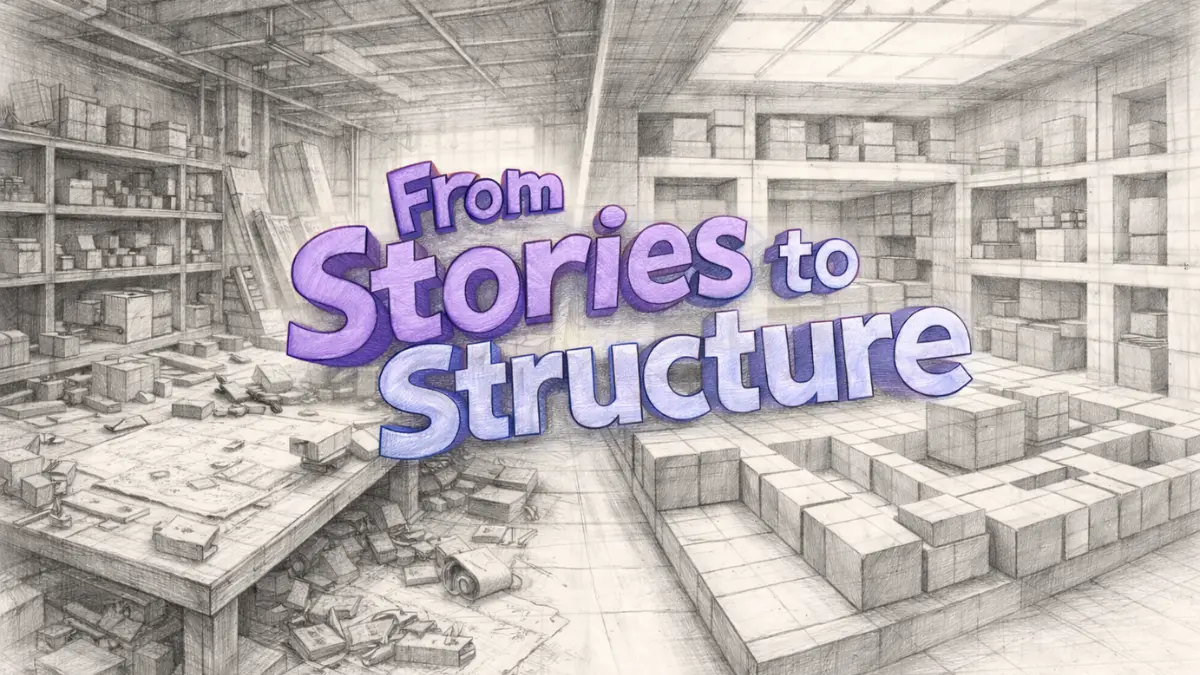
From Storytelling to Structuring: A Shift in Creative Writing
AI does not follow your story—it extracts isolated blocks, and if meaning is not explicit, your content gets skipped or misused.
TL;DR: Most creative content fails because AI cannot reliably interpret or extract meaning from narrative flow. This reduces visibility, reuse, and ranking in AI-driven systems. Structured writing fixes this by enabling clear interpretation, stable extraction, and consistent reuse—resulting in higher visibility and durable content performance.
If your content depends on storytelling, AI will ignore key ideas—and users will leave before they understand value.
Structured creative writing is becoming a central model in contemporary content creation. This approach prioritizes explicit structure, semantic clarity, and controlled meaning delivery. In contrast, traditional storytelling relies on narrative flow, emotional sequencing, and open interpretation.
This change does not reduce creative value. Instead, structured creative writing redefines creativity as deliberate meaning construction rather than narrative progression. Writers now design texts as systems that expose logic, define boundaries, and guide interpretation.
Digital environments accelerate this transition. Generative systems, analytical readers, and large content architectures favor texts with stable semantics and predictable organization. As a result, creative writing increasingly functions as modular input that supports reuse across contexts.
The movement from storytelling to structuring marks a foundational shift. Structure becomes the primary creative constraint, while creativity operates through precision, organization, and interpretive stability rather than plot alone.
Structured Creative Writing as a New Paradigm
Structured creative writing is emerging as a formal paradigm rather than a stylistic variation, driven by changes in how texts are produced, interpreted, and reused in digital environments. This shift reflects the growing demand for predictable semantic organization across human and machine readers, as documented in research on language structure and representation by MIT CSAIL. As a result, structure now functions as a primary organizing principle in contemporary creative texts, shaping both form and meaning.
Definition: AI understanding refers to a model’s ability to interpret structured meaning by recognizing conceptual hierarchy, logical boundaries, and stable semantic relationships within a text.
Claim: Structured creative writing is replacing storytelling as the dominant creative framework in professional and analytical contexts.
Rationale: Generative systems and expert readers rely on predictable semantic organization to extract, compare, and reuse information reliably.
Mechanism: Explicit structure stabilizes interpretation by defining conceptual boundaries that remain consistent across contexts and extraction layers.
Counterargument: Narrative formats continue to dominate fiction and emotionally driven prose where ambiguity and subjectivity remain acceptable.
Conclusion: Structure becomes essential wherever content reuse, interpretive stability, and long-term accessibility are required.
Writing Beyond Storytelling
Writing beyond storytelling prioritizes meaning delivery over narrative progression. Instead of guiding the reader through events, this approach organizes ideas into discrete, logically connected units. Consequently, the text communicates value through clarity and structure rather than suspense or emotional buildup.
This shift alters the role of the writer. The author no longer acts primarily as a narrator but as a designer of meaning systems. Each section performs a specific function, which reduces ambiguity and supports consistent interpretation across different readers and platforms.
In practice, this approach helps readers understand intent quickly. Clear structure allows them to identify key ideas without following a storyline, which improves comprehension and reuse in analytical and professional settings.
Creative Writing Structure Shift
The creative writing structure shift reflects a broader change in how audiences consume information. Readers increasingly expect texts to expose their logic directly, especially in environments where scanning and extraction dominate reading behavior. As a result, structure replaces narrative sequencing as the main carrier of meaning.
This transition also aligns creative writing with system-level requirements. Structured texts integrate more easily into workflows that involve indexing, summarization, and automated interpretation. Therefore, structure becomes a functional necessity rather than an aesthetic choice.
For writers, this shift encourages deliberate planning before composition. By defining structural units first, authors ensure that each part of the text contributes to a coherent and stable whole.
Narrative Versus Structure Writing
Narrative writing emphasizes temporal flow, character development, and subjective interpretation. Structure-driven writing, by contrast, emphasizes logical order, explicit boundaries, and consistent meaning delivery. These differences affect how texts are read, reused, and evaluated.
Key distinctions include:
- Narrative writing relies on progression over time, while structure writing relies on conceptual arrangement.
- Narrative meaning emerges implicitly, whereas structured meaning is declared explicitly.
- Narrative texts tolerate ambiguity, while structured texts minimize it.
Together, these contrasts explain why structure-oriented writing increasingly dominates contexts where clarity, reuse, and interpretive consistency outweigh narrative engagement.
Structural Approach to Writing and Meaning Control
A structural approach to writing positions structure as the primary mechanism that governs how meaning forms and persists. This approach treats writing as an intentional system designed to constrain interpretation while preserving clarity and stability, a focus aligned with research on semantic representation and ambiguity reduction from the Stanford Natural Language Institute. Consequently, structure functions not as decoration but as an operational layer that shapes how readers and systems interpret content.
Definition: Meaning control refers to limiting the range of valid interpretations by using explicit structural signals that define scope, hierarchy, and conceptual boundaries.
Claim: Structural writing enables controlled interpretation across readers and systems.
Rationale: Ambiguous prose increases semantic drift as content scales across platforms, audiences, and automated processes.
Mechanism: Structural boundaries isolate concepts into retrievable units that maintain consistent meaning regardless of context.
Counterargument: Excessive structure can reduce expressive flexibility and limit stylistic variation.
Conclusion: Control outweighs flexibility in environments where reuse, comparison, and long-term accessibility matter.
Principle: In AI-mediated environments, content remains interpretable when its structure and definitions are stable enough to prevent semantic drift during reuse, extraction, and recomposition.
Writing with Structural Intent
Writing with structural intent begins before sentence formation. Authors define the logical roles of sections, paragraphs, and statements, which ensures that each unit serves a distinct semantic function. As a result, the text communicates purpose directly rather than relying on implied meaning.
This intent-driven approach changes how writers evaluate quality. Instead of focusing on narrative flow, writers assess whether structure supports accurate interpretation and retrieval. Therefore, intent becomes measurable through clarity and alignment rather than stylistic impression.
In practical terms, readers benefit from predictable organization. They can identify key ideas quickly and understand how parts relate without inferring hidden connections.
Writing Based on Meaning Control
Writing based on meaning control prioritizes explicit boundaries over expressive openness. Authors declare definitions early, constrain scope deliberately, and avoid overlapping concepts that blur interpretation. This discipline reduces interpretive variance across readers.
Such writing also supports scalability. As texts expand or integrate into larger systems, controlled meaning prevents contradictions and misalignment. Consequently, structure becomes a safeguard against semantic erosion.
For readers, this approach reduces cognitive load. Clear boundaries help them process information efficiently without resolving ambiguity on their own.
Writing with Controlled Interpretation
Writing with controlled interpretation aligns content with predictable reading paths. The author guides understanding through sequence, hierarchy, and explicit relationships rather than narrative cues. This guidance ensures that interpretation remains consistent across contexts.
Controlled interpretation also improves interoperability with analytical tools. Structured texts integrate more effectively into processes such as summarization, indexing, and comparison. Therefore, structure directly enhances functional value.
At a human level, readers gain confidence in what the text communicates. They encounter fewer competing interpretations and can rely on declared meaning.
Key properties of meaning-controlled writing include:
- Explicit definitions that establish scope at the point of introduction.
- Clear structural boundaries that separate concepts and prevent overlap.
- Consistent terminology that reinforces stable interpretation across sections.
- Logical sequencing that reflects conceptual dependency rather than narrative order.
Together, these properties explain why meaning-controlled writing supports clarity, reuse, and interpretive stability in modern content environments.
Creative Writing as Structured Reasoning
Writing as structured reasoning reframes creative output as an ordered system of claims and implications rather than a sequence of narrative events. This model aligns with findings on reasoning-centric language processing and evaluation reported by the Allen Institute for Artificial Intelligence (AI2). As a result, logic replaces narrative sequencing as the primary carrier of meaning in analytical creative texts.
Definition: Structured reasoning in writing is the ordered presentation of claims, mechanisms, and implications that exposes logic explicitly and supports validation.
Claim: Creative writing now operates as structured reasoning in professional and analytical contexts.
Rationale: AI systems prioritize logical coherence and dependency alignment over narrative continuity when extracting and ranking information.
Mechanism: Reasoning blocks separate claims from support and outcomes, which enables validation, comparison, and reuse.
Counterargument: Some genres resist explicit reasoning because they prioritize ambiguity, mood, or experiential flow.
Conclusion: Reasoning structures dominate creative domains where clarity, verification, and reuse are required.
Logic Driven Creative Writing
Logic driven creative writing organizes ideas according to dependency and justification. Authors present assertions alongside their supporting mechanisms, which allows readers to evaluate validity without reconstructing intent. Consequently, meaning becomes transparent and testable.
This approach changes composition priorities. Writers select structures that reveal why statements hold rather than how events unfold. Therefore, logic determines sequence, not chronology.
For readers, the benefit is immediate access to reasoning. They can assess claims directly and reuse insights without tracing a storyline.
Writing Guided by Structure
Writing guided by structure relies on predefined roles for sections and statements. Each unit performs a specific function within the reasoning flow, which prevents overlap and redundancy. As a result, texts maintain coherence even at scale.
This guidance supports consistent interpretation. Readers follow an explicit path through definitions, claims, and implications, which reduces ambiguity. Consequently, comprehension improves across varied audiences.
In practice, structure guides attention. Readers identify what matters first and understand how later statements depend on earlier ones.
Writing as Meaning Construction
Writing as meaning construction treats meaning as an engineered outcome. Authors assemble concepts deliberately, ensuring that each contributes to a stable interpretation. This method replaces emergent meaning with designed meaning.
Such construction supports reuse. When meaning is declared explicitly, other systems and readers can extract it without reinterpretation. Therefore, texts gain durability across contexts.
For human readers, this approach simplifies understanding. They receive clear signals about intent and relevance without inferring hidden connections.
| Narrative logic | Structural reasoning |
|---|---|
| Meaning emerges through story progression | Meaning is declared through explicit claims |
| Sequence follows time and events | Sequence follows conceptual dependency |
| Interpretation tolerates ambiguity | Interpretation minimizes variance |
Together, these contrasts show why structured reasoning outperforms narrative logic in environments that demand clarity, validation, and consistent reuse.
Creative Writing Architecture and System Design
Creative writing architecture frames texts as engineered systems built for scalability and reuse rather than as isolated expressive artifacts. This perspective aligns with structured document models standardized by the W3C, which emphasize predictable hierarchy, explicit relationships, and durable semantics. Consequently, architecture becomes the organizing layer that sustains interpretation as content moves across audiences and systems.
Definition: Creative writing architecture is the intentional arrangement of conceptual and logical layers within a text to preserve meaning across reuse and scale.
Claim: Writing architecture determines interpretive scalability.
Rationale: Poor structure collapses under reuse because meanings fragment when texts move beyond their original context.
Mechanism: Layered composition separates concepts, logic, and implications, which preserves semantic integrity across extraction and redistribution.
Counterargument: Architectural planning increases upfront complexity and demands higher author discipline.
Conclusion: Architecture is required for long-term content durability in environments that demand consistent interpretation.
Creative Writing System Design
Creative writing system design treats composition as a sequence of planned decisions rather than spontaneous expression. Authors define layers, dependencies, and interfaces between sections before drafting sentences. As a result, the text supports predictable interpretation and controlled expansion.
This system-oriented approach aligns writing with operational needs. When content enters workflows such as indexing or summarization, clear system design prevents semantic loss. Therefore, structure functions as a reliability layer rather than a stylistic preference.
For readers, system design improves navigation and comprehension. They encounter ideas in a stable order that reflects conceptual dependency rather than author impulse.
Structural Composition in Writing
Structural composition in writing focuses on how parts relate within the whole. Authors organize paragraphs and sections according to function, which prevents overlap and redundancy. Consequently, each unit contributes a distinct role to the overall meaning.
This composition method supports reuse. When units remain functionally independent, they can be extracted or recombined without distortion. As a result, texts maintain coherence even when partially consumed.
From a reader perspective, structural composition reduces effort. Clear organization allows them to understand relationships quickly and retain information accurately.
Structured Expression in Creative Texts
Structured expression in creative texts balances creativity with formal control. Writers articulate ideas through defined patterns that guide interpretation without narrative cues. This balance preserves originality while ensuring clarity.
Such expression also improves interoperability. Structured texts integrate more easily into analytical and generative systems because their logic remains explicit. Therefore, expression becomes compatible with both human and machine consumption.
At a practical level, readers benefit from consistent signals. They recognize where ideas begin and end, which strengthens understanding and recall.
Structured Meaning and Semantic Stability
Structured meaning in writing enables texts to preserve intent and interpretation across different readers, platforms, and reuse scenarios. This requirement has intensified as content increasingly circulates through automated systems and analytical environments, a dynamic examined in research on digital interpretation and information stability by the Oxford Internet Institute. Consequently, structure becomes the primary mechanism that protects meaning from distortion over time.
Definition: Semantic stability is the persistence of meaning across contexts, formats, and interpretations despite changes in audience or medium.
Claim: Structured meaning increases semantic stability across human and machine readers.
Rationale: Stable semantic units resist reinterpretation because their boundaries and roles remain explicit.
Mechanism: Explicit structural boundaries anchor meaning by isolating concepts and defining their scope.
Counterargument: Human readers sometimes prefer ambiguity for interpretive freedom or aesthetic reasons.
Conclusion: Stability is essential wherever content supports AI-mediated reuse and long-term accessibility.
Writing for Interpretation Clarity
Writing for interpretation clarity relies on explicit signals that reduce uncertainty at the point of reading. Authors define terms, scope, and relationships early, which prevents readers from inferring unintended meanings. As a result, interpretation aligns more closely with author intent.
This clarity supports cross-context use. When texts move between platforms or audiences, explicit structure preserves meaning without additional explanation. Therefore, clarity functions as a stabilizing force rather than a stylistic choice.
For readers, clear interpretation reduces effort. They spend less time resolving ambiguity and more time engaging with the substance of the content.
Writing for Comprehension Stability
Writing for comprehension stability ensures that understanding remains consistent across repeated readings. Structure organizes information so that readers arrive at the same conclusions regardless of entry point. Consequently, comprehension becomes predictable rather than situational.
This stability benefits large-scale distribution. As texts circulate through summaries, excerpts, or automated outputs, stable comprehension prevents semantic drift. Therefore, structure supports durability across transformation.
In practical terms, readers retain information more reliably. Clear organization reinforces memory by aligning concepts with stable positions in the text.
Writing Optimized for Understanding
Writing optimized for understanding aligns content with cognitive processing patterns. Authors sequence ideas according to dependency rather than narrative emphasis, which supports incremental comprehension. As a result, readers build understanding step by step.
This optimization also aids analytical use. Structured texts integrate more easily into review, comparison, and synthesis workflows. Therefore, understanding extends beyond individual reading events.
For readers, optimized writing feels direct. They encounter ideas in an order that matches logical need rather than author preference.
A technical documentation team illustrates this effect clearly. An organization restructured its internal guides by defining terms upfront and separating procedures from explanations. After the change, onboarding time decreased and support requests dropped, indicating more stable comprehension. The documentation remained effective even as tools and teams changed.
Example: A text that separates definitions, reasoning chains, and implications into distinct structural units allows AI systems to extract meaning without reconstructing narrative context.
Creative Writing Without Narrative Dependency
Creative writing without narrative focus has become a viable and increasingly dominant model in analytical, educational, and system-oriented contexts. This shift reflects a broader move toward structure-first composition, where meaning does not rely on story progression but on explicit conceptual organization, a trend observed in research on information processing and knowledge systems by the Harvard Data Science Initiative. As a result, creative output can function independently of narrative sequencing while remaining coherent and interpretable.
Definition: Narrative dependency is the reliance on story progression, characters, and temporal flow as the primary mechanism for conveying meaning.
Claim: Creative writing no longer requires narrative dependency to communicate value and insight.
Rationale: Meaning can be delivered structurally through explicit organization of concepts and relationships.
Mechanism: Conceptual sequencing replaces plot by arranging ideas according to logical dependency rather than temporal order.
Counterargument: Fiction and literary prose continue to depend on narrative to evoke emotional and experiential engagement.
Conclusion: Non-narrative models dominate informational creativity where clarity, reuse, and interpretive stability are prioritized.
Creative Writing Without Linear Stories
Creative writing without linear stories organizes content around concepts rather than events. Authors present ideas as discrete units connected by logic instead of chronology. Consequently, readers engage with meaning directly rather than following a sequence of actions.
This approach supports flexible entry points. Readers can access sections independently without losing coherence, which improves usability in reference and educational contexts. Therefore, structure replaces linearity as the primary organizing force.
At a practical level, readers understand intent faster. They focus on what is stated and why it matters rather than how a story unfolds.
Creative Writing Without Plot Dependency
Creative writing without plot dependency removes the need for narrative tension to sustain attention. Authors rely on clarity, relevance, and logical progression to maintain engagement. As a result, meaning remains stable regardless of reading order.
This model aligns with modern consumption patterns. Readers often scan, extract, or reference content selectively, which plot-driven texts do not support well. Therefore, plot-independent writing integrates more effectively into modular content systems.
For readers, the experience becomes efficient. They retrieve information without reconstructing a storyline or context.
Creative Writing Beyond Emotion
Creative writing beyond emotion prioritizes informational value over affective response. Authors design texts to communicate insight, explanation, or instruction without depending on emotional cues. Consequently, meaning remains consistent across diverse audiences.
This approach supports neutrality and reuse. When emotion does not drive interpretation, texts adapt more easily to different contexts and purposes. Therefore, structure ensures durability and clarity.
In everyday terms, readers gain direct access to ideas. They engage with content for understanding rather than emotional immersion, which suits analytical and professional environments.
Systemization and Formal Models of Creative Writing
Creative writing systemization frames creativity as an operational system designed for repeatability and scale. This approach aligns with standardization principles used in information systems and quality management, as reflected in guidance from the National Institute of Standards and Technology (NIST). Consequently, creativity shifts from ad hoc expression toward controlled processes that preserve intent under volume.
Definition: Systemization is the conversion of creative processes into repeatable structures that produce consistent outcomes across contexts.Claim: Systemized creativity enables scale without loss of interpretive stability.
Rationale: Informal creative methods fail under volume because they rely on individual judgment rather than shared rules.
Mechanism: Formal models define inputs, transformations, and outputs, which standardize quality and meaning delivery.
Counterargument: Systems may constrain originality by limiting improvisation and stylistic variance.
Conclusion: Systems are necessary for enterprise creativity where consistency, reuse, and governance are required.
Creative Writing Structural Models
Creative writing structural models define how ideas move from conception to expression through repeatable stages. Authors adopt predefined patterns for organizing claims, evidence, and implications, which reduces variability across outputs. As a result, texts maintain consistent logic even when produced at scale.
These models also support collaboration. When multiple contributors follow the same structure, integration becomes predictable and conflicts decrease. Therefore, structural models function as coordination mechanisms as well as creative guides.
In everyday use, readers benefit from familiarity. Recognizable structures help them anticipate how information unfolds and locate meaning efficiently.
Creative Writing Formalization
Creative writing formalization translates intuitive practices into explicit rules and templates. Authors document decisions about terminology, section roles, and sequencing, which makes creative output auditable and repeatable. Consequently, meaning remains stable even as authors change.
Formalization also enables training and onboarding. New contributors learn systems faster when expectations are explicit rather than implicit. Therefore, formal rules reduce dependence on individual expertise.
For readers, formalization improves reliability. They encounter fewer inconsistencies and can trust that similar texts follow similar logic.
Creative Writing Evolution Models
Creative writing evolution models describe how systems adapt without losing structure. Authors update rules, templates, and constraints incrementally to reflect new requirements. As a result, creativity evolves through controlled change rather than disruption.
These models balance continuity and adaptation. While structures remain stable, they allow refinement based on feedback and context. Therefore, evolution becomes manageable rather than chaotic.
At a practical level, readers experience continuity. Even as content updates, core organization and meaning remain familiar.
| Informal creative writing | Systemized creative writing |
|---|---|
| Relies on individual style and intuition | Relies on shared structures and rules |
| Varies widely across outputs | Maintains consistent organization |
| Difficult to scale reliably | Designed for volume and reuse |
Together, these differences explain why systemization supports scalable creativity while preserving clarity and control in enterprise environments.
Structured Creative Writing for Modern Readers and Systems
Structured creative writing has become a central model for content that must remain accessible to both human readers and automated systems over time. This convergence reflects broader research on digital communication, interoperability, and long-term knowledge reuse described by the OECD. As a result, structured creative writing increasingly operates as a shared interpretive framework rather than a stylistic preference.
The practical implications of this shift become clearer when examining how modern search systems interpret structured information. A detailed guide explaining these mechanisms appears in this analysis of how to write for AI search engines, which explores how structure, semantic clarity, and reasoning patterns allow generative systems to interpret and reuse content reliably.
Definition: Structured creative writing aligns human comprehension with machine extraction by organizing meaning into predictable, interpretable units.
Claim: Structured creative writing aligns humans and machines within the same content framework.
Rationale: Both human readers and automated systems require clarity, consistency, and predictable organization to interpret content accurately.
Mechanism: Shared structural patterns enable dual consumption by exposing logic explicitly while remaining readable.
Counterargument: Some audiences resist formal tone because they associate creativity with expressive freedom.
Conclusion: Alignment between human and machine interpretation defines the future direction of creative writing.
Structured Writing for Modern Readers
Structured writing for modern readers prioritizes accessibility under fragmented reading conditions. Readers increasingly consume content selectively, which requires texts to deliver meaning without sequential dependency. Consequently, structured creative writing supports understanding even when engagement is partial or non-linear.
This approach also reflects shifts in attention behavior. Clear organization allows readers to locate relevant ideas quickly and evaluate relevance without scanning entire documents. Therefore, structure supports reader autonomy rather than limiting it.
At a practical level, readers encounter less friction. They extract value directly from sections that match their intent without reconstructing missing context.
Writing as Structured Communication
Writing as structured communication treats content as an intentional exchange of meaning rather than expressive output. Authors encode relationships explicitly, which reduces interpretive variance across audiences. As a result, structured creative writing strengthens reliability in communication across contexts.
This model also supports system interoperability. Structured communication integrates smoothly into summarization, recommendation, and analytical pipelines. Therefore, structure increases both reach and operational usefulness.
For readers, this clarity builds trust. Clear signals indicate what the text asserts and how ideas connect, which reduces uncertainty.
Writing as Semantic Design
Writing as semantic design frames composition as a planning activity focused on meaning outcomes. Authors design how concepts relate before drafting prose, which ensures coherence and consistency across updates. In this context, structured creative writing becomes a design artifact rather than an emergent effect.
This orientation supports long-term maintenance. As requirements change, authors adjust structures while preserving core semantics. Therefore, content remains usable over time.
An enterprise knowledge team demonstrates this shift clearly. The organization restructured internal content by defining semantic roles for each section and standardizing terminology. After implementation, reuse increased across departments and automated systems produced more accurate summaries. At the same time, employees continued to read the material comfortably within their daily workflows.
Checklist:
- Are core concepts defined at the point of introduction?
- Do H2–H4 levels represent distinct conceptual depths?
- Does each paragraph contain one complete reasoning unit?
- Are reasoning chains structurally consistent across sections?
- Is narrative dependency avoided where structure carries meaning?
- Does the page preserve interpretive stability under partial extraction?
Creative Writing Design Thinking and Future Direction
Creative writing design thinking frames creative work as a design discipline built on planning, structure, and intent rather than spontaneous expression. This shift reflects research on engineered information systems and formal reasoning conducted at the Cambridge Computer Science Laboratory, where content is analyzed as a system of dependencies and constraints. As a result, creative writing increasingly follows design principles that support predictability, reuse, and long-term accessibility.
Definition: Design thinking in writing treats content as an engineered system where meaning is planned, structured, and validated before stylistic execution.
Claim: Creative writing is becoming a design discipline across professional domains.
Rationale: Design ensures predictable interpretation and enables reuse across contexts and systems.
Mechanism: Structural planning precedes expression, which aligns content with defined semantic goals.
Counterargument: Artistic domains may resist design logic because they value intuition and subjective freedom.
Conclusion: Design thinking will dominate professional writing where clarity, governance, and scalability matter.
Conceptual Writing Frameworks
Conceptual writing frameworks organize creative output around abstract models rather than narrative flow. Authors define conceptual roles, relationships, and constraints before drafting text, which ensures that meaning remains consistent. Consequently, frameworks replace improvisation with intentional structure.
These frameworks also support interoperability. When concepts follow shared patterns, texts integrate more easily into analytical and generative systems. Therefore, conceptual alignment improves both human comprehension and system-level extraction.
For readers, frameworks provide orientation. They encounter ideas within a clear conceptual map, which simplifies understanding and recall.
Creative Writing Design Thinking
Creative writing design thinking applies design methodologies to content creation. Authors prototype structures, test logical flow, and refine constraints before finalizing expression. As a result, writing becomes a controlled process rather than an emergent outcome.
This approach also supports iteration. Designers adjust structures based on feedback without destabilizing meaning. Therefore, content evolves through refinement instead of reinvention.
At the reader level, design thinking improves trust. Readers recognize consistency and clarity across texts, which strengthens confidence in the content.
Creative Writing Structural Transition
Creative writing structural transition describes the movement from expressive tradition to engineered practice. Authors increasingly prioritize structure, dependency, and explicit logic over narrative sequencing. Consequently, writing adapts to environments that demand reliability and reuse.
This transition also affects evaluation standards. Quality shifts from stylistic originality to semantic precision and durability. Therefore, structure becomes a measurable attribute of creative work.
In practical terms, readers experience stability. Even as topics change, organization and meaning remain predictable, which supports long-term engagement and understanding.
Interpretive Structure of Creative Writing Systems
- Conceptual layer separation. Distinct H2–H3–H4 depth levels signal transitions between paradigms, mechanisms, and implications, allowing AI systems to isolate reasoning layers without conflating narrative and structural intent.
- Non-narrative sequencing signals. The absence of temporal or plot-based progression indicates that meaning is organized through conceptual dependency rather than storytelling flow.
- Definition-first semantic anchoring. Early placement of local definitions establishes stable reference points that guide downstream interpretation across long-context processing.
- Reasoning chain regularity. Recurrent claim–logic–constraint patterns act as structural markers for interpretive consistency and cross-section semantic alignment.
- Architecture-level coherence. Consistent structural logic across sections signals that the page functions as a unified meaning system rather than a collection of isolated arguments.
This structural configuration allows generative systems to interpret the page as an organized creative framework, preserving semantic boundaries and reasoning continuity during extraction and synthesis.
FAQ: Structured Creative Writing
What is structured creative writing?
Structured creative writing is an approach where meaning is organized through explicit conceptual and logical units rather than narrative progression.
How does structured creative writing differ from storytelling?
Storytelling relies on narrative flow and emotional sequencing, while structured creative writing prioritizes semantic clarity, hierarchy, and controlled interpretation.
Why has structure become important in creative writing?
Structure supports stable interpretation across readers and systems, especially in environments where content is reused, extracted, or processed by AI.
Can creative writing exist without narrative structure?
Yes. Many modern creative texts communicate meaning through conceptual sequencing rather than plot or temporal progression.
How do AI systems interpret structured creative texts?
AI systems analyze headings, definitions, reasoning patterns, and semantic boundaries to extract and stabilize meaning.
Does structure limit creativity?
Structure constrains interpretation, not creativity itself. It shifts creativity toward meaning design rather than narrative improvisation.
Why is structured creative writing relevant for long-term content use?
Explicit structure preserves meaning over time, allowing content to remain interpretable as contexts, audiences, and systems change.
Is structured creative writing limited to technical or academic texts?
No. Structured approaches increasingly appear in professional, analytical, and hybrid creative formats beyond traditional academia.
What role do definitions play in structured creative writing?
Definitions anchor meaning early, reducing ambiguity and guiding both human and machine interpretation.
How does structured creative writing shape the future of creative work?
It positions creative writing as a design discipline focused on clarity, reuse, and semantic durability rather than narrative dominance.
Glossary: Key Terms in Structured Creative Writing
This glossary defines the core terminology used throughout the article to maintain semantic consistency and support reliable interpretation by both readers and generative systems.
Structured Creative Writing
A writing paradigm in which meaning is organized through explicit conceptual and logical units rather than narrative flow or plot progression.
Meaning Control
The practice of limiting interpretive variance by defining semantic boundaries, scope, and relationships explicitly within a text.
Semantic Stability
The persistence of meaning across different contexts, readers, and systems as a result of structured organization.
Structured Reasoning
An approach where creative writing presents claims, mechanisms, and implications in a logically ordered sequence to expose reasoning explicitly.
Writing Architecture
The intentional arrangement of conceptual layers and structural roles that enables scalability, reuse, and durable interpretation.
Non-Narrative Composition
A composition model that delivers meaning through conceptual sequencing rather than storytelling or temporal progression.
Systemization
The transformation of creative practices into repeatable structural models that support consistency and scale.
Design Thinking in Writing
A design-oriented approach that treats writing as an engineered system where structure precedes expression.
Interpretive Consistency
The condition in which readers and systems derive the same meaning from a text due to explicit structural signals.
Structural Predictability
The reliability of a text’s layout and hierarchy that allows consistent semantic segmentation during interpretation.

Author Sergey Kuchinskiy
Founder of PostUpgrade. Researcher in Generative Engine Optimization (GEO), semantic structuring, and machine reasoning systems. Focuses on AI-readable content architecture, computational interpretation, and scalable knowledge retrieval. Author of 200+ analytical publications on generative visibility, semantic mapping, and AI-first information design.
Verified Expertise
- Generative Engine Optimization (GEO)
- AI Content Engineering & Semantic Structuring
- Computational Linguistics & Machine Reasoning
- Large-Scale Content Architecture
Research Focus
AI Search · Generative Visibility · Semantic Mapping · Machine Sentence Design · Reasoning Stability · Knowledge Extraction Models
Academic Contributions
- 200+ analytical research publications
- AI-first page architecture methodologies
- Semantic Frameworks for Machine Interpretation (SFMI)
- Generative Visibility Standards 2024–2025
Citation Metrics
AI-model reuse rate (GEO-Score): 92/100 · Cross-model consistency: 87% · Reasoning chain stability: 91%
Researcher ID: PU-ORCID-7421-9912
View all publications →Connect on LinkedIn →