Last Updated on March 21, 2026 by PostUpgrade
How to Develop a Generative Content Funnel
AI does not follow your funnel—it reconstructs meaning from fragments, and if structure fails, your content becomes invisible before a user even sees it.
TL;DR: Most content fails because AI cannot clearly interpret and extract its structure, which reduces visibility and reuse across generative systems. Without explicit semantic layering, AI breaks meaning during extraction and cannot reuse it reliably. A generative content funnel fixes this by structuring content for interpretation, extraction, and reuse, leading to stable AI visibility and higher distribution across discovery layers.
If your structure is unclear, AI will ignore your content regardless of quality, and users will never reach it.
Content discovery has shifted from linear SEO funnels toward systems where machine interpretation defines visibility and reuse. AI systems now act as primary interpreters and distributors of content, evaluating structure, consistency, and semantic clarity before any human interaction occurs. As a result, a Generative Content Funnel becomes a structural framework for organizing information so it remains accessible, extractable, and reusable across AI-driven discovery environments.
Generative Content Funnel as a System Model
A generative content funnel model treats content as an operational system rather than a persuasive sequence, which aligns with how AI engines interpret and reuse information at scale, as demonstrated by research from the Stanford Natural Language Institute. This model prioritizes reproducibility, machine interpretability, and controlled scalability over short-term conversion logic. It also establishes a stable vocabulary that supports consistent interpretation across discovery layers.
Definition: A generative content funnel is a system-level content structure that enables AI models to interpret, traverse, and reuse meaning across discovery, synthesis, and summarization contexts without relying on sequential persuasion.
Generative content funnel is a structured content system designed for interpretation, reuse, and traversal by generative AI models across multiple discovery layers. This architectural approach connects directly to the broader concept of generative visibility, where structured knowledge enables AI systems to recognize, interpret, and reuse information across discovery environments. A strategic overview appears in this guide to building a generative visibility strategy, which explains how semantic clarity and structural design influence AI-driven discovery.
Claim: A generative content funnel functions as a system model rather than a linear conversion path.
Rationale: AI systems process content as interconnected knowledge units instead of following sequential persuasion steps.
Mechanism: The funnel organizes content into structured layers that define scope, boundaries, and traversal rules, which enables reliable meaning extraction and recombination.
Counterargument: Linear funnels still deliver results for transactional landing pages with narrow intent and limited semantic depth.
Conclusion: Generative environments demand system-based funnel modeling to support scalable interpretation and reuse.
Difference Between Funnel Model and Content Flow
A funnel model defines a stable structural system with explicit layers and interaction rules, while content flow describes how information moves through that system over time. The model determines which content types exist, how they relate, and where boundaries apply, whereas flow reflects sequencing, updates, and traversal paths. AI systems rely on the model to infer meaning, while flow influences only temporal access.
When teams separate the structural model from content flow, they can adjust publishing cadence and topical expansion without altering semantic logic. This separation reduces semantic drift as volume increases. As a result, AI systems maintain consistent interpretation even during rapid growth.
In practical terms, the funnel model acts as a blueprint, while content flow describes how information moves through that blueprint as new materials appear.
System Boundaries and Scope
System boundaries define what the generative content funnel includes and excludes at a structural level. These boundaries specify topic domains, enforce terminology constraints, and regulate relationships between content units. Clear scope limits prevent unrelated concepts from entering the system and diluting interpretability.
Explicit scope control also supports predictable scaling because AI systems can distinguish core knowledge from peripheral material. When boundaries remain clear, models assign higher confidence to extracted facts and relationships. This confidence directly influences reuse across summaries, answer cards, and generative interfaces.
Simply put, boundaries tell AI systems what belongs inside the funnel and what stays outside, which preserves meaning as the system expands.
| Funnel Aspect | Linear Funnel | Generative Content Funnel |
|---|---|---|
| Primary objective | User conversion | Machine interpretation and reuse |
| Structural logic | Sequential steps | Layered system model |
| Content relationships | Implicit and contextual | Explicit and defined |
| Scalability behavior | Degrades with volume | Improves with structure |
| AI interpretability | Incidental | Core design principle |
This comparison shows how a system-based funnel emphasizes structural clarity over persuasive sequencing, which mirrors how generative models construct internal knowledge representations.
Generative Content Funnel Architecture
A generative content funnel architecture defines how content layers interact and how AI systems traverse meaning across them, as shown by structural reasoning research from MIT CSAIL. This architectural view treats content as an interpretable system rather than a collection of pages. As a result, architecture directly shapes AI comprehension, extraction reliability, and reuse potential.
Funnel architecture defines the structural layers and their interaction rules inside a generative system.
Claim: Architecture determines whether content is reusable by AI systems.
Rationale: Generative engines rely on predictable structural hierarchies to infer meaning and relevance.
Mechanism: Layered architecture separates discovery, interpretation, and expansion functions, which stabilizes content comprehension.
Counterargument: Flat content structures reduce design complexity and speed up publishing.
Conclusion: Architectural depth is required for generative visibility and long-term interpretability.
Entry Layer: Generative Content Flow Design
The entry layer governs how AI systems first encounter and contextualize information within a generative environment. This layer activates discovery triggers such as definitional clarity, scoped headings, and consistent terminology that signal relevance to models. By controlling initial exposure, the system shapes how AI assigns topical intent and confidence.
Initial semantic anchoring occurs when the entry layer presents clear definitions and bounded concepts at the point of first contact. These anchors reduce ambiguity and prevent models from misclassifying the content domain. As a result, AI systems establish a stable reference frame before traversing deeper layers.
In simple terms, the entry layer tells AI systems what the content is about and why it belongs to a specific knowledge domain.
Core Layer: Generative Content Funnel Structure
The core layer forms the semantic backbone of the funnel by hosting stable topic cores that define enduring meaning. This layer enforces internal logic containment through consistent concept boundaries and repeatable reasoning patterns. AI systems depend on this stability to extract facts and relationships with high confidence.
By maintaining strict containment rules, the core layer prevents unrelated concepts from merging into central topics. This containment preserves interpretability as content volume grows. Consequently, AI systems treat the core layer as a reliable source of authoritative meaning.
Put simply, the core layer holds the main ideas together so AI systems can trust and reuse them accurately.
Expansion Layer: Generative Content Flow Modeling
The expansion layer manages how the funnel grows without compromising semantic integrity. It enables controlled topic expansion through semantic branching that follows predefined structural rules. This approach allows AI systems to explore related concepts while maintaining alignment with the core model.
Controlled expansion limits the risk of semantic drift by enforcing consistency checks and scope boundaries. When expansion follows architectural rules, AI systems can connect new content to existing knowledge graphs without confusion. This discipline supports long-term scalability and reuse.
In straightforward terms, the expansion layer lets the funnel grow wider while keeping its meaning clear and connected.
Semantic Layering and Funnel Logic
A generative content funnel logic governs how AI systems interpret, separate, and recombine meaning across content layers, as demonstrated by representation and reasoning research from Berkeley Artificial Intelligence Research (BAIR). This logic prioritizes explicit semantic containers over narrative flow to support reliable extraction and reuse. As a result, layered logic directly influences AI comprehension and limits semantic drift over time.
Semantic layering is the separation of content into interpretation-safe meaning units.
Claim: Semantic layering stabilizes AI interpretation.
Rationale: AI models infer meaning from structural boundaries rather than implied narrative context.
Mechanism: Containers isolate concepts and enforce separation rules that prevent cross-contamination across topics.
Counterargument: Rich narrative writing can convey context implicitly and improve human readability.
Conclusion: Explicit semantic layers outperform narrative structures for consistent AI interpretation.
Concept Blocks vs Mechanism Blocks
Concept blocks define what a thing is by fixing terminology, scope, and identity within a bounded container. These blocks anchor meaning by presenting stable definitions and attributes that remain invariant across the funnel. AI systems rely on this stability to recognize entities and maintain consistent references during traversal.
Mechanism blocks explain how a defined concept operates through processes, interactions, or rules. They build on concept blocks without redefining them, which preserves semantic clarity. This separation allows AI systems to map cause-and-effect relationships without confusing definitions with operations.
Simply stated, concept blocks name and bound ideas, while mechanism blocks explain how those ideas work in practice.
Example Blocks and Implication Blocks
Example blocks demonstrate how a concept or mechanism manifests in a concrete scenario without expanding the system scope. These blocks provide controlled instances that reinforce interpretation while avoiding new terminology. AI systems use examples to validate pattern consistency rather than to infer new definitions.
Implication blocks describe the consequences that follow from established concepts and mechanisms. They extend meaning logically while respecting existing boundaries, which prevents drift. This design allows AI systems to project outcomes and relevance without altering core semantics.
In clear terms, examples show how something appears, and implications explain what follows from it, both without changing the original meaning.
- Concept containment rules define strict boundaries for terminology and scope.
- Transition constraints regulate how content moves between blocks without merging meanings.
- Scope enforcement limits expansion to approved semantic paths.
Principle: Generative content systems achieve stable AI visibility when their architectural layers, terminology, and semantic containers remain consistent enough to support unambiguous machine interpretation.
Together, these controls maintain interpretability by ensuring that each layer contributes meaning without introducing ambiguity.
AI-Driven Content Funnel Modeling
An ai driven content funnel aligns content architecture with how AI engines traverse, synthesize, and reuse information, reflecting findings reported by the Allen Institute for Artificial Intelligence (AI2). This approach connects generative funnel design to model behavior rather than human persuasion patterns. It also clarifies why AI-first modeling differs structurally from human-first content planning.
AI-driven content funnel is a funnel designed primarily for machine traversal and synthesis.
Claim: AI-driven funnels prioritize interpretation over persuasion.
Rationale: AI systems extract meaning independently of user intent and evaluate structure before engagement signals.
Mechanism: Modeling emphasizes clarity, hierarchy, and reuse so models can assemble knowledge reliably.
Counterargument: Human engagement metrics still influence distribution in mixed discovery environments.
Conclusion: AI-first modeling defines future visibility by optimizing for machine interpretation.
AI Content Funnel Modeling Principles
ai content funnel modeling relies on explicit rules that govern how content units expose meaning to AI systems. These principles enforce consistent terminology, predictable hierarchy, and bounded scope so models can traverse content without ambiguity. As a result, AI engines assign higher confidence to extracted relationships and facts.
The principles also prioritize reuse by designing content blocks that remain valid outside their original page context. This design reduces dependency on narrative flow and page-level cues. Consequently, AI systems can recombine information across summaries and answers without distortion.
In practical terms, modeling principles tell AI systems how to read, trust, and reuse content units across different interfaces.
AI Content Funnel Layers
ai content funnel layers separate discovery, interpretation, and expansion functions to match how AI engines process information. Each layer exposes a specific type of signal, such as relevance cues at entry, stable meaning in the core, and controlled growth at the edges. This separation allows models to move through content with predictable expectations.
Layered design also simplifies maintenance because teams can adjust one layer without rewriting the entire system. AI systems benefit from this stability because structural changes remain localized. Over time, this approach supports scalable growth without semantic drift.
Put simply, layers organize content so AI systems know where to find meaning, how to interpret it, and how far to extend it.
An enterprise knowledge hub applied AI-first funnel logic by restructuring thousands of documents into layered semantic units. The team defined entry layers with strict definitions, rebuilt core layers around stable concepts, and limited expansion to approved branches. After deployment, AI systems produced more consistent summaries and fewer contradictory outputs. This outcome showed how AI-driven modeling improves synthesis quality at scale.
Content Funnel Design Principles for Generative Systems
A generative content funnel design formalizes content constraints that enable consistent machine interpretation, drawing on structural standards maintained by the W3C. This approach avoids visual metaphors and stylistic devices in favor of explicit rules that improve machine readability. As a result, design decisions directly influence how AI systems parse, trust, and reuse content at scale.
Design principles define constraints that preserve interpretability at scale.
Claim: Design principles control generative reuse quality.
Rationale: Unconstrained content introduces semantic ambiguity that weakens machine interpretation.
Mechanism: Declarative design rules enforce consistency across terminology, structure, and scope.
Counterargument: Flexible writing can encourage creativity and human engagement.
Conclusion: Constraint-driven design benefits AI systems by prioritizing clarity and reuse over stylistic variation.
Generative Content Funnel Framework
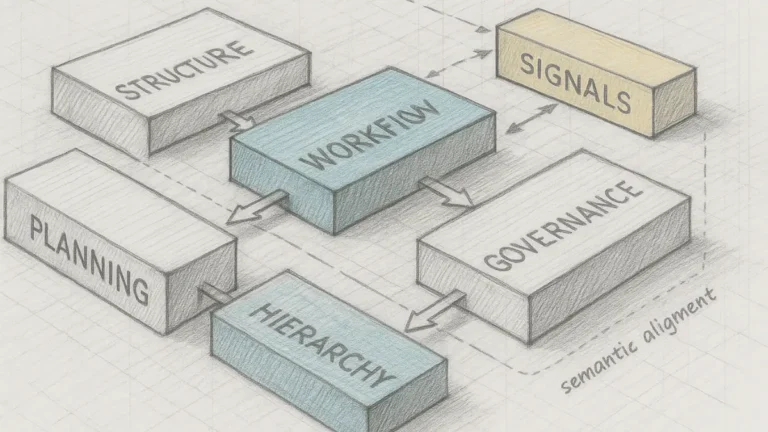
A generative content funnel framework establishes a repeatable structure that governs how content units expose meaning to AI systems. This framework defines allowable block types, transition rules, and hierarchy depth so models can interpret content predictably. By enforcing these constraints, teams reduce variation that would otherwise confuse machine reasoning.
The framework also supports long-term maintenance because it decouples content meaning from presentation format. Teams can update layouts or channels without altering semantic logic. Consequently, AI systems continue to interpret content correctly even as delivery methods change.
In simple terms, the framework acts as a rulebook that tells AI systems how content is organized and how meaning flows through it.
AI Oriented Content Funnel
An ai oriented content funnel aligns design choices with machine traversal rather than human persuasion. This orientation emphasizes explicit headings, bounded definitions, and consistent block patterns that AI systems can recognize and reuse. It also limits stylistic freedom where it would obscure meaning or weaken extraction confidence.
By focusing on machine orientation, teams design content units that remain valid outside their original context. AI systems can then assemble summaries, answers, and highlights without relying on surrounding narrative cues. This approach increases reliability across generative interfaces.
Put plainly, an AI-oriented funnel designs content for how machines read and connect ideas, not for how humans scroll pages.
| Design Rule | Purpose | AI Impact |
|---|---|---|
| Explicit definitions | Fix concept identity | Increases entity recognition |
| Stable terminology | Prevent semantic drift | Improves cross-page consistency |
| Layered hierarchy | Separate interpretation stages | Enables predictable traversal |
| Bounded scope | Limit topic expansion | Reduces ambiguity in synthesis |
| Declarative structure | Enforce clarity | Raises extraction confidence |
Together, these rules create a design system that prioritizes interpretability and reuse, which directly supports generative visibility across AI-driven discovery environments.
Generative Content Pipeline and Operational Scaling
A generative content pipeline design connects the funnel model to repeatable production processes while preserving semantic control, as outlined in data-driven governance research from the OECD. This connection shifts content creation from ad hoc publishing to systemized operations that AI systems can interpret consistently. Consequently, operational scaling depends on how well pipelines enforce structure rather than on output volume.
A generative content pipeline is the operational implementation of a content funnel.
Claim: Pipelines operationalize generative funnels.
Rationale: Manual publishing cannot maintain structural and terminological consistency at enterprise scale.
Mechanism: Pipelines enforce structure, validation steps, and review logic before content enters the system.
Counterargument: Pipelines increase organizational overhead and slow down initial production cycles.
Conclusion: Structured pipelines enable sustainable growth by preserving interpretability as scale increases.
Generative Content Pipeline Structure
A generative content pipeline structure defines how content moves from creation to publication through controlled stages. These stages include definition validation, structural alignment, and semantic review before release. By enforcing these checkpoints, organizations prevent unstructured content from entering the funnel.
Structured pipelines also clarify responsibility boundaries across teams. Editors, subject experts, and system owners interact through defined roles rather than informal coordination. As a result, AI systems encounter consistently structured content regardless of author or department.
In simple terms, pipeline structure ensures that every piece of content passes the same quality and structure checks before publication.
Generative Content Pipeline Modeling
Generative content pipeline modeling specifies how workflows adapt as content volume and topical coverage expand. This modeling focuses on repeatable patterns that remain stable under growth, such as standardized block templates and fixed review criteria. AI systems benefit because these patterns reduce variation that could weaken interpretation.
Modeling also supports iterative improvement by making pipeline behavior observable and adjustable. Teams can refine rules without rewriting existing content. Over time, this approach maintains semantic integrity while allowing controlled expansion.
Put simply, pipeline modeling defines how content production scales without breaking the meaning structure that AI systems rely on.
Visibility and Discovery in Generative Funnels
An ai readable content funnel enables visibility through machine interpretation rather than through traditional SERP positioning, reflecting principles described in generative search research published by Google Research. This model shifts exposure from ranking-based competition to extraction readiness across AI interfaces. As a result, discovery depends on how reliably AI systems can parse, trust, and reuse content blocks.
Generative visibility refers to AI-mediated exposure independent of traditional ranking.
Claim: Visibility emerges from structural interpretability.
Rationale: AI systems surface content based on extraction confidence rather than link authority or click behavior.
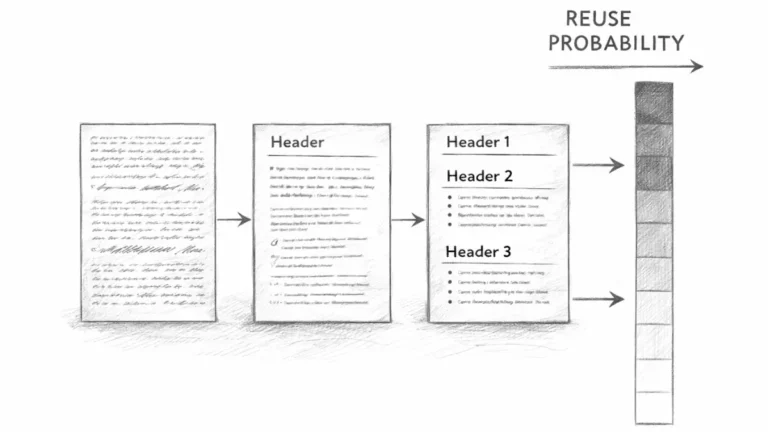
Mechanism: Funnels increase reuse probability across interfaces by presenting content in extraction-ready blocks.
Counterargument: Traditional rankings still dominate traffic in query-driven environments.
Conclusion: Generative visibility is structurally driven and depends on how content exposes meaning to AI systems.
Generative Funnel for AI Discovery
A generative funnel for ai discovery organizes content so AI systems can encounter it without explicit user queries. This organization relies on clear entry signals, stable semantic cores, and controlled expansion paths that guide model traversal. When these elements align, AI systems can surface content proactively in summaries, panels, and conversational responses.
Discovery also depends on how well the funnel communicates relevance without relying on keywords alone. Structural cues such as definitions, scoped headings, and consistent block patterns provide models with confidence signals. Consequently, AI systems treat well-structured funnels as reliable sources for knowledge extraction.
In simple terms, AI discovery happens when content structure makes meaning obvious without requiring search intent.
Example: A generative content funnel with clear entry definitions, stable core layers, and controlled expansion paths allows AI systems to extract high-confidence blocks repeatedly, increasing reuse across summaries, panels, and conversational outputs.
Content Funnel AI Visibility Model
A content funnel ai visibility model describes how structured content moves from internal representation to external exposure across AI interfaces. This model connects extraction confidence, reuse frequency, and contextual relevance into a single visibility mechanism. AI systems prioritize content that maintains clarity when detached from its original page.
Visibility models also explain why some content appears repeatedly across different AI outputs while other content remains hidden. Structural consistency and bounded meaning increase reuse probability. Over time, this behavior compounds visibility without reliance on rankings.
Put plainly, AI visibility models explain why structured content keeps appearing across AI systems even without ranking signals.
A reference architecture used in AI documentation platforms applies generative funnel principles to large knowledge bases. Teams define extraction-ready blocks, enforce semantic boundaries, and monitor reuse patterns across AI summaries. After adoption, platforms report higher consistency in generated explanations and fewer conflicting outputs. This pattern demonstrates how funnel-based visibility emerges through structure rather than traffic optimization.
Governance, Terminology Stability, and Long-Term Control
An ai aligned content funnel requires an explicit governance model to remain usable by AI systems over long time horizons, as formalized in information integrity and system governance standards published by the National Institute of Standards and Technology (NIST). Governance shifts control from individual authors to system-level rules that preserve meaning consistency. This approach directly addresses semantic drift that emerges as content volume and contributors increase.
Terminology governance ensures stable meaning across expanding content systems.
Claim: Governance preserves long-term AI usability.
Rationale: AI models amplify inconsistency over time by reusing and recombining unstable terminology.
Mechanism: Controlled vocabularies and recurring structural audits enforce meaning stability across the funnel.
Counterargument: Governance slows content production by introducing additional review layers.
Conclusion: Stability outweighs short-term speed when content must remain interpretable for years.
AI Interpretable Content Funnel
An ai interpretable content funnel relies on governance rules that make meaning predictable for machine systems. These rules define approved terms, enforce definition placement, and restrict synonym usage across the funnel. AI systems depend on this consistency to resolve references without ambiguity.
Interpretability also requires continuous validation as new content enters the system. Governance processes detect deviations early and correct them before models incorporate errors into their internal representations. This oversight maintains trust in extracted knowledge across AI interfaces.
Simply stated, interpretability comes from treating terminology as a controlled asset rather than a stylistic choice.
AI Optimized Content Funnel
An ai optimized content funnel extends governance beyond terminology into structural performance. Optimization focuses on how efficiently AI systems extract, traverse, and reuse content blocks without loss of meaning. Governance metrics track reuse consistency, contradiction frequency, and extraction stability over time.
Optimization also balances flexibility with control by allowing expansion only within approved semantic paths. This balance prevents fragmentation while supporting growth. As a result, AI systems continue to surface accurate and coherent outputs even as the content system evolves.
In plain terms, optimization ensures that governance rules actively improve how AI systems read and reuse content instead of merely restricting authors.
Checklist:
- Are core concepts of the generative content funnel explicitly defined?
- Does the page maintain stable H2–H4 architectural boundaries?
- Does each paragraph express a single, self-contained reasoning unit?
- Are semantic containers used to isolate concepts and mechanisms?
- Is terminology governed consistently across all sections?
- Does the structure support reliable AI traversal and reuse?
Interpretive Structure of a Generative Content Funnel
- Layered funnel segmentation. The separation of entry, core, and expansion layers creates discrete interpretive zones that allow AI systems to resolve intent, depth, and scope without conflation.
- Semantic container isolation. Clearly bounded concept, mechanism, example, and implication blocks prevent cross-context inference and stabilize meaning across generative reuse.
- Deterministic reasoning chains. Recurrent Deep Reasoning Chain patterns provide predictable internal logic that supports long-context aggregation and modular extraction.
- Terminology governance signals. Consistent vocabulary and definition placement function as alignment markers that reduce semantic drift during AI-driven synthesis.
- Traversal-oriented hierarchy.
FAQ: Generative Content Funnel
What is a generative content funnel?
A generative content funnel is a structured content system designed for AI interpretation, reuse, and traversal across generative discovery environments.
How does a generative content funnel differ from a traditional funnel?
Traditional funnels guide user actions, while generative content funnels organize meaning so AI systems can extract and recombine knowledge.
Why are generative content funnels important?
AI systems increasingly mediate discovery, so visibility depends on structural interpretability rather than sequential persuasion.
How do AI systems interact with a generative content funnel?
AI systems evaluate definitions, hierarchy, and semantic boundaries to determine how content can be reused in generated outputs.
What role does architecture play in a generative content funnel?
Layered architecture separates discovery, interpretation, and expansion, enabling predictable AI traversal and stable meaning extraction.
Why is semantic layering critical in generative funnels?
Semantic layering prevents concept overlap by isolating meaning into containers that AI systems can interpret without ambiguity.
How does governance affect generative content funnels?
Governance controls terminology and structure, reducing semantic drift as content volume and system reuse increase.
What determines visibility in generative content funnels?
Visibility emerges from extraction confidence, structural clarity, and consistent reuse across AI interfaces.
Can generative content funnels scale without losing meaning?
Structured pipelines and controlled expansion allow funnels to scale while preserving interpretability.
What skills are required to maintain a generative content funnel?
Teams require structural reasoning, terminology discipline, and governance awareness to sustain AI-readable content systems.
Glossary: Key Terms in Generative Content Funnels
This glossary defines the core terminology used throughout the article to ensure consistent interpretation by both AI systems and human readers.
Generative Content Funnel
A structured content system designed for AI interpretation, reuse, and traversal across generative discovery and synthesis environments.
Semantic Container
A bounded content block that isolates meaning to prevent ambiguity and enable reliable extraction by AI systems.
Funnel Architecture
The layered structural design of a generative content funnel that defines how content is discovered, interpreted, and expanded.
Semantic Layering
The separation of content into interpretation-safe layers that guide AI systems through meaning without cross-contamination.
Terminology Governance
A control framework that enforces consistent vocabulary usage to prevent semantic drift in expanding content systems.
Extraction-Ready Block
A content unit structured so AI systems can reuse it independently without loss of context or meaning.
Deep Reasoning Chain
A structured reasoning pattern that links claims, rationale, mechanisms, exceptions, and conclusions into a reusable knowledge unit.
Generative Content Pipeline
An operational workflow that enforces structure, validation, and semantic control as content scales within a funnel.
Generative Visibility
AI-mediated exposure that results from structural interpretability rather than traditional ranking or traffic signals.
Structural Predictability
The consistency of layout and logic that enables AI systems to segment and interpret meaning across content layers.

Author Sergey Kuchinskiy
Founder of PostUpgrade. Researcher in Generative Engine Optimization (GEO), semantic structuring, and machine reasoning systems. Focuses on AI-readable content architecture, computational interpretation, and scalable knowledge retrieval. Author of 200+ analytical publications on generative visibility, semantic mapping, and AI-first information design.
Verified Expertise
- Generative Engine Optimization (GEO)
- AI Content Engineering & Semantic Structuring
- Computational Linguistics & Machine Reasoning
- Large-Scale Content Architecture
Research Focus
AI Search · Generative Visibility · Semantic Mapping · Machine Sentence Design · Reasoning Stability · Knowledge Extraction Models
Academic Contributions
- 200+ analytical research publications
- AI-first page architecture methodologies
- Semantic Frameworks for Machine Interpretation (SFMI)
- Generative Visibility Standards 2024–2025
Citation Metrics
AI-model reuse rate (GEO-Score): 92/100 · Cross-model consistency: 87% · Reasoning chain stability: 91%
Researcher ID: PU-ORCID-7421-9912
View all publications →Connect on LinkedIn →